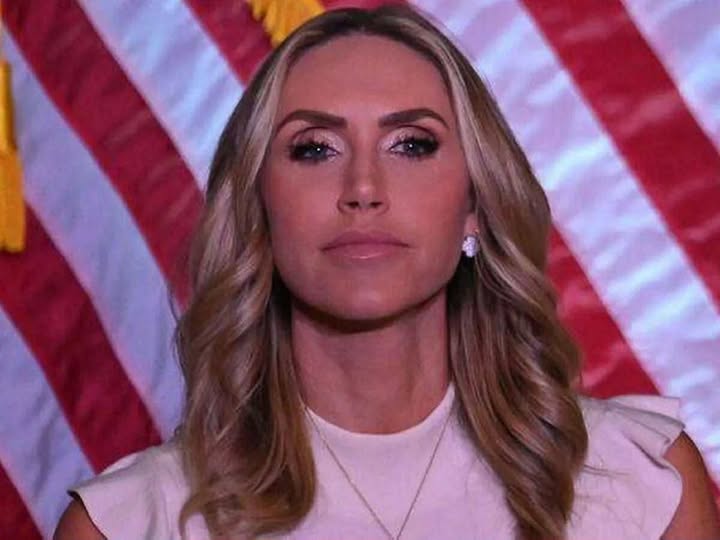
Lara Trump’s confirmation as co-chair of the Republican National Committee marks a major development in the party’s leadership structure. Officially approved through an RNC vote in North Carolina, her appointment concludes weeks of speculation and places her in a pivotal position within the national party apparatus. Observers note that this elevation formalizes her influence beyond her prior campaign involvement, giving her a leadership role that directly intersects with party strategy, messaging, and coordination at both state and national levels. As co-chair, she joins other senior leaders in overseeing the organization’s core functions, ensuring that party initiatives align with the broader priorities of the RNC heading into a critical election cycle.
Lara Trump’s background as a high-profile campaign surrogate and media strategist for former President Donald Trump positions her uniquely to bridge the former president’s base with the institutional party apparatus. Analysts suggest her appointment consolidates leadership influence around familiar voices, fostering operational cohesion and messaging consistency. Her responsibilities include organizing outreach programs, guiding committee activities, assisting in national strategy planning, and liaising with state-level affiliates. These duties are particularly important in the run-up to elections, where voter mobilization, fundraising, and communications require precise coordination across diverse political contexts.
The announcement has drawn significant attention from both party loyalists and political observers nationwide. Supporters emphasize her experience and visibility, viewing the confirmation as a natural extension of the Trump campaign’s grassroots and digital operations. They note that her familiarity with messaging, media engagement, and event organization strengthens the RNC’s ability to communicate effectively with voters and donors. By elevating a familiar and trusted figure, the party can enhance both internal cohesion and external engagement, reducing the potential for messaging conflicts or organizational misalignment during the high-stakes election season.
Strategic analysts highlight the broader implications of Lara Trump’s role for the party’s approach to electoral strategy. As co-chair, she will be involved in planning high-level campaign activities, coordinating fundraising efforts, and advising on candidate support across key battleground states. Her appointment also signals a continued emphasis on aligning party operations with the priorities of former President Trump, ensuring that organizational efforts reflect his established political base and messaging strategy. This alignment is viewed as a tactical move to maximize influence and engagement during the November general election.
Her confirmation also reflects the evolving nature of party leadership in the modern political landscape, where visibility, media experience, and campaign know-how are increasingly valued alongside traditional organizational skills. Lara Trump’s role underscores the RNC’s willingness to leverage prominent figures who combine public presence with operational insight. By positioning her in a leadership capacity, the party aims to balance both strategic oversight and high-profile representation, enhancing its ability to mobilize supporters, coordinate election-related initiatives, and maintain continuity in messaging at a national level.
Ultimately, Lara Trump’s appointment as RNC co-chair demonstrates the continuing interplay between prominent political families, campaign experience, and formal party leadership. It signals a strategic focus on coordination, cohesion, and operational efficiency as the party prepares for upcoming electoral challenges. Her role will be closely monitored by analysts, supporters, and critics alike, reflecting the importance of leadership decisions in shaping messaging, outreach, fundraising, and organizational effectiveness within one of America’s two major political parties. This development reinforces how key appointments can influence the party’s trajectory, voter engagement, and overall strategic posture in the months leading up to national elections.