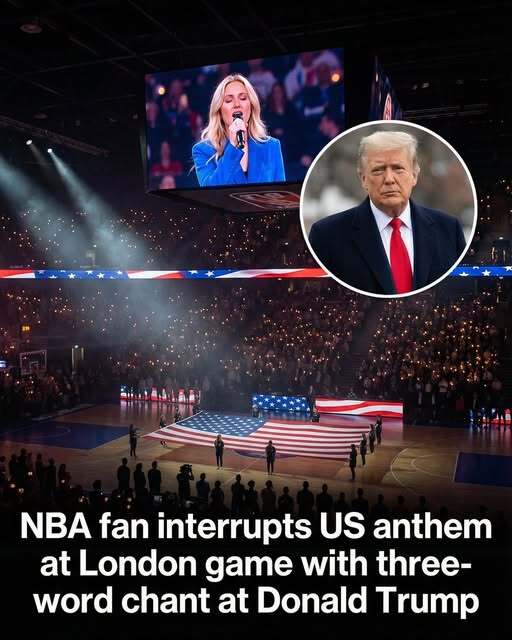
On January 18, 2026, the NBA returned to London with its first regular-season game in the city since 2019, showcasing both the league’s growing international presence and the increasing global appetite for professional basketball. The matchup between the Memphis Grizzlies and the Orlando Magic drew over 18,000 spectators from across the United Kingdom and Europe, creating a vibrant atmosphere where sport intertwined seamlessly with culture, conversation, and camaraderie. Jerseys representing North American teams mingled with banners from fans across the continent, while pre-game excitement buzzed through the O2 Arena as supporters prepared to witness elite-level competition. Beyond basketball itself, the event highlighted how the NBA’s international strategy turns a sporting contest into a cultural exchange, with fans eager not just for the game but for the spectacle, energy, and community it fosters.
The pre-game ceremony introduced a moment that quickly captured global attention. As singer and actress Vanessa Williams began performing the U.S. national anthem, a voice rang out from the crowd, shouting, “Leave Greenland alone!” The remark momentarily interrupted the ceremonial proceedings, drawing a mixture of applause, laughter, and disapproval from the audience, though Williams completed the performance with poise. Observers noted that the outburst referenced ongoing geopolitical debates surrounding Greenland, a semi-autonomous Danish territory. Recent political statements from former U.S. President Donald Trump advocating for greater American influence over the island had sparked opposition from Denmark and concern among European allies. For many in the London crowd, the interruption was interpreted as a spontaneous protest against perceived overreach, demonstrating how international sports events can serve as unexpected platforms for political expression.
Once the anthem concluded, attention shifted fully to the court. Memphis took control early, led by dynamic performances from Ja Morant, whose agility and scoring prowess energized both local and visiting fans alike. Orlando’s squad responded with periods of competitive play, but the Grizzlies maintained a steady advantage, ultimately securing a decisive 126–109 victory. Beyond the scoreboard, the game highlighted the skill, strategy, and teamwork that define the NBA, giving European fans a chance to witness high-level basketball in person, an experience often restricted to watching broadcasts. For attendees, the excitement of seeing live NBA action combined with the intensity of professional play made the evening memorable on both personal and communal levels.
Media coverage following the event focused heavily on the anthem incident, prompting discussions about the intersection of sports and politics. Analysts debated whether international games, particularly in neutral venues, naturally invite commentary on global issues, and whether athletes, fans, or performers should remain insulated from such expressions. While some critics viewed the interruption as inappropriate, others framed it as evidence that sports do not exist in a vacuum; they reflect and engage with broader cultural and political currents. For NBA leadership, such moments emphasize the delicate balance of hosting events abroad while respecting local sensitivities and international perspectives, underscoring the complexity of operating a truly global league.
The London crowd itself reflected the increasingly cosmopolitan nature of professional basketball fandom. Fans cheered in multiple languages, exchanged perspectives on teams and players, and embraced the social dimension of attending a live sporting event. This cultural blending, alongside the spontaneous political commentary, highlighted how international NBA games function as spaces for both shared joy and active civic engagement. For many, seeing top-tier athletes in action and interacting with fans from around the world reinforced basketball’s role as a connector across boundaries, offering experiences that extend far beyond the confines of competition alone.
Ultimately, the January 18 game illustrated the NBA’s dual role as both a sporting enterprise and a global cultural institution. While Ja Morant’s on-court brilliance and the Grizzlies’ victory were the primary athletic narratives, the crowd’s actions during the anthem emphasized that international events carry layers of meaning beyond points scored or records set. The evening demonstrated how fans, intentionally or spontaneously, can amplify global awareness, express dissent, and create memorable moments that resonate culturally. As the league continues to expand internationally, such games will likely remain a nexus where sport, society, and even politics converge, offering lessons in both entertainment and human expression that extend well beyond the hardwood.