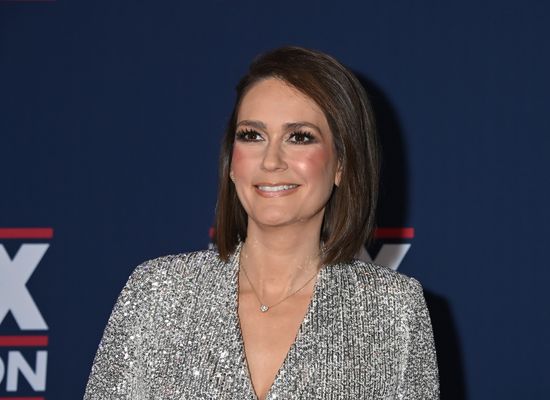
Jessica Tarlov’s remark on Fox News’ The Five lasted only a few seconds, yet it landed with the weight of a cultural flashpoint in an already combustible political environment. During a discussion about legal challenges related to Donald Trump’s eligibility to appear on the 2024 ballot, Tarlov referred to the effort as “the chance to put the final nail in the coffin so that you don’t have Donald Trump on the ballot again.” Though widely understood as a metaphor describing the end of a political campaign or legal pathway, the phrasing immediately drew intense scrutiny. In a nation where political violence is no longer theoretical but tragically real, language that once passed as routine rhetorical shorthand now carries heightened emotional and symbolic force. The reaction to Tarlov’s words revealed less about a single sentence and more about the precarious state of American political discourse, where intent, interpretation, and impact collide in unpredictable ways.
The backlash was swift and uncompromising, particularly among conservative audiences and Trump supporters who viewed the imagery as deeply inappropriate given the context of recent assassination attempts and credible threats against Trump. Critics argued that invoking death-related metaphors crossed an ethical line, regardless of intent, because of the current climate of fear and instability. Social media erupted with condemnation, with calls for Tarlov’s firing spreading rapidly across platforms. Hashtags demanding accountability trended, and clips of the segment circulated widely, often stripped of surrounding context. For many critics, the concern was not ideological disagreement but what they described as media irresponsibility. They argued that public figures, especially those with national platforms, must recognize that figurative language can still normalize violent imagery, potentially emboldening unstable individuals or further poisoning an already volatile atmosphere.
This intense response did not emerge in isolation but against a backdrop of years of escalating polarization and collective trauma. The United States has endured contested elections, mass protests, attacks on public officials, and repeated warnings from security agencies about the rise of domestic extremism. In such an environment, sensitivity to language has become acute, particularly language that can be interpreted as endorsing harm or finality. Critics of Tarlov emphasized that metaphors involving death, burial, or elimination carry a different resonance today than they did even a decade ago. They argued that commentators must evolve with the moment, exercising greater precision and restraint when discussing figures who evoke extreme emotions. To them, the controversy symbolized a broader failure within media culture to adapt rhetorical habits to a nation on edge.
Supporters of Tarlov, however, pushed back forcefully, framing the outrage as a deliberate distortion fueled by partisan hostility. They pointed out that “final nail in the coffin” is a long-established idiom used across journalism, politics, sports, and law to signify the definitive end of an effort or idea, not a call for physical harm. Defenders argued that Tarlov’s meaning was clearly political and legal, not violent, and that critics were weaponizing the current climate to silence dissenting voices. Some also highlighted what they viewed as a glaring double standard, noting that similarly aggressive or inflammatory language from conservative commentators often escapes comparable scrutiny. In this view, the uproar reflected long-standing resentment toward Tarlov’s role as a liberal voice on a network with a predominantly conservative audience, with the remark serving as a convenient catalyst for broader ideological grievances.
Fox News itself became inseparable from the controversy, not because of immediate disciplinary action, but because of what Tarlov represents within the network’s ecosystem. As one of the few consistently liberal panelists on The Five, she occupies a uniquely exposed position, often functioning as both counterbalance and lightning rod. The incident reignited debates among viewers about ideological diversity on the network. Critics argued that Fox has undermined its brand by platforming figures like Tarlov, while supporters contended that her presence strengthens debate and prevents the show from devolving into an echo chamber. The network’s decision not to issue a public reprimand or apology intensified these divisions, interpreted by some as tacit endorsement and by others as a principled defense of editorial independence and free expression.
Beyond the immediate figures involved, the episode has prompted broader reflection within journalism and political analysis about the evolving boundaries of acceptable rhetoric. Commentators across the spectrum have questioned whether language norms are tightening, fragmenting, or simply becoming more contested in an era of constant outrage and instant amplification. Metaphors that once felt benign are now filtered through collective anxiety and real-world violence, forcing media figures to reconsider how they frame arguments. The controversy surrounding Tarlov underscores a defining reality of contemporary American politics: words are no longer merely descriptive, they are symbolic, emotionally charged, and often treated as proxies for intent. Whether the backlash fades or lingers, the incident stands as a cautionary illustration of how quickly language can ignite national firestorms—and how fragile the margin for error has become in a democracy strained by mistrust, fear, and relentless polarization.