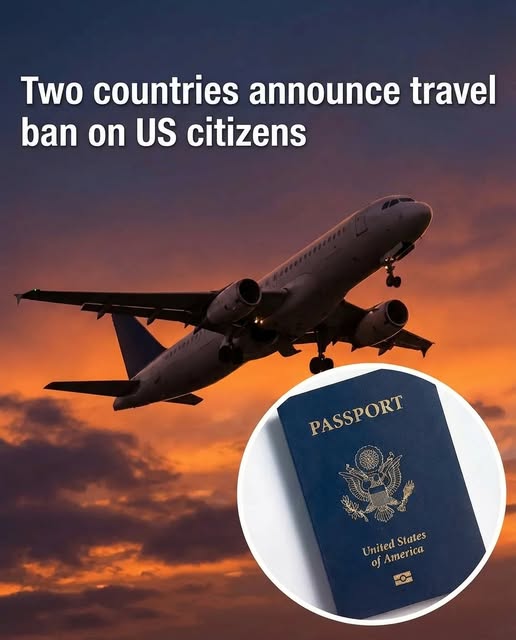
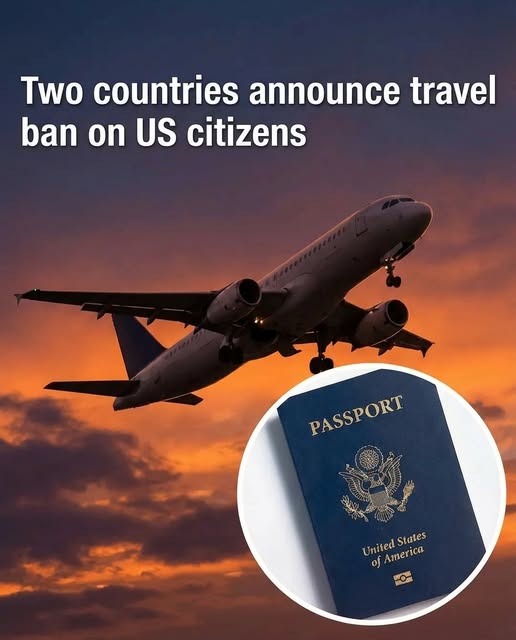
International travel regulations often shift incrementally, adjusted through bureaucratic notices that rarely capture widespread attention, yet their implications can be profound. Recent changes affecting U.S. travelers in parts of West Africa have broken through that usual quiet, drawing focus not simply because visas have become harder to obtain, but because of what those changes symbolize in a broader geopolitical context. Mobility, once treated as a largely administrative matter governed by passports and paperwork, is increasingly entangled with questions of political legitimacy, diplomatic recognition, and perceived fairness between states. For American travelers accustomed to relatively frictionless access in many regions, the evolving landscape in West Africa represents a reminder that travel privileges are neither permanent nor immune to international tensions. These developments are unfolding at a moment when global mobility is already under strain from post-pandemic adjustments, security anxieties, and shifting alliances, making them part of a much larger recalibration of how nations control their borders and signal their political priorities to the world.
In Niger, the most direct change has been the suspension of visa issuance for U.S. citizens, a move that authorities have framed explicitly as reciprocal. Officials have pointed to U.S. restrictions placed on Nigerien officials following recent political developments, arguing that equitable treatment between nations demands parallel measures. From Niger’s perspective, allowing unrestricted access to American travelers while its own officials face limitations abroad would represent an imbalance inconsistent with sovereign equality. Government statements have emphasized that the policy is not designed to punish tourists or disrupt cultural exchange, but rather to assert a principle: travel access should reflect the state of diplomatic relations. This framing is significant because it situates visas not merely as tools of border control, but as instruments of political messaging. By choosing suspension over more targeted measures, Niger has underscored its dissatisfaction in a way that is immediately visible to ordinary travelers, effectively translating abstract diplomatic disagreements into tangible personal inconvenience.
Elsewhere in the region, particularly in Mali and Burkina Faso, the changes have been less explicit but no less impactful. There have been no formal announcements banning U.S. travelers, yet reports from Americans attempting to enter these countries describe longer processing times, more extensive documentation requests, and heightened questioning at border crossings. These experiences suggest a shift toward discretionary enforcement, where individual travelers may encounter vastly different outcomes depending on the circumstances of their arrival. Such an approach reflects the complex security environments these countries face, as well as their evolving relationships with Western governments. Rather than issuing blanket policies that risk diplomatic escalation, authorities appear to be exercising greater scrutiny on a case-by-case basis. While this allows flexibility, it also introduces uncertainty, making it difficult for travelers to plan with confidence and for organizations to deploy staff efficiently.
From the perspective of U.S. officials, visa restrictions and enhanced scrutiny are often framed as administrative responses tied to governance standards, security cooperation, or the protection of national interests. These measures are typically described as technical rather than political, emphasizing that they are not directed at civilians. However, leaders and commentators in West Africa frequently challenge this characterization, arguing that the real-world effects fall most heavily on ordinary people. Families separated across borders, students pursuing research, humanitarian workers responding to crises, and business travelers seeking to maintain economic ties all find themselves navigating increasingly complex barriers. The disconnect between official rhetoric and lived experience fuels resentment and reinforces perceptions that global mobility is becoming a privilege unevenly distributed along lines of power and influence.
Historical precedent suggests that such policies are rarely static. Past cases in the region, including Chad’s temporary visa changes that were later revised, illustrate how entry rules can evolve as diplomatic conditions change. In some instances, restrictions have been eased following renewed dialogue or shifts in political leadership; in others, they have hardened amid prolonged disputes. This fluidity means that today’s barriers may not define tomorrow’s realities, but it also means that uncertainty has become a defining feature of international travel. For travelers and institutions alike, adaptability is now essential. Monitoring policy updates, maintaining open channels of communication with embassies, and preparing contingency plans have become standard practices rather than exceptional precautions.
Taken together, the recent developments in West Africa highlight a broader reassessment of how nations conceptualize mobility in an increasingly fragmented world. Visas and border controls are no longer viewed solely as mechanisms for managing tourism or migration, but as reflections of political alignment, mutual respect, and strategic interest. For U.S. travelers, the message is clear: access cannot be taken for granted, and awareness of diplomatic context is becoming as important as logistical preparation. For governments, the challenge lies in balancing legitimate security and sovereignty concerns with the human and economic costs of restricted movement. As dialogue continues and relationships evolve, the future of travel to and within the region will likely hinge on transparency, reciprocity, and sustained efforts to rebuild trust, reminding all parties that mobility, at its core, is both a practical necessity and a powerful symbol of international relations.