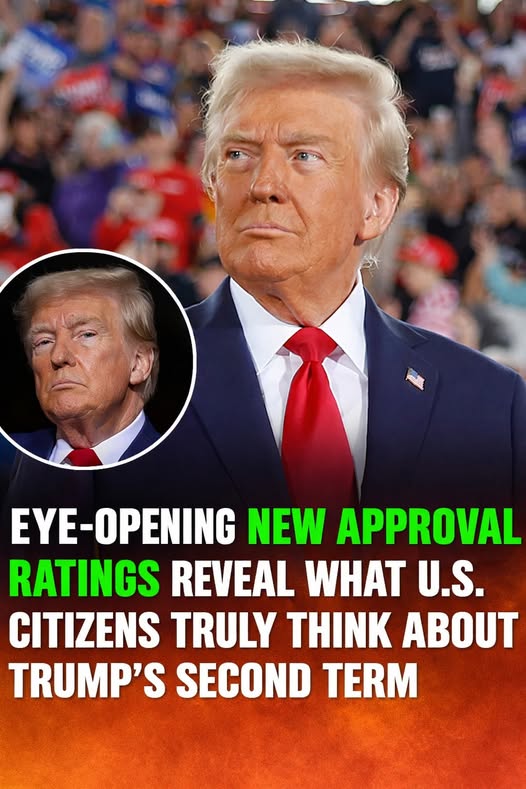
Since returning to the White House in January 2025, President Donald Trump’s second term has been defined by bold policy initiatives, aggressive executive actions, and a highly polarized political environment. From tariffs and immigration crackdowns to high-profile foreign policy maneuvers, the Trump administration has pursued an unapologetically assertive agenda. White House officials and the president himself frequently frame his leadership as a period of historic achievement, emphasizing economic resilience, strong borders, and an “America First” philosophy. Trump and his aides point to low unemployment figures, assertive trade policies, and a refusal to shy away from geopolitical flashpoints as evidence of effective governance. Yet, amid these assertions, polling data from multiple sources paint a picture of public opinion that diverges significantly from the narrative promoted by the administration. Rather than enjoying a surge in national approval, the president’s job performance ratings have remained modest at best and troubling for his supporters at worst, revealing an electorate deeply split in its assessment of his leadership.
Recent polling consistently shows that Trump’s overall approval rating is below the majority threshold that typically signals broad public support for a sitting president. An AP-NORC poll conducted in January 2026 found that only about four in ten Americans approve of the job Trump is doing in office, with roughly six in ten disapproving of his performance. This pattern aligns with other contemporary surveys: an Economist/YouGov poll reported approval in the high 30s with disapproval in the mid-to-high 50s, resulting in one of the lowest net approval scores of Trump’s presidency. Aggregate measures from RealClearPolitics similarly show that approval on key issues such as the economy, immigration, and foreign policy tend to hover around or below 40 percent, with disapproval often substantially higher. These figures underscore a central reality of Trump’s second term: despite commanding high visibility in political discourse and maintaining vigorous support among core Republican voters, the president has struggled to secure widespread approval across the broader American public.
The public’s views of Trump’s handling of individual policy areas highlight deep divides in perception and priorities. On economic stewardship—an area Trump frequently cites as evidence of effective governance—approval ratings have been persistently weak. For example, polls show only around 37–38 percent of respondents expressing satisfaction with how Trump is managing economic conditions, while a clear majority view economic performance negatively. This perception may be rooted in everyday lived experience: many Americans report concern about the cost of living, inflation, and the impact of tariffs on household expenses, factors that do not always align with macroeconomic indicators touted by the administration. Similarly, approval of Trump’s immigration policies, once considered a signature strength and a key driver of his electoral coalition, has declined over time. While some polls have shown that nearly half of Americans might still approve of specific border security measures, support for the administration’s broader approach to immigration enforcement has slipped at various points throughout his second term. On foreign policy, where the administration’s posture has ranged from assertive intervention to heightened rhetoric about global influence, public opinion is similarly mixed, with many Americans disapproving of Trump’s handling of international affairs.
These approval trends reflect, in part, the enduring polarization of American politics. Trump’s support remains robust among Republican voters and segments of the electorate that prioritize his core policy objectives, particularly those who believe he is advancing conservative priorities and pushing back against perceived liberal dominance in cultural and governmental institutions. Yet his numbers among independents and moderate voters are substantially weaker, and these groups play a critical role in shaping national consensus—or the lack thereof—regarding presidential leadership. Independent voters’ skepticism of Trump’s performance, particularly on economic and diplomatic questions, contributes to approval figures that struggle to cross the halfway mark. Additionally, demographic factors such as age, education, and urban-versus-rural residence continue to influence how Americans view Trump’s presidency, with stark contrasts emerging along these lines in nearly every major poll.
The gap between Trump’s narrative of success and public perception is not merely a matter of partisan disagreement; it underscores broader questions about the role of public sentiment in governance and political legitimacy. Presidents often frame their achievements in the most favorable light, highlighting policy victories and dismissing criticism as misguided or ideologically motivated. But when persistent polling shows consistent disapproval across multiple issues and multiple survey organizations, it raises questions about the extent to which a leader’s own understanding of success aligns with the lived experiences and priorities of the electorate. Trump’s rhetoric of economic strength, for example, resonates strongly with his base but may ring hollow for voters who feel the effects of inflation or worry about job security. Similarly, foreign policy actions that generate headlines may not translate into higher approval if public sentiment favors diplomatic stability over confrontation. This dynamic reflects a broader reality of modern American politics: measurable policy outcomes do not automatically translate into broad popular approval.
The implications of these approval dynamics extend beyond Trump’s immediate political standing to broader electoral and governance questions, especially as the country approaches the 2026 midterm elections. Low presidential approval ratings can influence voter turnout, congressional races, and party strategies, even when the president’s party controls one or both chambers of Congress. Historically, presidents with approval ratings consistently below 50 percent face challenges in advancing their legislative agendas and mobilizing support for key initiatives. In Trump’s case, the sustained partisan polarization of his support base means that while his core voters remain deeply loyal, the broader electorate’s lukewarm or negative assessment creates an environment where political victories require careful coalition-building and messaging that reaches beyond the base. Given that many swing voters and independents remain skeptical of Trump’s leadership—even as they may agree with him on isolated issues—political strategists on both sides of the aisle will be closely watching how these perceptions evolve as the midterm elections draw near.
Ultimately, the disconnect between the administration’s portrayal of Trump’s second term and public opinion highlights the complexity of contemporary political leadership in the United States. While the president continues to emphasize accomplishments and assert confidence in his agenda, the broader public’s assessment remains nuanced and, in many respects, skeptical. Approval ratings are not static; they reflect ongoing judgments about policy effectiveness, economic well-being, social stability, and individual priorities. The current data suggest that while Trump retains significant influence within conservative circles, a majority of Americans do not share his optimistic self-assessment and remain unconvinced that his performance has broadly met their expectations. This persistent gap between narrative and perception will likely shape political discourse and policy debates throughout the remainder of his term and into the electoral contests that follow, underscoring that public opinion remains a powerful force—even in highly polarized times.