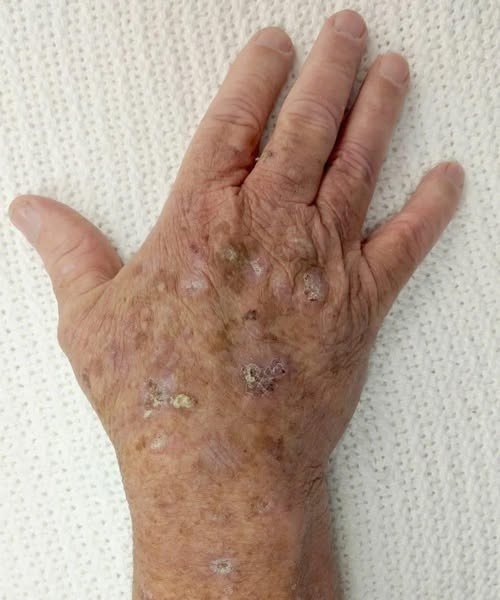
Human skin quietly records every season of life, absorbing sunlight, wind, and time while adapting to constant environmental stress. Over decades, this exposure leaves behind freckles, fine lines, and uneven texture that many people accept as normal aging. Yet within these familiar changes, actinic keratosis can begin forming almost invisibly, appearing as rough, flaky, or slightly discolored patches that feel different long before they look concerning. These lesions develop when ultraviolet radiation damages skin cell DNA, creating abnormal cells that no longer behave normally. Unlike sudden rashes or injuries, actinic keratoses progress slowly and often without pain, making them easy to dismiss. Many people mistake them for dry skin, eczema, or irritation, especially when moisturizers temporarily soften the surface. This quiet nature makes them dangerous, as they represent the earliest visible stage of potential skin cancer development. When left untreated, a portion of these lesions can evolve into squamous cell carcinoma, a common but sometimes aggressive form of skin cancer. Recognizing the difference between harmless aging and early warning signs requires awareness, regular self-examination, and the understanding that prevention often begins long before a diagnosis is made.
Sunlight plays a paradoxical role in human health, supporting vitamin D production and emotional well-being while exposing skin to harmful ultraviolet rays. UVA radiation penetrates deeply, accelerating aging and weakening skin structure, while UVB rays cause more direct DNA damage and sunburn. Over time, repeated exposure overwhelms the skin’s repair mechanisms, allowing mutations to accumulate. Actinic keratoses most often appear on areas that receive the most sun throughout life, including the face, scalp, ears, forearms, hands, and neck. They may feel like sandpaper, appear pink or reddish, or develop a scaly crust that repeatedly returns after peeling. Some remain flat, others thicken slightly, and coloration can range from flesh-toned to brown or yellow. Sensations vary as well, from mild itching to tenderness, though many lesions remain painless. This inconsistency contributes to confusion and delay, leading people to ignore changes for months or even years. Persistence is the most important clue. Any spot that fails to heal, repeatedly flakes, or slowly changes texture deserves professional evaluation, regardless of size or discomfort.
Risk factors for actinic keratosis extend beyond occasional sunburns and reflect cumulative exposure across a lifetime. Fair-skinned individuals, particularly those with light hair or eyes, are more susceptible due to lower melanin protection. Age significantly increases risk as cellular repair slows and immune surveillance weakens. Outdoor occupations and hobbies amplify exposure, placing farmers, construction workers, athletes, and gardeners at higher risk. Geographic location also plays a role, with sunny and high-altitude regions intensifying ultraviolet radiation. People with compromised immune systems face additional vulnerability, as their bodies are less able to eliminate abnormal cells. Many individuals develop multiple lesions over time, sometimes dozens, a pattern known as field cancerization, where large areas of skin show chronic sun damage. While this does not mean cancer is inevitable, it signals the need for ongoing monitoring and preventive care. Understanding personal risk shifts the conversation from fear to informed responsibility.
The progression from actinic keratosis to squamous cell carcinoma is typically slow, providing a valuable opportunity for intervention. Early lesions remain confined to the outer skin layer, but if left untreated, abnormal cells can invade deeper tissue, making treatment more complex and increasing the risk of spread. Early-stage management, however, is highly effective. Dermatologists often diagnose lesions through visual examination and magnification tools, confirming uncertain cases with small biopsies. Treatment options depend on the number, thickness, and location of lesions. Cryotherapy using liquid nitrogen remains common, quickly destroying damaged cells. Topical medications can stimulate immune responses or selectively eliminate abnormal tissue over several weeks. Photodynamic therapy treats broader areas of sun damage, while laser or surgical approaches address thicker or resistant lesions. These procedures are typically outpatient with minimal recovery, underscoring the power of early detection. Treating actinic keratosis not only removes existing lesions but also lowers future cancer risk in affected areas.
Beyond physical treatment, an actinic keratosis diagnosis often carries emotional impact. The term “precancerous” can provoke anxiety, yet it also offers reassurance that intervention occurred before invasive disease developed. For many patients, diagnosis becomes a turning point, prompting long-term lifestyle changes. Daily sunscreen use, protective clothing, shade-seeking habits, and avoidance of tanning beds become consistent practices rather than occasional precautions. Regular dermatology visits provide reassurance and early intervention, transforming fear into manageable vigilance. Public education plays a crucial role in this shift, dispelling the myth that skin cancer is always obvious, painful, or limited to certain skin tones. Increased awareness and routine screening have already improved early detection worldwide, reducing advanced disease and improving outcomes across diverse populations.
Living with sun-damaged skin requires balance rather than avoidance. Sunlight remains part of daily life, and protection does not mean isolation. Gentle skincare, hydration, antioxidant-rich nutrition, and routine self-examinations help support skin resilience. Monthly skin checks allow individuals to become familiar with their own patterns, making subtle changes easier to notice. Photographs can help track questionable spots over time, while professional exams provide expert assessment. Advances in dermatology continue to improve treatment comfort, cosmetic outcomes, and prevention strategies, reinforcing that early action is both effective and empowering. Actinic keratosis is not a sentence but a warning, one that highlights the skin’s ability to signal risk long before serious harm occurs. By listening to these signals, respecting cumulative sun exposure, and responding promptly, individuals can protect their skin and their overall health, transforming quiet warnings into opportunities for prevention and long-term well-being.