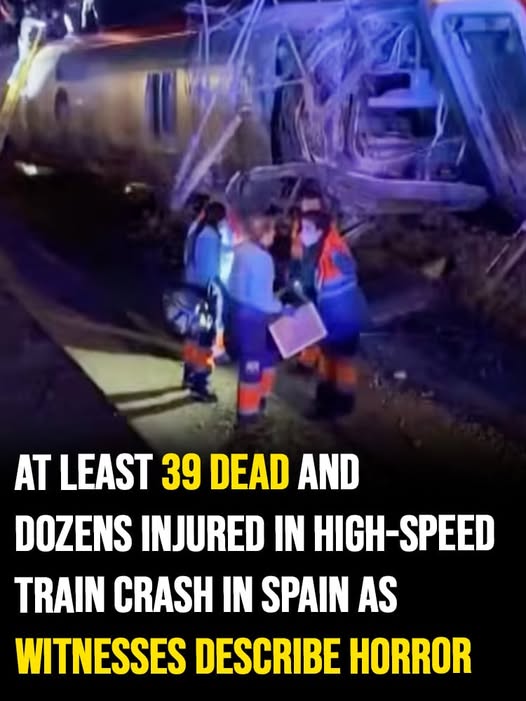
The night began like any other along Spain’s vast high-speed rail network, with passengers traveling home from work, visiting family, or simply returning to ordinary routines. But within moments, normalcy dissolved into catastrophe. A train hurtling along the tracks at high velocity derailed, metal shrieking as carriages twisted and collided. The roar of the crash, combined with shattered glass, flying debris, and smoke, left at least 39 dead and dozens more injured, sending survivors and witnesses into shock. For many, the sudden violence of the event shattered the familiar sense of safety that everyday travel provides.
Emergency responders arrived rapidly, yet the scene was chaotic and perilous. Firefighters, doctors, and volunteers waded through wreckage, climbing over mangled carriages to reach those trapped. Nearby hospitals activated emergency protocols, preparing to treat waves of patients suffering from broken bones, lacerations, and severe trauma. Rescue crews worked tirelessly in darkness and freezing conditions, guided only by flashlights and urgency, each life pulled from the wreckage a small triumph amid the overwhelming destruction. The dedication of first responders became a lifeline for survivors and a crucial anchor for anxious families awaiting news.
Accounts from those who survived capture the sheer terror of the derailment. Passengers described the violent shaking of the train, the feeling of being thrown from seats, and luggage and personal belongings hurtling through the cars. Parents called out for children, friends cried for one another, and the cacophony of screams mingled with the deafening silence that followed the initial impact. Many spoke of a sense of disbelief, unable to comprehend how a routine journey had transformed into a scene of horror. The trauma of these moments, survivors said, would linger long after the physical wounds healed, etched indelibly into memory.
Authorities moved quickly to investigate, seeking to determine why the derailment occurred. Initial reports focused on speed, track conditions, and the integrity of safety systems, with investigators emphasizing a comprehensive review. Public debate surged over whether existing regulations were sufficient and if infrastructure maintenance had been neglected. Officials assured the public that every mechanical, operational, and human factor would be analyzed to prevent similar tragedies in the future. The investigation underscored the delicate balance between technological advancement, regulatory oversight, and the unpredictability of human and mechanical interaction.
Spain has begun a period of mourning and reflection. Citizens placed candles, flowers, and notes at train stations, while flags were lowered across the nation. Messages of condolences arrived from governments, organizations, and individuals worldwide. Families of the deceased face an unimaginable reality, while survivors struggle to reconcile the trauma of their experiences with the sudden loss of friends, colleagues, and loved ones. The tragedy has brought the nation together in grief, highlighting both the human cost of transportation accidents and the resilience of communities confronting loss on a massive scale.
This devastating derailment will remain etched in Spain’s history as more than a tragic accident. It marks a moment that disrupted lives, challenged the efficacy of emergency response systems, and prompted critical questions about rail safety and infrastructure reliability. Beyond the immediate aftermath, it serves as a sobering reminder of the fragility of even the most advanced transport systems and the responsibilities that accompany technological progress. As investigations continue and the country begins to heal, the memory of that night will shape policies, inspire reforms, and leave a permanent scar on Spain’s rail legacy.