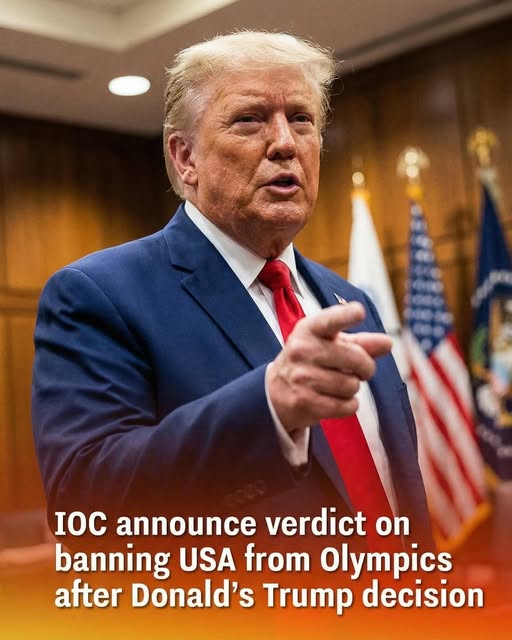
As the Milan–Cortina Winter Olympics approach, online speculation surfaced regarding the potential impact of global and political developments on Team USA’s participation. With the Opening Ceremony scheduled for February, fans and commentators naturally scrutinized the intersection of international politics and high-profile sporting events. Given that the United States traditionally sends one of the largest Olympic delegations, any hint of disruption prompted discussion about possible consequences or exclusions. In the age of social media, such speculation spreads rapidly, creating a sense of urgency and uncertainty among supporters eager to see athletes compete.
Historically, international sporting events have occasionally become entangled with political debates, and some online voices argued that major sports organizations should reconsider participation rules during politically charged periods. Examples from past Olympic cycles were cited to support the notion that geopolitical tensions might influence decisions about which nations are allowed to compete. While these discussions generated online attention, they remained largely speculative and removed from any formal decision-making processes, highlighting the need for official clarification to prevent misinformation.
The International Olympic Committee responded directly to quell rumors and provide guidance. In a public statement, the IOC reiterated its longstanding position that the Olympic Games are not a venue for adjudicating political disputes. The committee emphasized that its mission is to unite athletes through sport, ensuring fair competition and camaraderie regardless of external conflicts or governmental actions. By reaffirming this principle, the IOC aimed to reassure athletes, national committees, and fans that political speculation would not interfere with the scheduled Games.
The IOC clarified that decisions about participation are governed by the Olympic Charter rather than temporary shifts in political climates or public pressure. Political disputes and international policy matters fall outside the scope of the committee’s authority, ensuring that sports remain distinct from diplomatic or governmental conflicts. The organization further highlighted that maintaining a clear separation between athletics and politics is essential to uphold the integrity of the Games and to provide athletes with a stable, predictable environment in which to train and compete.
As a result of the clarification, Team USA’s participation remains unchanged. Athletes continue preparing for the Games, focusing on training regimens, finalizing logistics, and building team cohesion. Officials and organizers in Italy have reassured delegations that the event will proceed as planned, emphasizing safety, fairness, and adherence to competition standards. With speculation officially addressed, attention has largely shifted back to the athletes, the events, and the spirit of international competition—the core purpose of the Olympic Games.
Ultimately, the IOC’s statement underscores the enduring principle that the Olympic Games prioritize athlete participation and international unity over political considerations. By clearly communicating the separation of sport and politics, the committee provided stability and reassurance to teams, supporters, and stakeholders worldwide. As Team USA heads into Milan–Cortina, the focus returns to performance, preparation, and the celebration of athletic excellence, reaffirming the Olympic ideal that competition can transcend geopolitical tension and unite participants in shared dedication, effort, and sportsmanship.