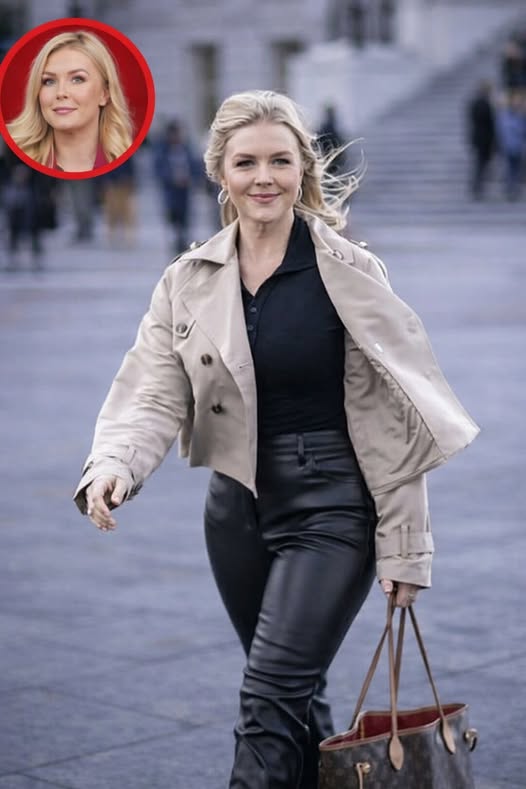
White House Press Secretary Karoline Leavitt unexpectedly became the focus of online discussion over the weekend after an Instagram post drew attention for an unusual reason—not her words, but a detail in her photo. Leavitt, 27, the youngest press secretary in U.S. history, had recently made headlines with sharp remarks about France, responding to a suggestion from a French politician that the Statue of Liberty should be returned. Leavitt emphasized that France should remember the U.S. had ensured it avoided “speaking German,” a comment that resonated with supporters but also ignited debate online.
The conversation soon shifted to Leavitt’s choice of accessory: a Louis Vuitton Neverfull tote, a signature item from one of France’s most renowned luxury brands. Critics quickly accused her of hypocrisy, questioning why someone who publicly criticized France would carry a French-made handbag. The critique spread rapidly across social media platforms, with some commenters framing the situation as a disconnect between her words and personal choices, while others debated whether the issue warranted attention at all.
Supporters of Leavitt were quick to defend her, highlighting her professionalism and dismissing the criticism as overblown. Many praised her style, her composure in office, and her ability to navigate the pressures of her high-profile position at such a young age. The defense underscored the recurring challenge for public figures: personal choices, from fashion to leisure activities, are often scrutinized through the lens of political statements, sometimes amplifying minor details into perceived contradictions.
Amid the online debate, Leavitt herself appeared largely unfazed, instead sharing glimpses of family life. Her Instagram over the weekend featured photos of baking with her young son and moments spent with relatives, demonstrating a focus on personal priorities beyond professional scrutiny. The posts conveyed a sense of normalcy and balance, emphasizing her dual role as a public official and a parent navigating the pressures of modern media attention.
This incident reflects a broader trend in public discourse, where the personal choices of political figures are scrutinized as closely as their professional statements. While Leavitt’s handbag became a talking point, supporters argue that such focus distracts from substantive political discussion, emphasizing appearance over policy or leadership ability. The debate highlights the challenges faced by young public officials, especially those in unprecedented roles, as they balance personal expression with the expectations of national visibility and political accountability.
Ultimately, the social media controversy underscores the modern intersection of politics, public perception, and lifestyle. Karoline Leavitt’s experience demonstrates how even minor details can ignite conversation, yet also shows the importance of maintaining perspective, prioritizing family, and navigating criticism with composure. While online commentary may continue, Leavitt’s approach—emphasizing personal moments and professional responsibility—illustrates a method for managing public life without losing sight of private priorities.