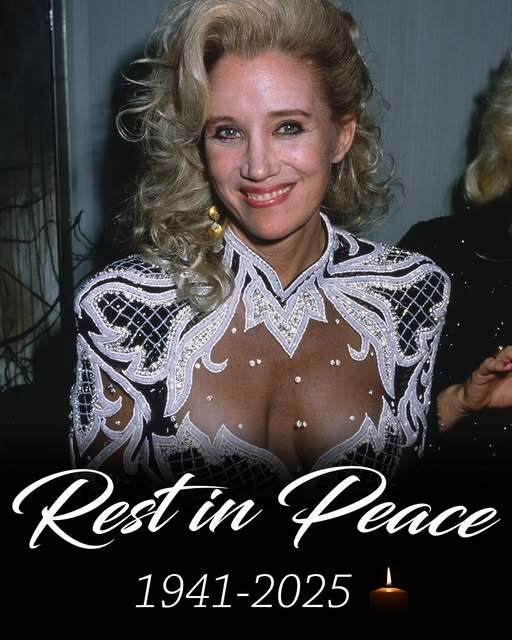
The passing of Sally Kirkland at the age of 84 marked the close of a chapter spanning more than six decades of relentless creativity, personal bravery, and artistic exploration. Her life was far more than a series of credits and accolades; it was a sustained commitment to the idea that acting could be an act of truth, risk, and transformation. From her earliest training to her final years reflecting on a life devoted to performance, Kirkland remained guided by the belief that art mattered most when it confronted discomfort and revealed emotional honesty. Her death, reported after she entered hospice care in Palm Springs, California, came quietly, yet the resonance of her work continues to echo loudly across film, television, and theater. Those who knew her speak not only of her extraordinary talent but of her intensity, generosity, and refusal to settle for safe or predictable paths. Kirkland was an artist shaped by curiosity rather than convention, and her journey illustrates how devotion to craft can outlast trends, fame, and even physical decline.
Her artistic foundation was built with uncommon rigor. Training at both the Actors Studio and the American Academy of Dramatic Arts, Kirkland immersed herself in method acting and classical techniques at a time when such disciplines demanded complete emotional surrender. She absorbed lessons emphasizing vulnerability, psychological depth, and the courage to inhabit characters fully, even when doing so meant confronting painful inner truths. These formative years coincided with her involvement in New York’s Off-Broadway and experimental theater movements, where she embraced unconventional narratives and avant-garde forms that challenged both audiences and performers. Her association with Andy Warhol’s Factory placed her at the heart of a revolutionary cultural moment, surrounded by artists who blurred the boundaries between life and performance. This environment nurtured her instinct to reject limitation and fueled a lifelong resistance to typecasting. For Kirkland, experimental work was never a stepping stone; it was an essential expression of artistic freedom, a philosophy that informed every choice throughout her career.
Kirkland’s breakthrough in mainstream cinema arrived with the 1987 film Anna, a role that distilled everything she believed about acting into a single, unforgettable performance. Portraying a woman navigating fragility and inner strength, she earned both a Golden Globe Award for Best Actress in a Drama and an Academy Award nomination, affirming her as a performer of extraordinary depth. Critics praised her ability to convey raw vulnerability without sentimentality, balancing intensity with restraint. The success of Anna did not steer her toward safer roles or predictable stardom; instead, it gave her greater freedom to pursue projects aligned with her artistic values. She resisted the gravitational pull of Hollywood conformity, continuing to seek characters that demanded emotional risk. This choice defined her legacy, establishing her as an actress respected not only for her achievements but for her unwavering integrity.
Over the course of her career, Kirkland appeared in more than 200 film and television projects, demonstrating a versatility that allowed her to move seamlessly between drama, satire, and dark comedy. In Oliver Stone’s JFK, she added texture to a complex ensemble, while in Bruce Almighty, she revealed comedic instincts that balanced her intensity with warmth. Television audiences encountered her in series such as Roseanne, ER, Law & Order, and NYPD Blue, where she brought authenticity to both brief guest appearances and more developed roles. Regardless of the size of the part, she approached each performance with complete emotional investment. Alongside her screen work, she remained devoted to theater, returning repeatedly to the stage to explore the immediacy of live performance. Her ability to move between mainstream visibility and experimental freedom made her a rare and remarkable figure in the performing arts.
In later years, Kirkland faced significant personal and health challenges, including dementia and injuries from a serious fall. Life-threatening infections eventually led to her entering hospice care, and friends established a GoFundMe page to support her medical needs. Even during this difficult period, she was surrounded by individuals who recognized her impact and felt compelled to give back to a woman who had given so much to her craft and community. Friends describe her final months as challenging yet dignified, marked by moments of clarity, reflection, and enduring artistic spirit. Her resilience during this time reinforced the image of a woman who confronted adversity with honesty rather than denial. The support she received reflected the respect she had earned through decades of mentorship, collaboration, and unwavering dedication to the performing arts.
Sally Kirkland’s legacy extends far beyond awards or public recognition. She represents a model of artistic courage rooted in emotional truth, discipline, and a willingness to be misunderstood. Generations of actors cite her as an inspiration—not because she chased fame, but because she honored the work itself. From experimental stages in New York to acclaimed screen performances, she consistently chose depth over comfort and exploration over safety. As tributes continue to emerge from colleagues, fans, and students of her work, it is clear her influence will persist through the artists she inspired and the performances that continue to move audiences. Sally Kirkland’s journey reminds us that a life devoted to art, lived without compromise, leaves a legacy that outlasts time, illness, and even death itself.