Tipping at the nail salon is often treated as a small, almost forgettable moment at the end of an appointment, yet it carries far more meaning than many clients initially realize. It exists at the crossroads of etiquette, economics, and human connection, quietly shaping the experience for both client and technician. Nail technicians perform detailed, hands-on work that blends hygiene, artistry, and technical precision, often under physically demanding conditions that require focus and stamina. They spend long hours leaning over hands and feet, maintaining steady concentration while managing tightly scheduled appointments and diverse client needs. For many technicians, tips are not an optional bonus but a vital component of their income, helping offset modest base pay and unpredictable scheduling. When a client tips, it communicates appreciation not only for the finished nails but for patience, physical effort, creativity, and professional care. Over time, tipping has become an unspoken language within salons, one that builds trust, familiarity, and mutual respect. Clients who tip thoughtfully often notice greater attentiveness, comfort, and warmth in return, transforming a routine appointment into a small but meaningful ritual. Understanding this deeper context reframes tipping not as an obligation or social pres
One of the most common sources of confusion is whether tipping should apply equally to all nail services or only to elaborate or time-consuming treatments. Modern salons offer an impressive range of services, from basic manicures and pedicures to gel applications, acrylic and dip powder sets, intricate hand-painted designs, extensions, repairs, and spa-style add-ons such as scrubs or massages. It may feel intuitive to reserve tipping for complex or lengthy services, but industry norms generally support tipping for every service received. Even a basic manicure involves sanitation, shaping, cuticle care, and careful polish application, all performed with attention to detail and client comfort. Pedicures add another layer of physical effort, as technicians often work in awkward positions for extended periods. Skipping a tip for a basic service can unintentionally signal dissatisfaction or disregard, even when the client feels pleased. Consistent tipping across all services helps establish goodwill and reinforces professional respect. For technicians who see dozens of clients each week, that consistency contributes to income stability and morale. From the client’s perspective, recognizing that every service requires expertise helps remove the mental hierarchy that can make tipping feel selective or confusing.
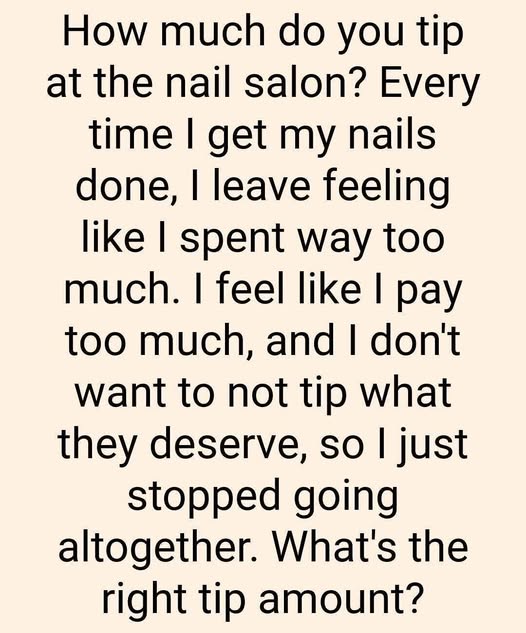
The question of how much to tip is where hesitation most often arises. While there is no universal rule, a general guideline of 15 to 20 percent of the service cost is widely accepted in many regions and aligns nail salon tipping with other personal care industries such as hairstyling and massage therapy. A standard manicure or pedicure typically fits comfortably within this range, while services that demand more time, creativity, or technical complexity often merit tipping at the higher end or beyond. Detailed nail art, custom designs, or lengthy acrylic applications may involve significant planning, steady concentration, and artistic judgment, all of which justify increased gratuity. Some clients prefer to tip a flat amount rather than a percentage, especially for frequent visits, as it provides predictability and ease. Others adjust tips slightly upward for exceptional results or particularly attentive service. Both approaches are acceptable when applied thoughtfully. What matters most is not rigid adherence to numbers, but a tip that reflects awareness of effort, skill, and genuine satisfaction.
Several practical factors can guide a more personalized tipping decision, making the process feel fair rather than awkward. Service quality is central: attentiveness, cleanliness, communication, and the technician’s willingness to listen and adjust all contribute to the overall experience. Time investment is another key consideration, as longer appointments require sustained physical effort and focus. Complexity also matters, particularly when designs or treatments require advanced techniques, specialized tools, or premium products. Client behavior plays a role as well; last-minute requests, changes, or delays may increase the technician’s workload, and a higher tip can acknowledge that added effort. If a service falls short of expectations, many clients choose to tip at the lower end of the customary range rather than skipping it entirely, unless the experience was genuinely unacceptable. Viewing tipping as a spectrum rather than a binary choice allows for nuance, fairness, and mutual respect, helping clients feel more confident in their decisions.
Cultural expectations around tipping can further complicate matters, especially for clients who travel frequently or come from regions where gratuity is uncommon. In some cultures, tipping is minimal or even discouraged, while in others it is deeply embedded in service industries. Nail salons, particularly in countries where tipping is customary, operate within these local norms, and technicians often rely on them when planning their finances. Being mindful of regional expectations can help clients avoid unintentional misunderstandings. When in doubt, observing local practices or politely asking the front desk about salon norms is usually welcomed. Such questions signal consideration rather than ignorance. Clear communication helps bridge cultural differences and ensures that goodwill is conveyed as intended. Over time, this awareness fosters smoother interactions and a sense of ease for both clients and professionals.
Developing a personal tipping strategy can greatly reduce uncertainty, especially for those who visit nail salons regularly. Many clients find it helpful to establish informal guidelines based on service type, frequency, and budget. For example, someone might decide in advance to tip a consistent percentage for routine services and reserve higher gratuities for special occasions, intricate designs, or holiday visits. Loyalty to a specific technician often deepens this approach, as long-term relationships tend to involve mutual understanding and appreciation. Regular clients who tip consistently often enjoy smoother appointments, easier communication, and a sense of being known and valued. Over time, tipping becomes less of a momentary calculation and more of a natural extension of the relationship, supporting a positive and respectful salon environment.
Ultimately, tipping at the nail salon reflects broader values about respect for labor, appreciation for skill, and awareness of shared humanity. It acknowledges that behind every polished nail is a person investing time, effort, and expertise to help someone feel confident and cared for. While percentages and guidelines provide helpful structure, the spirit of tipping lies in recognition rather than calculation. A thoughtful gratuity reinforces professionalism, encourages high standards, and contributes to a healthier salon culture where technicians feel seen and motivated. For clients, it fosters trust, continuity, and a sense of participation in a respectful exchange. In this way, tipping becomes more than a social expectation; it becomes part of the experience itself, quietly shaping the atmosphere of dignity, care, and mutual appreciation that defines a truly good salon visit.
sure, but as a practical and human way to honor skilled labor in an industry built on personal care.