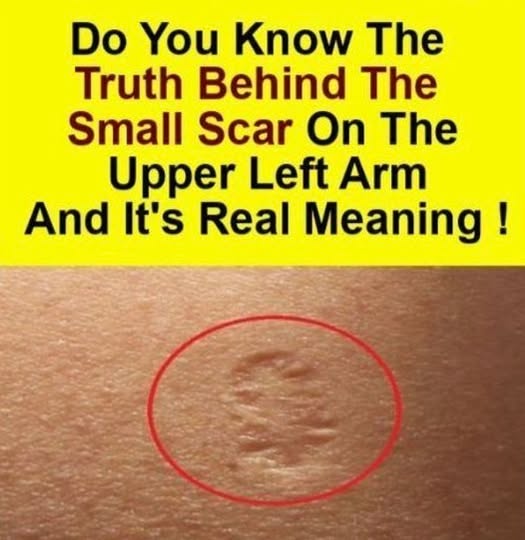
I remember, vividly, the first time I noticed the small circular scar on my mother’s upper arm. It sat high near her shoulder, a mark that seemed deliberate yet quiet, commanding attention without demanding it. Even as a child, I sensed its difference—it was precise, patterned, and meaningful, unlike any scrape or bruise I had ever seen. The ring of small indentations encircled a slightly larger mark in the center, forming a symbol that seemed both intentional and mysterious. At the time, I did not understand its origin, nor did I grasp the extraordinary historical story it carried. Yet, even in my limited awareness, I understood that this was more than skin-deep; it held a narrative I had not yet been told, a relic of a world shaped by fear, disease, and human resilience. I wondered, silently, what this scar could mean, what story it held, and why it seemed so important to preserve itself on her skin.
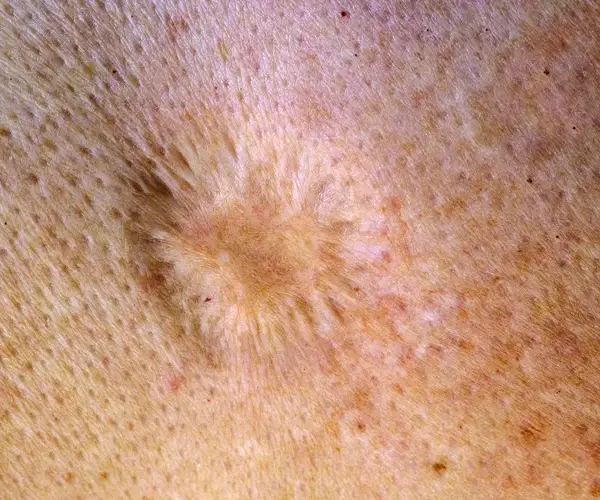
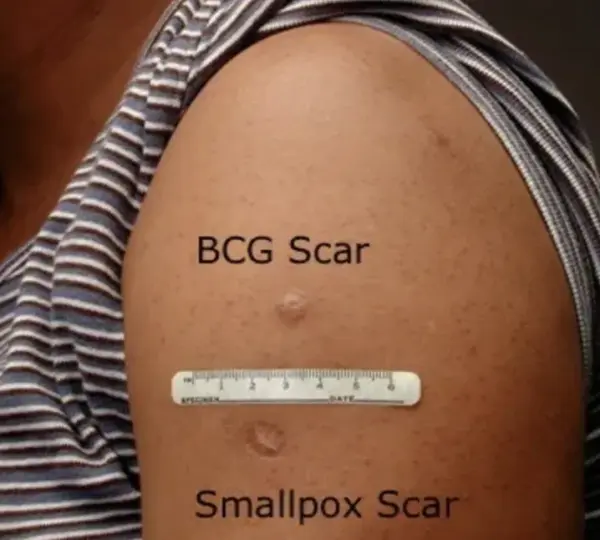
Years passed, and the memory faded into background thought, as childhood curiosities often do. Then one summer, an unexpected encounter revived that early fascination. Helping an elderly woman off a train, I glimpsed her arm, and there it was: the exact same circular scar in the exact same location. Recognition flooded me immediately. This was not unique to my mother—it was shared. The scar was not an accident or personal anomaly; it was a historical marker, a sign of something that had affected generations. I called my mother, recounting the coincidence. She laughed and reminded me that she had explained it countless times: the mark came from the smallpox vaccine. That simple explanation opened a doorway into a vast historical narrative, connecting personal memory with collective history, and revealing how human ingenuity had triumphed over one of the deadliest diseases humanity had ever known.

Smallpox, caused by the variola virus, was once a scourge of humanity. Its symptoms began subtly—fever, fatigue, and body aches—but rapidly escalated into a disfiguring rash that covered the body. Fluid-filled pustules scabbed over, often leaving permanent scars, particularly on the face. Mortality rates were staggering: approximately three in ten people infected died, while survivors were left bearing the physical remnants of the disease for life. Entire communities feared outbreaks, as the virus could decimate families and towns within weeks. For centuries, smallpox shaped human society, influencing migrations, wars, and demographic changes. Its effects extended beyond immediate health consequences, leaving scars on families, economies, and collective psyche. It was a disease that demanded both fear and action, and humanity responded with determination. The arrival of the smallpox vaccine was a turning point in this story, an intervention that combined science, perseverance, and social cooperation to push back a virus that had haunted generations.
Unlike modern vaccines, which are often delivered as a single injection into muscle tissue, the smallpox vaccine was applied using a specialized technique. A two-pronged needle dipped in vaccinia virus—a relative of the variola virus—was used to puncture the skin multiple times. These tiny punctures introduced the vaccine into the dermis, triggering a localized immune reaction. Within days, a small raised bump appeared at the site, developing into a vesicle that eventually broke open, scabbed over, and healed, leaving a circular scar with tiny peripheral marks from the needle punctures. The process, which took weeks, was a visible signal that the body’s immune system was learning to recognize and combat smallpox. While the blistering and scabbing might have seemed concerning at the time, it represented a triumph of prevention—a controlled infection designed to protect against a far more deadly natural one. In this sense, the scar was a badge of survival, a permanent reminder of humanity’s capacity to harness biology for protection and longevity.
By the mid-20th century, routine vaccination programs were widespread in the United States and other nations, making the smallpox scar an almost universal mark for those born before the 1970s. Millions of children received the vaccine, each acquiring a permanent record on their arm, a silent but powerful confirmation that they had been shielded from one of history’s most lethal pathogens. The marks were so ubiquitous that, for a generation, the sight of a smallpox scar was common, yet carried immense meaning. It was a personal emblem of global public health achievement. Each scar represented a carefully orchestrated system of research, education, and vaccination campaigns that spanned continents. Seeing someone else with the same circular mark instantly connects one to a lineage of collective protection and resilience, linking individuals through shared experience of scientific innovation and societal commitment to health.
Today, as smallpox remains eradicated and newer generations grow up without ever encountering the disease or the vaccination, these scars have taken on symbolic meaning beyond the practical. They serve as reminders of human vulnerability, the importance of preventative medicine, and the transformative power of coordinated action. The scars are not just remnants of a needle prick; they encapsulate the historical arc from helplessness to protection, from fear to security, from a world constantly threatened by disease to one safeguarded by science. Each mark carries a story, merging personal memory with a broader human achievement. They remind us that medical advancements are not abstract victories—they are tangible, lived experiences that leave marks on both the body and history. In noticing these scars today, whether on a loved one or a stranger, we are reminded that the comfort and safety of contemporary life were earned through decades of vigilance, innovation, and shared human endeavor.
Looking back on the first childhood curiosity that sparked this reflection, I now see it with greater depth. What once seemed like an odd, symbolic mark on my mother’s arm is, in reality, a chapter of human triumph. The smallpox vaccine scar is a visible testament to the power of human cooperation, the triumph of science over fear, and the resilience of communities committed to protecting the vulnerable. It is a reminder that public health is not only about statistics or policies—it is about lives, futures, and the tangible results of collective action. Every glance at that tiny circle brings history into the present, preserving the memory of one of humanity’s most significant victories and reminding us that even the smallest marks can carry profound meaning for generations.