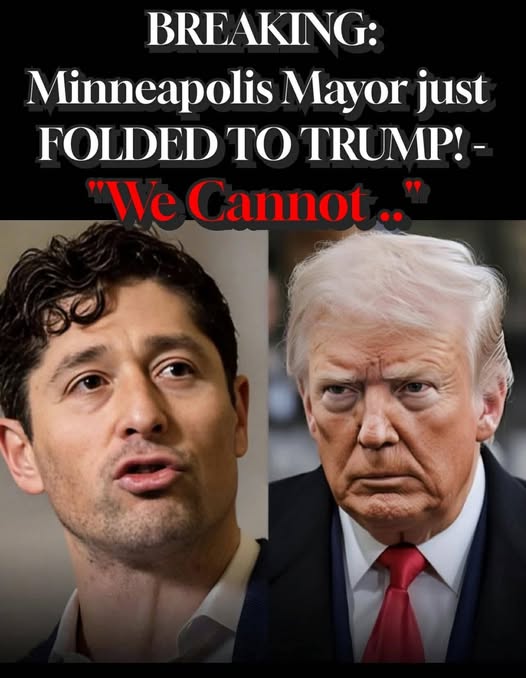
Minneapolis finds itself in a state of heightened tension as federal immigration enforcement operations escalate amid protests, legal challenges, and deepening mistrust between local leaders and federal authorities. Mayor Jacob Frey has repeatedly described the current conditions as unsustainable, pointing to the growing presence of thousands of federal agents — including ICE and Homeland Security officers — deployed in the city in recent weeks. This federal surge, intended to support immigration crackdowns and respond to enforcement priorities, has instead fueled unrest and sharpened conflicts over safety, civil rights, and the proper role of outside law enforcement within local communities. Local leaders say they did not request this level of federal engagement and argue it is overwhelming Minneapolis’s own capacity to maintain order.
The latest flashpoint underscoring these deep divisions was a federal officer‑involved shooting in north Minneapolis that followed only days after a separate fatal shooting of a woman by an ICE agent. Local officials, including Mayor Frey, openly rejected the federal narrative that agents acted in self‑defense, calling that characterization “bulls**t” after reviewing video footage they say contradicts official claims. Frey has argued that the ongoing presence and actions of federal agents have “not made our city safer” and instead “created chaos and distrust” among residents, particularly within immigrant communities and communities of color.
Frey’s comments reflect broader frustration within city leadership over what they see as a disconnect between federal priorities and local realities. Minneapolis currently has a relatively small force of local police already stretched thin, while an estimated 2,000–3,000 federal agents operate in the area, contributing to a sense of dual authorities and mixed messages on the ground. Frey has warned that without clearer coordination and de‑escalation, the potential for further violence and clashes between protesters, residents, and law enforcement will only grow. He has urged peaceful protest and avoided calls for escalation even as he condemns federal tactics.
The city’s response has also taken a legal turn. Minnesota officials, including Frey and Governor Tim Walz, are under investigation by the U.S. Department of Justice for allegedly conspiring to impede federal immigration agents — a rare and serious claim that critics characterize as federal overreach and retaliation for political opposition. The probe, rooted in a Civil‑War era statute, has drawn national attention and intensified debates over free speech, state authority, and federal enforcement power. Frey has stated he will not be intimidated by the investigation, framing it as an attempt to suppress his advocacy for Minneapolis residents.
On the judicial front, tensions have played out in the courts as well. A federal judge recently imposed significant limits on the tactics federal agents can use against protesters, restricting the use of pepper spray, arrests, and other actions unless demonstrators are suspected of interference or criminal conduct. The Justice Department has appealed that ruling, signaling continuing legal contention over how federal agents may operate in Minnesota.
Residents and grassroots groups remain deeply divided. Many in Minneapolis and across Minnesota view the federal enforcement surge and agent conduct — especially in the wake of deadly and nonfatal shootings — as excessive and harmful. Others argue that federal action is necessary to address crime and immigration enforcement challenges. The resulting environment feels, to many, like an escalation rather than resolution: protests continue, public safety concerns rise, local officials walk a fine line between condemning violence and demanding accountability, and the city’s social fabric feels strained under competing pressures.
For Mayor Frey and other local leaders, the situation’s unsustainability lies in the combination of federal intervention without local request, public safety concerns, rising protest activity, and the legal jeopardy facing elected officials. His message — that local authorities “cannot” thrive under current conditions and that peace hinges on de‑escalation and dialogue — speaks to the broader national conversation about the balance between federal power, community autonomy, and how cities respond to deeply polarized issues.