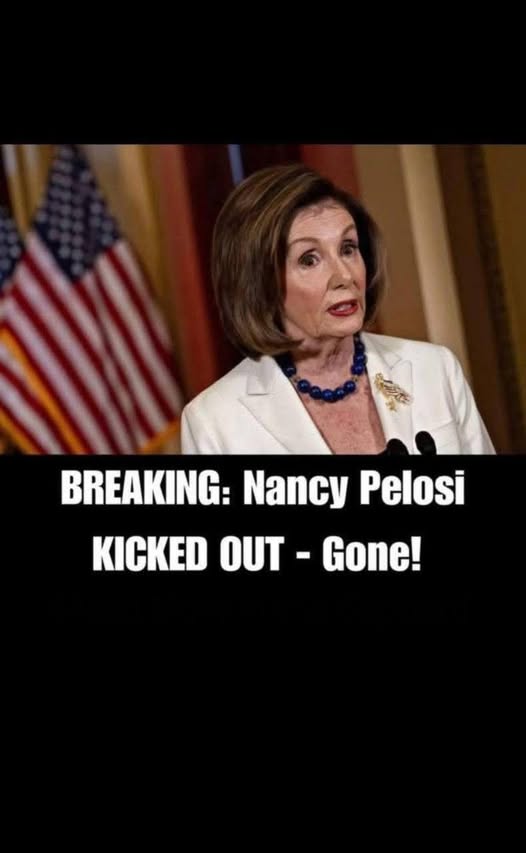
What began as another skirmish in the long-running battle over immigration reform and state autonomy took a dramatic legal turn when the U.S. Department of Justice under former President Donald Trump delivered a sharply worded ultimatum to House Speaker Nancy Pelosi and other California officials. What was previously framed by state leaders as spirited political opposition to federal immigration enforcement quickly became, in the DOJ’s assessment, a potential legal liability. The letter did not delve into the moral debates about immigration policy or the merits of sanctuary protections. Instead, it reframed the narrative entirely: actions taken in the name of “resisting ICE” and protecting undocumented immigrants might violate federal law—not merely express political disagreement. In an instant, what had been political theater in Sacramento and Washington, D.C. began to resemble potential exposure to federal prosecution. The shift was unprecedented in its tone and implications, and its reverberations spread far beyond California.
At the heart of the DOJ’s message was the invocation of the Supremacy Clause of the U.S. Constitution, which establishes that federal law takes precedence over conflicting state laws. By centering the dispute on this constitutional provision, the department made clear that it was not merely arguing policy differences; it was asserting that certain types of state resistance could cross a legal boundary into obstruction of federal authority. Suddenly, mayors, county officials, the state attorney general, and even the governor were not simply political actors making rallying cries. They were targets of a legal framing that put their words and internal policy decisions under potential scrutiny. Once-obvious political rhetoric—tweets, fundraising emails, symbolic public statements—could be interpreted as evidence of intent to interfere with federal enforcement. To critics, the move was heavy-handed and aggressive; to supporters within the DOJ, it was a necessary defense of constitutional order. Regardless of perspective, it marked a clear escalation in how the federal government was addressing sanctuary-state measures.
For Pelosi, California Governor Gavin Newsom, and their allies, the stakes jumped rapidly. What had been a matter of state-level policy disagreement and political positioning became a confrontation with federal legal authority. The DOJ’s letter explicitly warned that obstructing federal immigration agents, or encouraging others to do so, could subject state officials to legal consequences. In practical terms, this meant that internal memos advising law enforcement on how to limit cooperation with Immigration and Customs Enforcement (ICE), publicly announced restrictions on data-sharing, or local ordinances refusing to honor certain federal requests were no longer purely policy choices but potentially prosecutable actions. Officials who had grown accustomed to invoking moral arguments and political defense strategies were now forced to engage with constitutional jurisprudence, criminal statutes, and federal enforcement threats. The process blurred the lines between political advocacy and legal jeopardy, demanding a recalibration of tactics from state leaders.
The narrative shift crafted by the Justice Department was deliberate. By framing the conflict as a constitutional test, the DOJ effectively moved the dispute off opinion pages and cable news panels and into the realm of constitutional law. Instead of Washington defending federal enforcement actions against criticism, the focus turned to whether California’s leaders could lawfully adopt policies that insulated certain individuals from federal deportation efforts. The department’s position was clear: if states were allowed to openly nullify or obstruct federal law they opposed, the very foundation of the Constitution’s supremacy hierarchy could begin to unravel. In this view, a fractured legal landscape where state directives directly contradict federal enforcement was not a victory for local autonomy but a threat to the cohesiveness of the national legal order.
For decades, sanctuary policies have been championed by local governments and state leaders as tools to protect vulnerable immigrant populations, foster community trust in policing, and allocate local resources according to community priorities rather than federal mandates. California, in particular, has been at the forefront of these policies, enacting a series of laws and directives designed to limit cooperation with federal immigration authorities and protect undocumented residents from certain federal actions. Supporters argued that such approaches made communities safer by encouraging cooperation with local law enforcement without fear of immigration consequences. They maintained that sanctuary measures were moral imperatives and essential for public safety and human dignity. Yet, from the DOJ’s perspective under the Trump administration, these policies did more than advocate for a different approach—they crossed a line into active interference with federal immigration enforcement operations.
As the letter circulated and analysis began in earnest, legal scholars and commentators weighed in from all sides. Some argued that the DOJ’s threat was unprecedented and politically charged, noting that the Constitution protects considerable leeway for states to prioritize their resources and choose how to engage with federal programs. Others countered that while states have autonomy in certain policy arenas, immigration enforcement has historically been viewed as a core federal responsibility, and direct obstruction of federal agents could violate statutes such as 8 U.S.C. § 1324 and others related to impeding federal operations. Within this debate lay not only questions of constitutional interpretation but also broader issues about the balance of power in a federal system and the acceptable limits of dissent when dealing with enforcement agencies.
For Pelosi and her allies, the DOJ’s framing presented a formidable rhetorical and legal challenge. Political leaders are accustomed to defending policy choices on grounds of public safety, community values, and economic considerations, but defending against allegations of impeding federal authority required a different strategy altogether. Statements that previously energized supporters now needed careful calibration to avoid being read as evidence of intent to obstruct. Fundraising appeals that framed California as resisting an overreaching federal government had to be quickly checked against legal interpretations. Strategists and attorneys working for state leaders found themselves navigating a minefield where every phrase could carry legal weight. In speeches, interviews, and official correspondence, the language shifted from abstract values to precise legal terms as leaders sought to clarify that their policies did not, in fact, rise to the level of obstruction or interference as defined by federal law.
The conflict also triggered deeper reflection about broader political polarization and the role of law enforcement in a democratic society. Sanctuary policies have long been a flashpoint in debates over immigration policy, civil rights, and public safety. For supporters, these measures embody compassion, inclusion, and prioritization of local control. For critics, they represent defiance of the rule of law and an abdication of shared national responsibility. The DOJ’s ultimatum intensified these arguments by raising the possibility that policy disagreements could result in legal accountability for elected officials. It added a layer of personal and professional risk to what had previously been framed as a legitimate policy choice. Suddenly, political calculations had to factor in potential criminal exposure, not merely electoral consequences.
The public’s reaction mirrored the complexity of the issue. In California and beyond, constituents rallied behind their leaders, framing the federal demand as an overreach and a threat to democratic expression. Others applauded the DOJ’s firmness, arguing that sanctuary policies undermined federal immigration law and needed definitive challenge. The partisan dynamics of the moment ensured that interpretations fell along ideological lines, with each side drawing on its own narratives about fairness, law, and justice. For many Californians, the letter became a symbol not only of federal power but of political rivalry writ large. In the midst of heated public debate, the underlying legal questions risked being overshadowed by political posturing, making it harder for neutral analysis to take hold.
Meanwhile, legal scholars continued to unpack the implications. Constitutional experts pointed out that the Supremacy Clause has long been understood to mean that federal law takes precedence when conflicts arise, but the mechanisms for resolving those conflicts are rarely as direct as criminal threats to state leaders. Historically, such disputes have been settled in federal courts, where judges interpret the Constitution and statutory boundaries. The DOJ’s letter, however, suggested that state actions could cross a threshold into prosecutable conduct, not merely civil conflict. This assertion raised concerns about the appropriate role of the executive branch in policing policy disagreements and the potential chilling effect on state-level experimentation with alternative social policies. Some commentators warned that blurring the lines between political opposition and legal liability could deter robust policy debate, a cornerstone of democratic governance.
The escalation also had practical implications for ongoing legal battles. California’s sanctuary laws were subject to existing lawsuits challenging their constitutionality or legality, and the DOJ’s new framing added complexity to those cases. Judges overseeing these disputes would have to consider not only the text of the laws but the broader constitutional context and the government’s interpretation of what constitutes interference. Attorneys for both sides prepared for extended litigation as precedent, historical practice, and statutory interpretation were likely to shape rulings. The federal threat did not fundamentally change the legal landscape, but it sharpened the focus on how courts might balance state authority with federal supremacy in the context of immigration enforcement.
Amid the heightened rhetoric and legal maneuvering, everyday communities on both sides of the debate grappled with what the confrontation meant for their lives. For immigrant advocates, the conflict underscored the vulnerability of communities already navigating fear and uncertainty. Sanctuary policies had been engineered to build trust between residents and local law enforcement; the DOJ’s ultimatum risked eroding that trust and heightening anxiety. For law enforcement officers who work with both local communities and federal partners, the dispute complicated relationships and operational protocols. Officers tasked with upholding local ordinances found themselves caught between competing directives and the possibility of legal scrutiny. Across municipalities, mayors and county supervisors had to reassess policy implementation while responding to constituent concerns about safety and civil liberties.
Political leaders also faced internal pressures. In California’s legislature and city councils, discussions about the potential impact of the DOJ’s position influenced strategy and messaging. Some leaders called for greater clarity from legal authorities, urging bipartisan efforts to resolve the dispute through judicial channels rather than executive threat. Others pushed back against any perceived federal intimidation, reinforcing solidarity with sanctuary principles. Within the broader Democratic Party, the confrontation became another example of federal-state tensions that have defined recent political discourse. National conversations about immigration reform, border security, and executive power were infused with references to the California dispute, amplifying its significance far beyond the state’s borders.
By the time the initial shock had passed, it was clear that the DOJ’s ultimatum had transformed the sanctuary-state debate into a constitutional confrontation with lasting implications. The dispute illuminated fault lines in American federalism and raised urgent questions about how far states can go in resisting federal law without incurring legal consequences. It highlighted the complex interplay between political ideology and legal authority, forcing leaders, citizens, and judges to confront tough questions about shared governance in a diverse republic. For Pelosi, Newsom, and others caught in the crossfire, the moment was a reminder that political advocacy and legal accountability are sometimes closer than they appear—especially when constitutional questions about power and authority are at stake.
In the end, the clash between California’s sanctuary policies and the DOJ’s insistence on federal supremacy became more than a policy disagreement. It became a test of how America navigates competing principles of autonomy and unity, dissent and obedience, local innovation and national cohesion. Whether resolved through courts, legislation, or continued political debate, the confrontation underscored that in a constitutional democracy, the rule of law must be carefully balanced with the right to dissent and the imperative of shared national purpose. The Trump DOJ’s ultimatum did not settle those questions, but it thrust them into the center of public life, demanding attention and dialogue in equal measure.