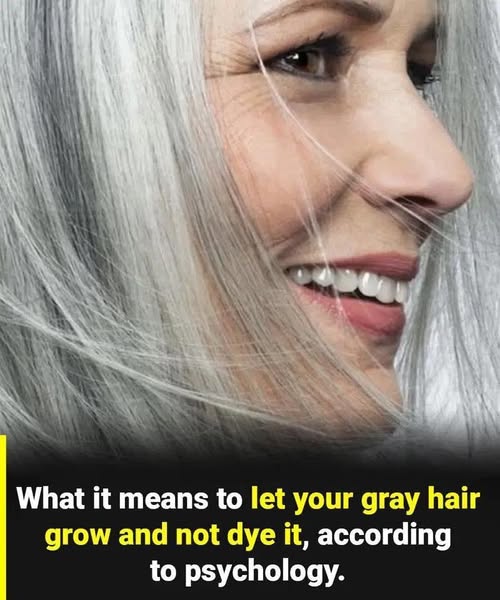
Allowing gray hair to grow naturally has evolved from a simple cosmetic choice into a powerful symbolic act that reflects self-awareness, personal growth, and a shifting relationship with time. For decades, gray hair was culturally framed as a flaw to conceal—a visible marker of aging that threatened perceived value, attractiveness, and relevance. Society, advertising, and popular media reinforced the idea that youth equated to social and professional worth, while aging demanded correction or camouflage. Choosing to forgo hair dye, therefore, can feel revolutionary. Psychologically, it often arises during periods of introspection, when individuals reassess their relationship with external expectations and seek alignment with internal values. Rather than signaling neglect or resignation, letting gray hair show can signify acceptance, authenticity, and a deliberate refusal to prioritize societal approval over self-integrity.
Hair functions as a central element of personal identity and social signaling. The way individuals style or color their hair has long been a vehicle for controlling perceptions of age, vitality, and desirability. Opting to embrace gray hair often coincides with a deeper process of redefining identity—an exploration of self beyond social validation. Psychologists observe that such transformations are common during midlife, yet they can occur at any stage when values or self-perceptions shift. Choosing natural gray hair sends a message of autonomy: self-worth becomes internally anchored rather than contingent upon external approval. This decision does not imply indifference to appearance, but rather a reorientation where physical traits are secondary to authenticity and emotional coherence.
Emotionally, ceasing hair dye routines can reduce anxiety and pressure, creating a sense of liberation. Maintaining artificially colored hair requires constant upkeep, reminding individuals that aging is a problem to be fixed. Letting hair grow naturally interrupts this cycle, fostering emotional relief and authenticity. Many describe feelings of lightness, calm, and alignment after embracing their natural gray. The psychological shift mirrors a broader acceptance of impermanence, highlighting that change is inevitable, meaningful, and to be integrated rather than resisted. Gray hair thus becomes a visible record of experience and resilience, reframing age markers as symbols of lived life rather than loss or decline.
Socially, embracing natural gray hair challenges entrenched norms, particularly for women. While male gray hair is often valorized as distinguished or authoritative, women historically face intense pressure to conceal signs of aging. Psychologically, resisting this expectation is an act of empowerment, requiring courage to confront potential judgment or diminished visibility. Successfully navigating this decision strengthens self-trust, confidence, and a willingness to assert personal values. Over time, the act of embracing gray hair can influence broader behaviors, including boundary-setting, decision-making, and self-expression, demonstrating how an aesthetic choice can intersect meaningfully with personal growth and autonomy.
Allowing gray hair to remain visible also reflects a transformed relationship with time and aging. Modern culture promotes the illusion that age can be postponed or controlled, fostering dissatisfaction as the body inevitably changes. Accepting gray hair represents a shift toward realistic self-compassion, acknowledging that the passage of time is a partner in life, not an enemy. Individuals embracing this perspective cultivate resilience, patience, and presence, viewing each strand of gray as a testament to lived experience. Gray hair becomes less a symbol of decline and more a marker of wisdom, endurance, and life’s continuity.
Ultimately, the psychological significance of embracing gray hair lies in authenticity, self-alignment, and courage. It is not a universal imperative—many continue to color their hair joyfully—but for those who let it grow naturally, the choice embodies a readiness to be seen as they truly are. In a society that equates youth with worth, the act is both a personal and cultural statement: value does not fade with age; it deepens. Gray hair reflects self-knowledge, lived experience, and the bravery required to inhabit one’s evolving identity without apology, showcasing emotional maturity, personal integrity, and the quiet power of self-acceptance.