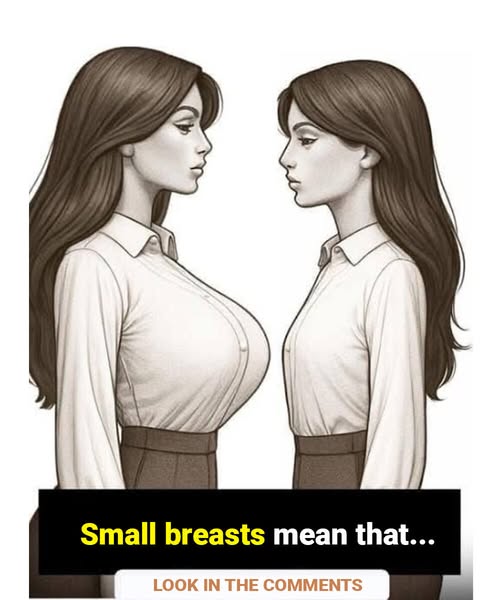
Breast size has long been surrounded by curiosity, judgment, and cultural storytelling, often carrying meanings far beyond its biological function. From media portrayals to casual conversation, breasts are frequently treated as indicators of femininity, attractiveness, or even health. Scientifically, however, breast size is primarily shaped by a combination of genetics, hormonal fluctuations, age, body fat distribution, and life stages such as puberty, pregnancy, and menopause. Estrogen plays a central role in breast development, but its presence or balance cannot be accurately measured by appearance alone. A woman with smaller breasts can have completely normal hormone levels, just as a woman with larger breasts can experience hormonal imbalances. The idea that breast size reflects internal health is a cultural assumption rather than a medical reality, one that persists largely because visible traits are easier to judge than invisible biological processes. Understanding this distinction is essential for separating myth from science and reducing the unnecessary anxiety many women feel about their bodies.
Health itself is a far more complex system than any single physical characteristic can represent. Hormonal health depends on intricate interactions between the endocrine system, metabolism, stress response, sleep patterns, nutrition, and overall lifestyle. Estrogen, progesterone, testosterone, cortisol, insulin, and thyroid hormones all interact continuously, influencing energy levels, mood, fertility, immune function, and long-term disease risk. Breast size is influenced by some of these hormones, particularly estrogen, but it is not a reliable marker of whether those hormones are balanced or functioning optimally. Two women with similar hormone levels may have very different body shapes due to genetics and fat distribution. Judging wellness based on breast size oversimplifies biology and reinforces harmful stereotypes that equate appearance with value or health. True indicators of hormonal balance are found in consistent menstrual cycles, stable energy, healthy skin and hair, emotional regulation, and overall physical resilience—not in measurements taken from the outside.
Research has occasionally explored correlations between breast size and certain health conditions, but these findings are often misunderstood or taken out of context. Some studies have observed that women with larger breasts may show higher rates of conditions such as type 2 diabetes or metabolic syndrome. Importantly, these associations are not caused by breast size itself. They are typically linked to overall body weight, fat distribution, and insulin resistance. Breast tissue contains both glandular tissue and fat, and in many individuals, larger breasts simply reflect a higher proportion of body fat. This does not mean that breasts are a risk factor, but rather that they are part of a broader pattern of body composition. Focusing on breast size instead of underlying factors like diet, physical activity, and metabolic health distracts from what truly matters. It also risks stigmatizing natural body diversity and reinforcing fear-based narratives around women’s bodies.
Every woman’s body develops according to a unique blueprint shaped by heredity and lived experience. Breast size can change over time due to weight fluctuations, pregnancy, breastfeeding, hormonal contraception, aging, and menopause. These changes are normal and do not automatically signal improvement or decline in health. Small breasts are not a sign of hormonal deficiency, just as large breasts are not proof of hormonal excess. Bodies adapt to life stages in different ways, and variation is the norm rather than the exception. When women compare themselves to narrow ideals or interpret natural differences as medical problems, it can undermine self-esteem and distort body awareness. Emphasizing respect for natural variation helps shift the focus away from appearance-based judgments and toward functional well-being, encouraging women to listen to their bodies rather than measure them against unrealistic standards.
Supporting hormonal health is less about altering physical traits and more about nurturing the systems that regulate balance from within. Consistent nutrition, adequate protein and healthy fats, regular movement, sufficient sleep, and stress management all play crucial roles in endocrine function. Chronic stress, poor sleep, and extreme dieting can disrupt hormonal rhythms far more significantly than any natural variation in breast size. Some people explore natural remedies such as herbal teas, adaptogenic plants, or supplements to support hormonal well-being. While certain approaches may offer benefits, they should be used thoughtfully and ideally under medical guidance, as hormones are sensitive and complex. There is no universal remedy that reshapes the body into a “healthier” form, because health itself does not have a single shape. Sustainable habits, not appearance-focused interventions, are what support long-term balance.
Ultimately, breast size does not define health, femininity, or worth. These qualities are shaped by how a person feels, functions, and lives within their body, not by how closely they resemble cultural ideals. When women are encouraged to view their bodies as systems to care for rather than objects to evaluate, confidence and well-being naturally grow. Understanding the relationship between breast size and hormonal health helps dismantle persistent myths and replaces them with a more compassionate, evidence-based perspective. True wellness is reflected in vitality, resilience, and self-respect, not in measurements or comparisons. By honoring the body’s natural diversity and focusing on care rather than correction, women can cultivate both physical health and a healthier relationship with themselves.