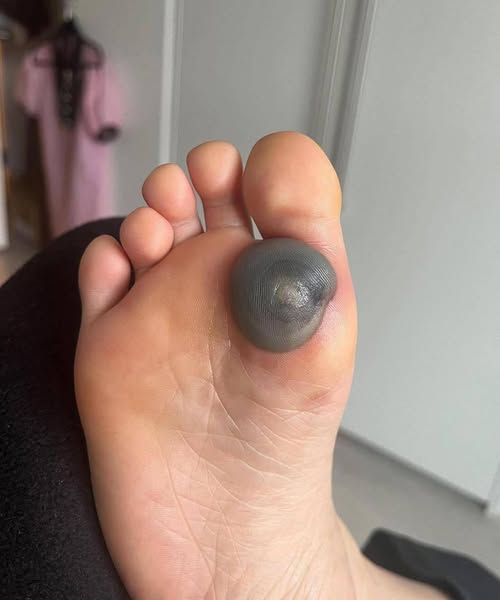
Seeing a sudden, dark blister filled with blood on your child’s skin is an alarming experience for any parent. One moment, their skin appears completely normal, and the next, a swollen, purplish-black bubble emerges, looking almost like a storm trapped beneath the surface. It’s natural to feel panic and uncertainty, torn between wanting to remove it and fearing that doing so could cause more harm. In these moments, understanding what you’re looking at and how to respond becomes crucial, not only to ensure proper healing but to maintain your child’s comfort and prevent infection.
Medically, this phenomenon is known as a subepidermal hematoma, more commonly referred to as a blood blister. Unlike ordinary blisters that contain clear fluid, blood blisters form when small blood vessels beneath the skin rupture without breaking the skin itself. Blood seeps into the space under the epidermis, creating a tense, raised pocket. Essentially, it is a bruise that has risen to the surface yet remains protected under intact skin. While dramatic in appearance, the body is actively isolating and beginning to heal the injury, demonstrating a remarkable natural defense system at work.
Blood blisters often result from minor physical trauma. Common causes include fingers caught in doors, toes compressed by tight shoes, or repeated friction from tools, sports equipment, or even playground apparatus. In children, such injuries can happen in an instant: a sudden fall while running, gripping bicycle handlebars too tightly, or bumping into furniture. Because the skin remains unbroken, the body naturally seals the blood within, preventing exposure to bacteria while initiating healing. Understanding these triggers helps parents contextualize the injury and reduce unnecessary worry.
Blisters in more sensitive areas, such as the mouth, can be particularly concerning. Known as angina bullosa haemorrhagica, these can appear on the tongue, cheeks, or roof of the mouth. Triggers often include accidental biting, irritation from dental appliances, or eating very hot or hard foods. Although the visual impact is startling—deep red or purplish bubbles against soft tissue—the underlying cause is usually minor trauma rather than infection or a systemic problem. Awareness of these patterns reassures parents that many blood blisters, though dramatic, are self-limiting.
The cardinal rule in treating blood blisters is not to pop them. While the temptation to relieve pressure or remove the fluid is understandable, piercing the blister significantly raises the risk of infection. The overlying skin acts as a natural protective barrier, keeping bacteria out while the body absorbs the trapped blood. Instead, care should focus on hygiene, protection, and gentle observation. Washing the area with mild soap and water, patting it dry, and covering it loosely with a breathable bandage or padded dressing can prevent further friction and allow the blister to heal naturally. Over one to two weeks, the blister’s color will darken, gradually fade, and the skin may peel away to reveal healed tissue beneath.
Parents should also pay attention to patterns that might signal a more serious concern. Recurrent or unexplained blisters, clusters of purple spots (petechiae), or frequent bruising could indicate underlying health issues such as clotting disorders, platelet deficiencies, or circulatory problems. Children with conditions like diabetes may experience slower healing, turning what would normally be a minor blister into a more serious complication. Prompt evaluation by a pediatrician in such cases is critical to rule out underlying pathology and to ensure that the child receives appropriate guidance and care.
Certain warning signs require immediate medical attention. If a blood blister shows increasing warmth, red streaks radiating outward, yellow or green fluid, or if the child develops severe pain or fever, these may indicate infection or systemic response to injury. While a single, isolated blood blister on the hand or foot is often the result of minor, unnoticed trauma from the previous day, multiple blisters or unexplained bruising should never be ignored. Pediatricians can perform tests to identify clotting abnormalities, provide safe drainage if necessary, and advise on ongoing care.
Ultimately, a blood blister is both a visual shock and a demonstration of the body’s resilience. Most heal naturally with patience and gentle care, leaving behind nothing more than a brief scare. However, they also serve as reminders to parents to observe, protect, and respect the body’s fragile systems. Each sudden appearance teaches attentiveness, encouraging careful monitoring for signs of infection or underlying health concerns while emphasizing that even dramatic injuries often resolve without lasting harm. Observing, not interfering, is the best way to support your child’s recovery.
By responding calmly, maintaining cleanliness, and providing comfort, parents ensure that the injury heals safely and that the child feels secure. These situations, while frightening, offer opportunities to teach children about body awareness, resilience, and the importance of reporting injuries. With time, proper observation, and gentle care, the blister will fade, reinforcing that the body can repair itself remarkably well when left to its natural processes, and reminding parents that vigilance and patience are the most effective tools in protecting their children’s health.