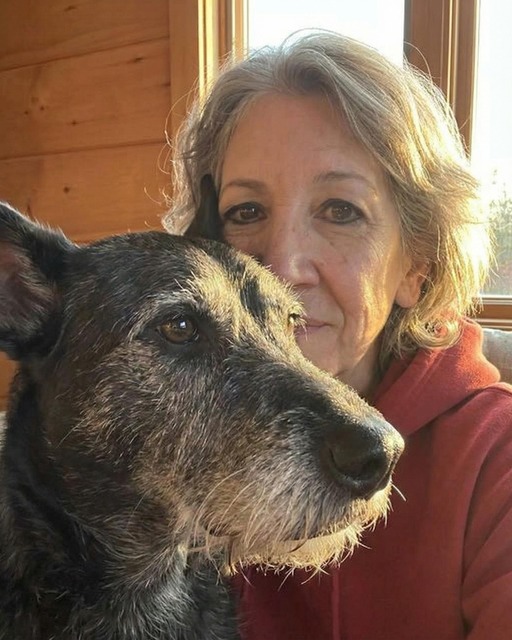
The decision to adopt Daisy, the oldest and most fragile dog in the municipal shelter, was not made lightly. I knew she had only a few weeks to live, yet the moment I saw her curled in the farthest kennel, her frail body pressed against the metal bars, I felt an unexplainable pull. There was a quiet intelligence in her eyes, a soft awareness that seemed to reach through the cold concrete floor and into the deepest parts of my heart. My husband, Daniel, hesitated. He argued, gently at first and then firmly, that we were not equipped to care for a dying dog, that our home was too orderly, our lives too predictable, for such a challenge. But something inside me stirred, a long-suppressed longing to nurture and care for life in its most vulnerable form. I signed the adoption papers, and for the first time in years, I felt a mixture of purpose, fear, and hope.
Our home, despite outward appearances of stability, had been quiet in ways that hinted at deeper gaps. Daniel and I had been married for eleven years, and while our life seemed steady—a modest house, reliable jobs, neighbors we waved to politely—inside, something vital had eroded. We had spent nearly half of our marriage trying to have children. The early years had been filled with cautious excitement, dreaming about baby names, debating nursery paint colors, imagining who our child might resemble, how their laughter might echo through the rooms. But hope, stretched thin over time, sharpens into something heavier, and eventually, reality could no longer be avoided. After countless doctor visits, tests, and gentle, empathetic explanations from medical professionals, we accepted what we had avoided acknowledging for years: we could not have children. The unspoken grief settled between us, and our conversations became careful, minimal, almost robotic. Daniel buried himself in work, and I filled our days with errands and obligations, avoiding the silence that had once been comfortable but now echoed with absence.
Introducing Daisy into this fragile equilibrium changed everything. She was twelve years old, her fur thin and patchy, her muzzle frosted white, and she moved with careful, deliberate motions that spoke to a life lived fully yet now waning. Her presence was unassuming, yet it filled the rooms in ways we had forgotten were possible. The routines became grounding: morning medications wrapped in peanut butter, short walks that allowed her to sniff each blade of grass with reverent attention, afternoons in sunlight where she would nap while I spoke to her about mundane things—my work, the weather, my day—knowing she listened. The act of caring, of being fully present for another living being, became a form of quiet therapy, a reminder that life and love exist even when we feel depleted. Slowly, Daisy’s vitality surprised us. She ate with gusto, her tail wagged at small joys, and her eyes reflected a spark we hadn’t expected in her final weeks.
Daniel’s absence during this time was palpable, yet Daisy’s presence filled the gaps in unexpected ways. While our marriage would ultimately not survive, the lessons learned were profound. Daisy demanded attention, compassion, and patience, qualities that had lain dormant in both of us for years. By showing up consistently, day after day, I began to confront my own fears, disappointments, and grief that had accumulated silently over the years. I realized that love and care do not require permanence to be transformative; the act of devotion, even for a limited time, reshapes both the giver and the receiver. Daisy’s gentle presence encouraged me to live in the present, to find joy in small victories—a sniff, a wag, a sigh of contentment—that otherwise would have gone unnoticed.
As weeks became months, Daisy defied expectations. She stabilized, surprising veterinarians with her resilience. The companionship and unconditional love she offered illuminated what had been missing in our home for years. The routines, the small gestures, the unspoken communications—they reminded me that caring is reciprocal, even when one party cannot express it in words. While Daniel had stepped away, our connection softened, and he eventually called, curious and tentative, asking how the dog was. The conversation, though brief, acknowledged a shared humanity, a recognition of the lessons Daisy had imparted. Through her, I learned the power of presence, the quiet strength of patience, and the profound influence of compassion when applied consistently, without expectation of reciprocation.
Daisy’s final day was serene. I lay beside her, hand on her chest, feeling the steady rhythm gradually slow. When she finally passed, it was peaceful, surrounded by warmth, sunlight, and love. Her passing left a quiet void, yet the house no longer felt hollow. It was imbued with the lessons she had silently imparted: love is active, nurturing is transformative, and presence is the most powerful gift one can offer. In the months that followed, I continued to adopt senior dogs, those often overlooked, understanding that while our time together may be brief, the impact is profound. Daisy taught me that love does not require permanence to change lives; sometimes, all it needs is courage, attention, and an open heart willing to embrace the fleeting, beautiful moments that define the essence of living.