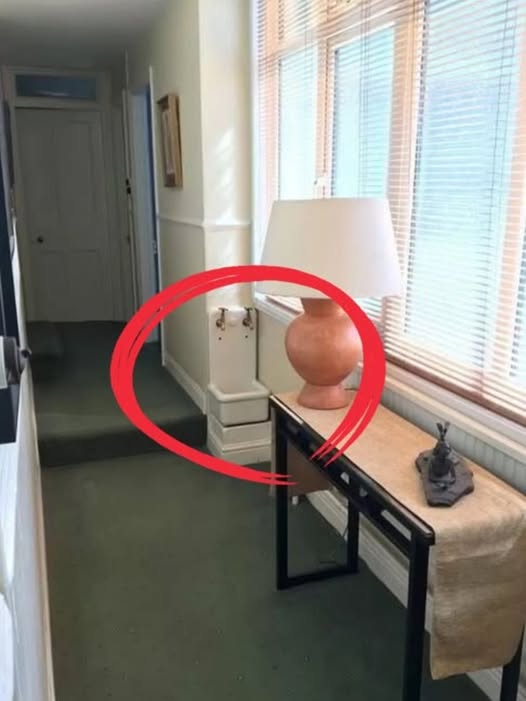
At first glance, a sink installed in the middle of a hallway seems puzzling. Modern homeowners often wonder why such a fixture would exist outside a bathroom or kitchen, tucked into a transitional space. It looks awkward, unnecessary, and even misplaced, leading some to assume it is the result of a strange remodel or previous owner’s eccentric taste. In reality, hallway sinks were once deliberate and practical installations, widely used in homes built during the late 1800s and early 1900s. They reflect a period when indoor plumbing was evolving, hygiene practices were highly visible, and homes were designed with functionality and public health in mind.
During this era, sanitation was becoming a critical concern, but bathrooms were not yet standard on every floor. Placing a sink in a hallway allowed residents and visitors to wash their hands immediately upon entering the home, reducing the risk of spreading germs throughout living spaces. This design choice was especially crucial during outbreaks of contagious diseases like tuberculosis and influenza, when handwashing was emphasized as a first line of defense. By keeping hygiene visible and accessible, hallway sinks acted as both a practical and symbolic tool, underscoring the household’s commitment to cleanliness and modernity.
Another key purpose of hallway sinks was to support household staff. Large homes often included service corridors, where staff needed quick access to water for personal hygiene, cleaning, or managing kitchen and dining duties. By installing sinks in these high-traffic areas, the household maintained efficiency without relying on private bathrooms, which were reserved for family members. Even in smaller homes, these sinks offered an everyday utility that went beyond personal cleanliness, functioning as a convenient tool for chores and tasks that required water throughout the day.
Hallway sinks also served as early “slop sinks,” a practical feature for disposing of dirty water, rinsing cleaning rags, or managing other domestic duties before utility rooms and laundry spaces became common. Their placement near hallways or service areas maximized accessibility and minimized disruption to the family’s private spaces. In a time when plumbing was limited and water access often required careful planning, positioning a sink along a hallway represented an elegant solution to the multiple demands of daily life, merging convenience with practicality.
Today, many homeowners face the decision of whether to remove or preserve these historical fixtures. While some sinks feel out of place in contemporary layouts, others have been creatively repurposed. Hallway sinks can become charming vintage features, plant-watering stations, pet-washing spots, or conversation-starting design elements. By retaining the fixture, homeowners can honor the home’s architectural history and showcase how early 20th-century design balanced hygiene, labor efficiency, and practicality.
Ultimately, the presence of a sink in a hallway is not random or whimsical; it is a testament to an era when home design responded to social norms, public health concerns, and everyday utility. These fixtures reveal the ingenuity of past architects and homeowners, who integrated health, hygiene, and household efficiency into domestic spaces in ways that may seem unusual today but were remarkably clever at the time. Recognizing this history allows modern homeowners to appreciate their old homes in a new light and consider how past innovations continue to inform contemporary design choices.