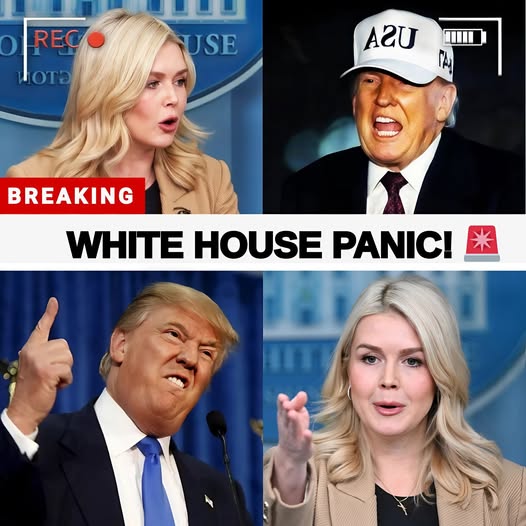
The White House faced mounting scrutiny this week as approval ratings for the administration slipped, highlighting the growing tension between leadership messaging and public perception. National polling averages show a decline of several points, signaling a shift in the political landscape that has prompted both supporters and critics to reexamine expectations. While core constituents remain largely loyal, independents and soft Republicans are reportedly expressing unease, reflecting an electorate increasingly attentive not only to policy outcomes but also to tone, transparency, and consistency in communication. Analysts note that approval fluctuations often correspond less to specific legislative successes than to the perceived behavior of administration officials, with press interactions, rhetoric, and symbolic gestures carrying disproportionate influence. The administration’s strategy of rapid response, combative press briefings, and high-profile announcements has drawn attention for its intensity, reinforcing existing partisan divisions while provoking debate over the role of civility, respect, and accountability in governance. This period underscores the broader question: how does leadership maintain credibility when public trust is fragile, and controversies compound with each passing news cycle?
Much of the controversy centers on the handling of immigration enforcement, particularly operations conducted in major metropolitan areas where ICE and Customs and Border Protection interventions have generated significant public discourse. Reports of paramilitary-style tactics, including masked agents and the use of tear gas, have been criticized for infringing upon civil liberties, drawing attention from civil-rights advocates and local elected officials alike. The administration insists that operations target individuals with criminal records and dangerous histories, framing the measures as necessary for public safety. Yet visual documentation, viral video clips, and media coverage have amplified public concerns, creating a perception of escalation and normalization of extraordinary measures. The tension illustrates the difficulty of balancing law enforcement objectives with community trust, highlighting the broader challenges facing federal agencies in urban environments. Public discourse surrounding these operations has become a flashpoint, with debates extending beyond legal interpretation to questions of morality, proportionality, and accountability. How leadership communicates rationale, anticipates backlash, and coordinates with local authorities has emerged as a key determinant of political and reputational outcomes.
Economic messaging has similarly become a focal point of scrutiny, as administration officials make ambitious claims about progress on inflation, healthcare costs, and overall economic stability. Assertions that certain prescription drug prices have fallen dramatically or that inflation has been “defeated” have prompted pushback from economists and analysts, who cite inconsistent data and limited implementation of policies as evidence that statements may overstate immediate achievements. While there has been measurable improvement in some price indices and targeted interventions, the broader economic reality remains uneven, leaving households grappling with fluctuating costs in housing, transportation, and essential goods. Critics argue that overly confident messaging risks eroding credibility, particularly among voters who perceive a disconnect between official statements and personal experience. Supporters counter that aspirational claims signal optimism and demonstrate proactive engagement with complex policy challenges, emphasizing negotiation and strategic planning as evidence of leadership competence. The juxtaposition of ambition and measurable impact highlights the ongoing struggle to align narrative with reality, a tension that increasingly shapes public perception and influences electoral prospects.
Questions regarding the integrity of electoral processes and governance further intensified following remarks that suggested the future necessity of elections could be reconsidered under the administration’s continued tenure. While officials attempted to frame these statements as jokes, humor in the context of democratic norms carries weight and has raised alarms among scholars, opposition voices, and civil society observers. The episode demonstrates the fragility of institutional trust and the interpretive power of language, illustrating how even facetious commentary from high office can be perceived as legitimizing challenges to foundational democratic principles. Constitutional experts and political analysts have emphasized that the public’s confidence in fair, transparent, and consistent electoral procedures is central to the stability of governance. Statements that appear to blur lines between jest and policy have prompted calls for clarification and restraint, underscoring the delicate balance between personality-driven communication and institutional responsibility. The administration’s handling of the fallout, including efforts to contextualize remarks and reassure stakeholders, reflects broader concerns about political messaging in a climate of hyper-polarization and media scrutiny.
Foreign policy developments added another dimension to the week’s challenges, particularly discussions regarding troop movements, territorial claims, and strategic alliances. Confirmation that European deployments to Greenland would not alter stated interests in potential acquisition scenarios drew swift criticism from Danish and European officials, who reinforced that the territory is not for sale. Analysts warned that ambiguous language in international forums carries consequences, particularly in areas involving security, defense cooperation, and longstanding alliances. Observers note that even seemingly minor statements from the Oval Office or senior officials can ripple through diplomatic networks, influencing negotiations, public opinion abroad, and perceptions of credibility on the global stage. The episode underscores the complexity of modern foreign policy, where domestic political considerations, media amplification, and global norms intersect, often requiring rapid recalibration of messaging and strategic positioning. Maintaining alignment between domestic narrative and international obligations has become a central challenge for leadership navigating the simultaneous pressures of media attention, partisan scrutiny, and global accountability.
Amidst these controversies, internal dissent among conservative commentators and media figures illustrates the delicate nature of coalition politics. While the administration retains the support of a loyal base, some voices have publicly questioned approaches to transparency, immigration enforcement, and document handling, reflecting an undercurrent of concern about long-term political strategy. Polling suggests that while base support remains stable, erosion among swing voters and moderate allies has contributed to broader concern about credibility, tone, and governing style. Analysts argue that these dynamics highlight the importance of aligning leadership actions with coalition expectations, strategic messaging, and the perceptions of both supporters and undecided constituents. Leadership in this context is not merely about enacting policy, but also managing narrative, anticipating scrutiny, and maintaining cohesion in a polarized and media-saturated environment. These pressures reinforce the reality that political stability relies as much on perception, communication, and tone as it does on legislative or executive accomplishments.
Ultimately, the week’s developments illustrate the multi-layered challenges of governance in a highly polarized, media-intensive environment. From immigration and economic messaging to electoral integrity and foreign policy, the administration’s actions and rhetoric have amplified scrutiny while testing public trust. The White House insists its agenda remains on track, emphasizing achievements and ongoing initiatives while framing criticism as exaggeration. Yet the accumulation of disputes and public discourse underscores a central lesson of contemporary politics: leadership effectiveness is inseparable from the capacity to communicate clearly, respond proportionally, and maintain credibility under pressure. As political observers, voters, and analysts digest the implications, the core challenge for the administration will be to demonstrate that authority, decisiveness, and ambition can coexist with restraint, accountability, and public confidence—key determinants of stability and long-term electoral viability in an era defined by rapid information flows, deep polarization, and heightened expectations of governance.