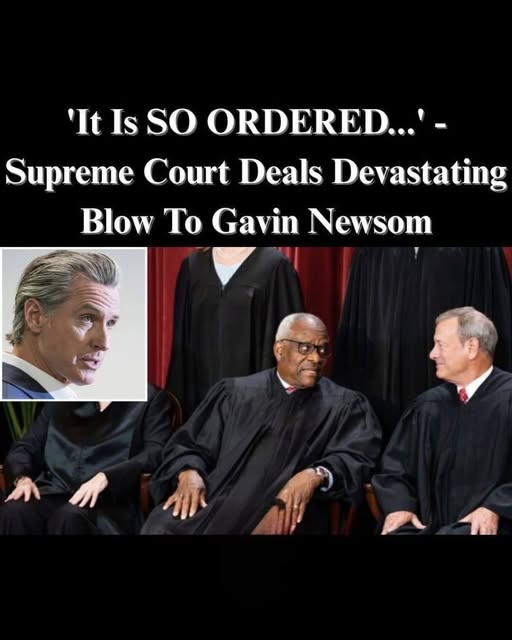
California Governor Gavin Newsom’s latest setback arrived not with the spectacle of a partisan clash, but through a meticulous judicial ruling that quietly dismantled one of the nation’s most aggressive attempts to regulate political speech in the age of artificial intelligence. Judge John Mendez did not dispute the underlying fear driving the legislation: that AI-generated deepfakes, fabricated images, synthetic voices, and deceptive videos pose a real and growing threat to democratic processes. Instead, he drew a sharp constitutional line, ruling that the state cannot combat those dangers by criminalizing political speech or compelling online platforms to remove it. In striking down both the content-based ban and the mandatory takedown provision, the court reaffirmed a long-standing principle of American law: that even disturbing, misleading, or manipulative political expression enjoys strong protection under the First Amendment. The decision represents not merely a legal loss for California, but a broader reckoning with the limits of government authority in an era where technology evolves faster than law.
At the core of the ruling is a rejection of the idea that the state can decide which political speech is too deceptive to exist. California’s law attempted to carve out a narrow exception, targeting AI-generated content that could mislead voters about candidates or elections. Yet the court found that such distinctions inevitably require subjective judgments about truth, intent, and impact—judgments the Constitution does not permit governments to enforce through speech suppression. Judge Mendez emphasized that political expression has historically received the highest level of protection precisely because it is often controversial, provocative, or unsettling. From parody and satire to exaggeration and outright falsehoods, American democracy has long tolerated imperfect speech as the price of freedom. The ruling aligns with decades of precedent holding that the remedy for bad speech is more speech, not enforced silence. In that sense, the decision does not minimize the danger of deepfakes; it asserts that constitutional safeguards must hold even when the threat feels unprecedented.
The implications of Section 230 loomed just as large over the case. By attempting to force platforms to remove flagged content, California’s law collided directly with the federal statute that shields online services from liability for user-generated speech. Judge Mendez ruled that the state’s takedown mandate was preempted, meaning federal law overrides it. This aspect of the decision reinforces the enduring strength of Section 230, despite years of political attacks from both parties. Platforms such as X, Rumble, and even the satirical outlet The Babylon Bee emerged as unlikely beneficiaries and, in this case, defenders of free expression principles. Their involvement underscores a paradox of modern speech debates: that those who publish controversial or irreverent content often become the most visible guardians of constitutional protections, even when their material makes many uncomfortable.
The timing of the ruling could not be more consequential. California now enters its first major generative-AI election cycle with virtually no state-specific regulatory guardrails addressing political deepfakes. Lawmakers had warned vividly of a future filled with fake robocalls mimicking candidates’ voices, fabricated videos showing officials saying things they never said, and synthetic images designed to inflame outrage or suppress turnout. Those fears remain entirely valid, yet the court’s decision makes clear that fear alone cannot justify speech restrictions. The absence of bespoke legal tools does not mean the danger disappears; it means the responsibility for confronting it shifts. Campaigns must adapt, voters must become more discerning, and platforms must decide—voluntarily—how aggressively they will label, contextualize, or limit AI-generated political content.
This shift represents a profound change in how democratic resilience is defined. Rather than relying on government to police truth, the ruling places faith in social norms, transparency, and collective skepticism. Verification becomes a civic skill rather than a regulatory mandate. News consumers are forced to slow down, question sources, and resist emotional manipulation. Campaigns must respond faster to disinformation, not through legal threats but through credibility and clarity. Platforms, while legally protected, face mounting pressure to demonstrate responsibility without becoming de facto arbiters of political truth. None of these solutions are simple, and all carry risks of inconsistency and failure. Yet the court’s message is unmistakable: democracy must learn to survive AI-driven chaos in the open, rather than attempt to suppress it through unconstitutional shortcuts.
Ultimately, Judge Mendez’s ruling exposes a deeper tension at the heart of modern governance. Technological power now enables deception at a scale and realism unimaginable in earlier eras, while constitutional principles remain rooted in a commitment to free expression that predates digital life entirely. California’s defeat is not an endorsement of AI manipulation, but a reminder that the First Amendment was designed to endure precisely when speech becomes dangerous, not convenient. The ruling forces an uncomfortable but necessary confrontation: that protecting democracy may depend less on silencing falsehoods and more on strengthening public judgment. In this emerging landscape, freedom and vulnerability coexist, and the survival of democratic norms will hinge not on perfect information, but on a society capable of navigating imperfection without surrendering its foundational liberties.