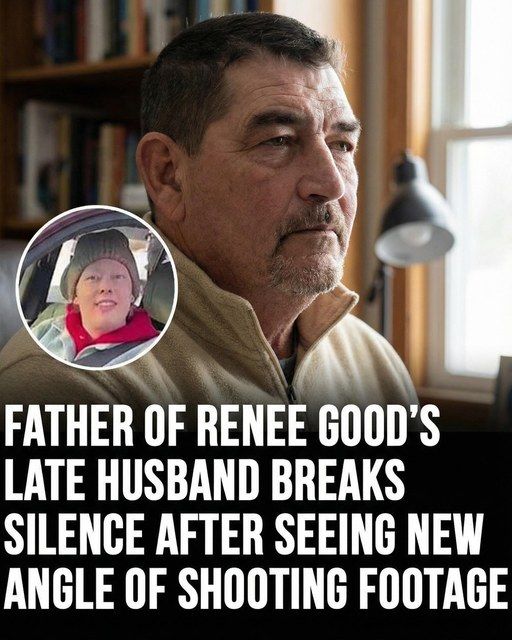
The fatal shooting of 37-year-old Renee Good during a federal immigration enforcement operation in Minneapolis has ignited a wave of public reaction that continues to grow rather than fade. What began as a brief encounter on a residential street has evolved into a national flashpoint, driven in large part by video footage that rapidly spread across social media platforms. The images, replayed and analyzed frame by frame, have drawn millions of viewers into an emotionally charged debate about how quickly the situation escalated and whether a different outcome was possible. For many, the footage evokes grief and disbelief; for others, it raises urgent questions about judgment, procedure, and proportionality. As with so many incidents involving law enforcement and civilian deaths, the visual record has not settled the matter, but instead deepened divisions, offering competing interpretations shaped as much by prior experience and trust in institutions as by the events themselves.
Federal authorities have maintained that the officer involved discharged his weapon after believing he was in immediate danger. According to official statements, the encounter escalated when Good’s vehicle moved forward during the operation, leading the officer to perceive it as a potential threat. Supporters of this account emphasize the realities of high-pressure enforcement scenarios, where decisions must be made in fractions of a second with incomplete information. They argue that officers are trained to respond decisively when they believe their lives or the lives of others are at risk, and that hesitation in such moments can have fatal consequences. From this perspective, the shooting is framed not as an act of malice, but as a tragic outcome of a volatile situation in which fear, uncertainty, and rapid movement converged.
Yet the same footage and facts have prompted sharply different reactions from critics, community leaders, and civil rights advocates. They question whether the perceived threat justified lethal force and whether alternative tactics could have prevented the loss of life. Some point to the speed with which the encounter escalated, arguing that de-escalation strategies or additional distance might have changed the outcome. Others focus on the broader context of federal immigration enforcement operations conducted in residential neighborhoods, raising concerns about the risks such actions pose not only to targets of enforcement, but to bystanders and communities as a whole. For these voices, the shooting of Renee Good is not an isolated tragedy, but part of a pattern that demands closer scrutiny of policies, training, and accountability mechanisms.
The public response in Minneapolis has reflected these tensions. Demonstrations and community meetings followed the shooting, providing spaces for grief, anger, and collective questioning. Residents have voiced fears about the presence of heavily armed federal agents in their neighborhoods, while others have expressed concern for the safety of officers tasked with carrying out controversial and often dangerous assignments. The protests have remained largely peaceful, but they underscore a deep unease about the balance between enforcement authority and public safety. In these gatherings, the debate often extends beyond the specific details of the case to encompass broader issues of trust, transparency, and the relationship between communities and law enforcement agencies that operate within them but are not directly accountable to local governments.
Members of Good’s extended family have also entered the public conversation, adding nuance to a debate that can easily become polarized. In emotional statements, relatives have expressed profound grief while acknowledging the complexity of the situation. One family member noted that he did not fully blame the officer involved, recognizing the fear and confusion that can accompany such encounters. At the same time, he criticized certain public statements made after the shooting as insensitive, suggesting that official language can deepen wounds when it appears to dismiss or minimize the human loss at the center of the incident. These voices complicate attempts to frame the event in purely adversarial terms, reminding the public that tragedy often resists simple narratives of villain and victim.
As investigations continue, multiple layers of government are involved in reviewing the incident. Authorities have urged patience, emphasizing that a thorough examination of all evidence, including video footage, witness statements, and forensic analysis, is necessary before conclusions can be drawn. Officials have encouraged the public to share additional information that might shed light on the encounter, promising that further findings will be released once reviews are complete. Yet patience is difficult to sustain in a media environment that rewards speed and certainty over deliberation. Each new comment, clip, or leaked detail risks hardening opinions before the investigative process has run its course.
Ultimately, the Minneapolis enforcement incident has become a lens through which broader national debates are refracted. It raises enduring questions about how law enforcement defines and responds to threat, how transparency is practiced in the aftermath of deadly force, and how communities can maintain trust when outcomes are irreversible. Regardless of the conclusions reached by investigators, the death of Renee Good has already left a lasting mark, not only on her family and community, but on a country still struggling to reconcile safety, authority, and the value of human life. The inquiry may determine facts and responsibilities, but the deeper reckoning it has sparked will continue long after official reports are released.