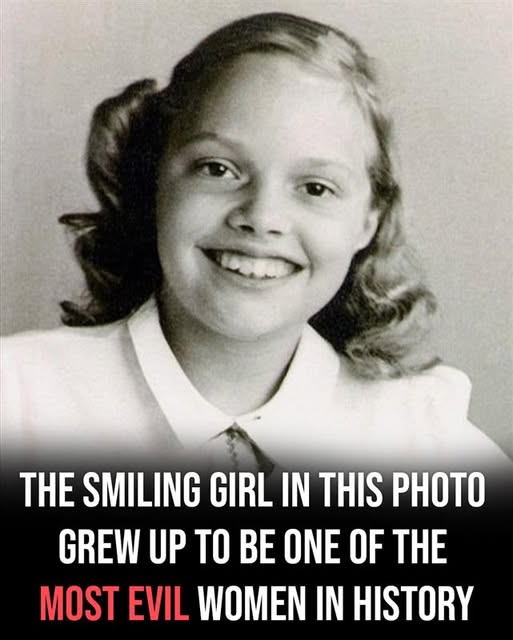
At first glance, she seemed like any other little girl—bright eyes, blonde hair, a timid smile that suggested vulnerability rather than danger. But beneath that innocent exterior lay a childhood riddled with chaos, neglect, and trauma so severe it would leave indelible scars on her psyche. Born in 1956 in a quiet Michigan town, her life was marked almost immediately by instability. By the age of four, her young mother vanished, leaving her and her brother to navigate a world without parental protection. Her mother would later describe her disappearance as the biggest mistake of her life, but by then the damage was irrevocable. At almost the same time, her father—already incarcerated for the kidnapping and assault of a young girl—took his own life in prison. Orphaned and without guidance, the children were placed with their grandparents, a move that promised safety but instead introduced another layer of trauma. Alcoholism, violence, and alleged predatory behavior defined their new home, creating an environment where fear, instability, and neglect were constants
The years that followed solidified patterns of abuse and survival that would shape the rest of her life. Her grandparents’ home, instead of offering protection, became yet another site of suffering. Verbal abuse, emotional neglect, and possibly sexual misconduct were daily realities, and any hope of rescue from the system of care was minimal. Her mother later reflected on the cycle of abuse, acknowledging that both she and the girl’s father had been verbally abusive, embedding a deep-seated sense of worthlessness in the children. By the age of eleven, she was already exchanging sexual favors for cigarettes, drugs, and food at school, an early survival strategy that marked the beginning of years on the margins of society. With no consistent adult guidance and no access to stability, she dropped out of school and began living on the streets, navigating a dangerous world through crime, prostitution, and the fragile alliances of street life. Arrests for theft, assault, and disorderly conduct became a recurring pattern, forming a criminal record that would follow her into adulthood. Each encounter with law enforcement was another reminder that the world was not a place of safety, that the law offered little protection, and that survival required cunning, resilience, and sometimes violence.
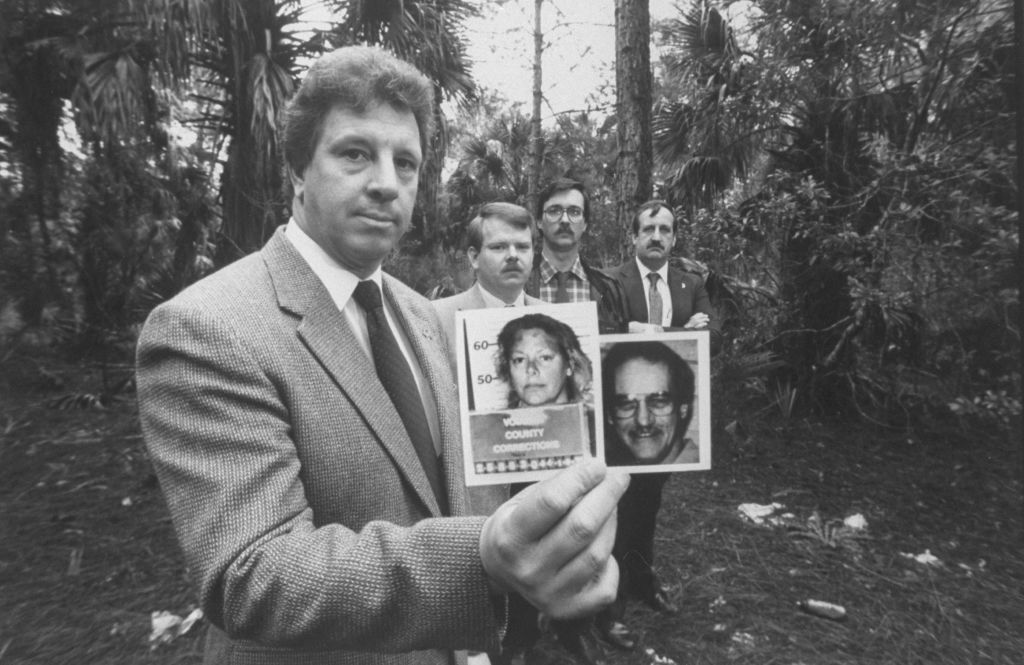
By her mid-twenties, she had drifted to Florida, a state where her story would take its darkest turn. In 1989, the first known murder linked to her occurred when a man’s body was discovered deep in the woods near Daytona Beach, shot multiple times. Within weeks, police connected the death to a woman seen hitchhiking in the area—a pattern that would repeat itself. When apprehended, she admitted not to a single killing, but to several, claiming self-defense against men who allegedly attempted to assault her. Her narrative was shaped by a lifetime of trauma, reflecting a woman who had experienced repeated violations and abandonment, and who asserted that every act of violence was a defensive measure. She denied being motivated by hatred of men, explaining instead that her experiences had left her either “walking in shock” or so habituated to being mistreated that her actions had become a survival mechanism. To her, the killings were not random acts of cruelty, but desperate attempts to assert agency in a life defined by exploitation, rejection, and powerlessness.
Prosecutors, however, presented a dramatically different narrative: one of premeditation, calculation, and the predatory targeting of men for robbery and murder. By the time her case went to trial, she had been accused of killing seven men within a single year. The media quickly branded her “America’s first female serial killer,” reducing her complex history to sensational headlines and transforming the courtroom into a spectacle. She became known as the “Damsel of Death,” a moniker that emphasized both gendered fascination and societal fear. The trial captured national attention, fueled by lurid reporting, psychological evaluations, and conflicting statements from Wuornos herself. She maintained that every killing was an act of self-defense, yet she later admitted in court to committing the murders in cold blood. Her words shocked the public: “I am as guilty as can be. I want the world to know I killed these men, as cold as ice. I’ve hated humans for a long time. I am a serial killer. I killed them in cold blood, real nasty.” The complexity of her life—the childhood trauma, the years of abuse, and the survival strategies that had long dominated her decisions—was distilled into a narrative of pure evil, with little attention paid to the societal and personal factors that contributed to her descent.
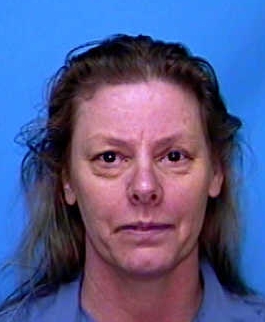
While confined to death row at Broward Correctional Institution, Wuornos repeatedly expressed her belief that sparing her life was pointless. She maintained a steady narrative of remorse mixed with defiance, insisting that she would continue to kill if given the chance. Her statements reflected both the enduring impact of decades of abuse and a profound sense of alienation from a society that had failed her repeatedly. In July 2001, she said, “There is no point in sparing me. It’s a waste of taxpayers’ money. I killed those men, robbed them. And I’d do it again, too. There’s no chance in keeping me alive or anything, because I’d kill again. I have hate crawling through my system.” These words were not mere theatrics—they revealed the depth of her trauma and the unresolved rage carried throughout her life. She had endured abandonment, sexual violence, and systemic neglect, and the criminal justice system would ultimately close the final chapter of her story. Her death, via lethal injection on October 9, 2002, at the age of 46, ended a life defined by chaos, suffering, and notoriety, leaving behind a legacy that remains both horrifying and tragic.
Aileen Wuornos’ story serves as a stark reminder of how early childhood trauma can ripple across a lifetime, shaping behavior, perception, and survival strategies in ways society often struggles to understand. Her life and crimes prompt difficult questions about the intersections of gender, violence, and neglect, challenging simple categorizations of victim and perpetrator. While she committed unspeakable acts that cannot be justified, her path underscores the profound consequences of abandonment, abuse, and systemic failure. In her own words, she intertwined self-preservation with fatal actions, revealing how the human psyche can adapt to endure extreme adversity, sometimes in destructive ways. From an innocent child left to fend for herself to a figure branded as America’s first female serial killer, Wuornos’ life encapsulates the dark consequences of neglect compounded by societal indifference. Her story is retold endlessly in books, documentaries, and films, not only for its shocking crimes but for the cautionary tale embedded within—a life where vulnerability, abandonment, and trauma converged to create a tragic inevitability.