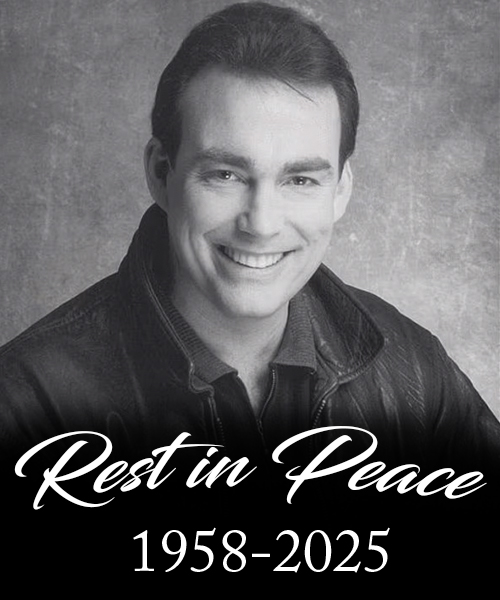
With heavy hearts, friends, fans, and colleagues are mourning the sudden loss of John Mulrooney, a man whose presence was larger than any stage he stood on and whose voice became a familiar companion to millions. Known equally as a fearless stand-up comic, a sharp-witted radio personality, and a late-night television host, Mulrooney died unexpectedly at his home in Coxsackie, New York, on December 29, 2025, at the age of 67. The news sent shockwaves through the entertainment world, not only because of his long and varied career, but because he was still deeply active, engaged, and looking ahead. According to those closest to him, there had been no warning signs, no gradual goodbye—only the abrupt silence left behind when someone who seemed endlessly energetic is suddenly gone. For many, the loss feels deeply personal, as though a familiar voice that had narrated decades of laughter, mornings, and memories had vanished overnight.
Born and raised in Brooklyn, Mulrooney emerged during the raw, competitive comedy boom of the early 1980s, an era when success was earned night after night in smoky clubs before unforgiving crowds. He cut his teeth at legendary venues like Dangerfield’s and Sheepshead Bay, learning quickly that survival meant originality, fearlessness, and an ability to command a room. That instinct carried him west, where he became a regular at The Improv and The Laugh Factory, solidifying his reputation as a comic who could follow anyone—and often leave the next performer rattled. His loose, unpredictable style made him a natural fit for television, and by the late 1980s, he was appearing regularly on national programs. One of the most notable moments of his early career came in 1987, when he briefly stepped in as host of The Late Show following Joan Rivers’ departure, a rare and high-pressure opportunity that underscored the industry’s respect for his talent and composure.
Mulrooney’s career defied easy categorization, touching nearly every corner of entertainment. He appeared on Comic Strip Live, Comedy Tonight, Great Balls of Fire!, An Evening at the Improv, and Andrew Dice Clay and His Gang Live! The Valentine’s Day Massacre. He competed on Star Search and The New Hollywood Squares, guest-starred on shows like Ellen and The Good Life, and hosted programs including Fox’s King of the Mountain and The Pat Sajak Show. He also created and starred in the short-lived Comedy Central sitcom Midtown North, a project that reflected both his love for New York and his affection for the city’s distinct personalities. While not every project endured, Mulrooney’s willingness to take risks and reinvent himself defined his career. He was never content to stay in one lane, believing that creativity thrived on movement, challenge, and discomfort.
After returning to the East Coast, Mulrooney reinvented himself yet again—this time behind the microphone. Radio became not just a platform, but a second home. He hosted The John and Abbey Show on 105.1 “The Buzz,” then co-hosted the wildly popular Wolf and Mulrooney in the Morning alongside Bob “The Wolf” Wohlfeld on WPYX. The show’s success lay in its authenticity; Mulrooney’s humor felt conversational rather than performative, as though he were speaking directly to each listener. Later stops at WPDH and iHeartRadio expanded his reach, and his unmistakable voice became part of the daily rhythm for audiences across the East Coast. Even as formats changed and media evolved, Mulrooney’s appeal remained constant—rooted in sharp observation, self-deprecation, and an ability to connect without pretense.
Despite decades in broadcasting, Mulrooney never abandoned stand-up comedy, the craft that first defined him. Just months before his death, in May 2025, he was still performing, sharing the stage with Colin Quinn and Aidan O’Kelley at the Craic Comedy Fest in Astoria. Friends say comedy was not something he ever outgrew; it was something he carried with him everywhere. That devotion extended beyond entertainment. From 2010 to 2024, Mulrooney worked as a police officer, balancing law enforcement with performing—often using comedy to support police and fire department fundraisers across the country. According to those who knew him, he viewed service not as a detour from comedy, but as an extension of it. Laughter, for Mulrooney, was a way to build bridges, ease tension, and give back. He was also a recreational pilot and, as his obituary noted, deeply proud of his country and the people he served.
Tributes poured in almost immediately following the news of his death. Adam Sandler, reflecting on their early days coming up together during a 2024 episode of The Joe Rogan Experience, captured what so many comedians remembered about Mulrooney. “I remember Mulrooney would just destroy a room,” Sandler said. “He was so loose and would dominate the room, and then they’d bring you up, and you’re like, ‘Oh, goodness gracious.’” Steven Van Zandt, a close friend, told the Albany Times Union that the loss still hadn’t fully registered. The two first connected while launching competing morning radio shows and quickly formed a bond that lasted decades. Van Zandt recalled speaking with Mulrooney less than two weeks before his death, when he talked excitedly about Christmas and a packed calendar for 2026. “It’s all so unexpected,” he said. “It’s still sinking in.”
Beyond the credits, the appearances, and the accolades, those closest to John Mulrooney say what defined him most was loyalty. He showed up—for friends, for colleagues, for strangers who needed support. His obituary described him as a “beloved stand-up comedian, dedicated public servant, and proud patriot whose life was defined by service, laughter, and an unwavering devotion to the people he loved.” He leaves behind no single title that can fully contain him, but rather a legacy built across comedy clubs, radio studios, television sets, and police precincts. More importantly, he leaves behind a long list of people who say their lives were brighter because John Mulrooney was part of them. His voice may be gone, but his stories, his laughter, and his spirit continue to echo—proof that some presences never truly fade.