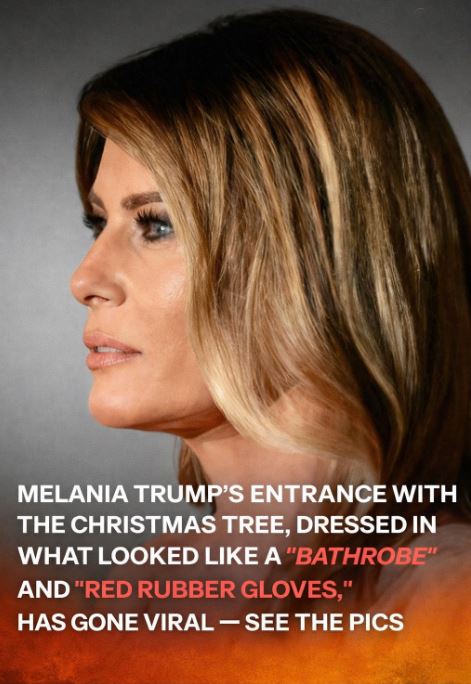
The arrival of the official White House Christmas tree has long served as one of the most visually evocative rituals of the American holiday season, a moment when tradition, pageantry, and national attention briefly converge on the North Portico. This year’s ceremony, however, carried an added intensity, as Melania Trump stepped forward to greet the towering fir with a presence that felt both familiar and newly charged. Delivered by horse-drawn carriage from Michigan, the 18-foot tree arrived amid crisp winter air, festive music, and the soft rhythm of hooves against stone, evoking images drawn straight from history. Yet in an age of constant digital observation, the scene was never destined to remain purely ceremonial. Cameras lingered, phones recorded, and within moments the event moved beyond the White House grounds into a sprawling online conversation. What unfolded was not simply a seasonal tradition renewed, but a reminder of how deeply the public continues to invest meaning in symbols—especially when they intersect with fashion, personality, and the enduring mystique of the First Lady’s role.
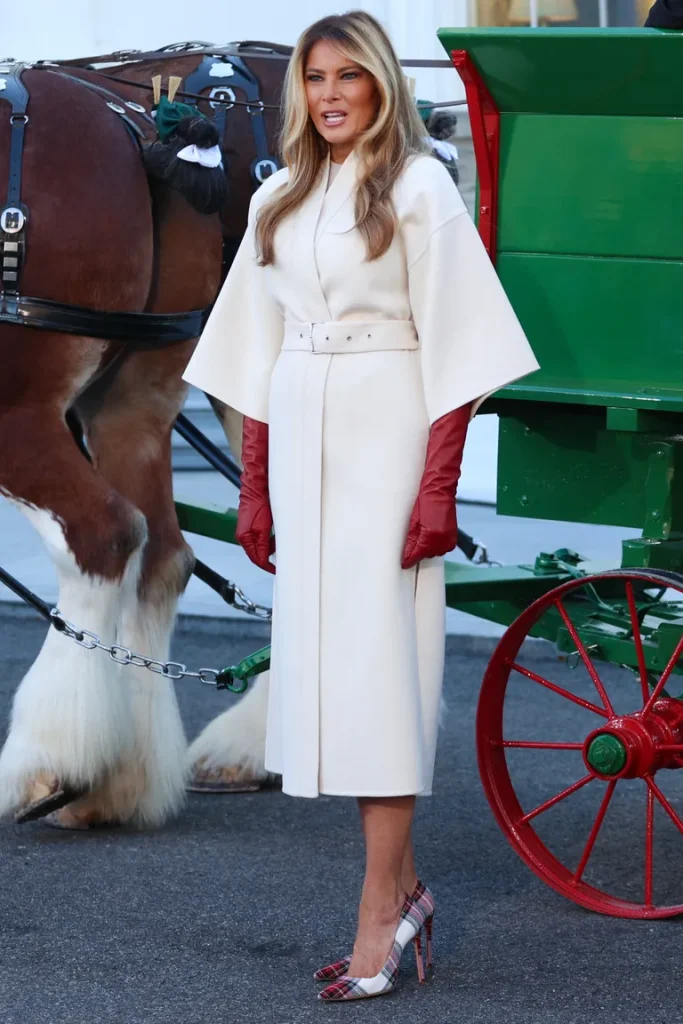
As the ceremony unfolded, Melania Trump greeted the handlers and Clydesdale horses with practiced composure, her demeanor reinforcing the quiet formality associated with the occasion. But it was her winter ensemble that quickly became the focal point of public attention. Wearing a striking white Dior coat paired with vivid red gloves and plaid stilettos, she presented a look that was at once festive, deliberate, and unmistakably hers. For supporters, the outfit embodied elegance and seasonal flair, a confident nod to classic holiday imagery filtered through high fashion. For others, the dramatic silhouette of the coat sparked playful commentary, with comparisons ranging from winter wraps to robes, illustrating how even the most polished appearances invite interpretation in a culture accustomed to instant reaction. Social media platforms lit up with commentary that blended admiration, humor, and critique, transforming a quiet sartorial choice into a viral moment. The response underscored a modern reality: in the digital era, fashion at the White House is no longer a side note to tradition, but an integral part of how such moments are received and remembered.
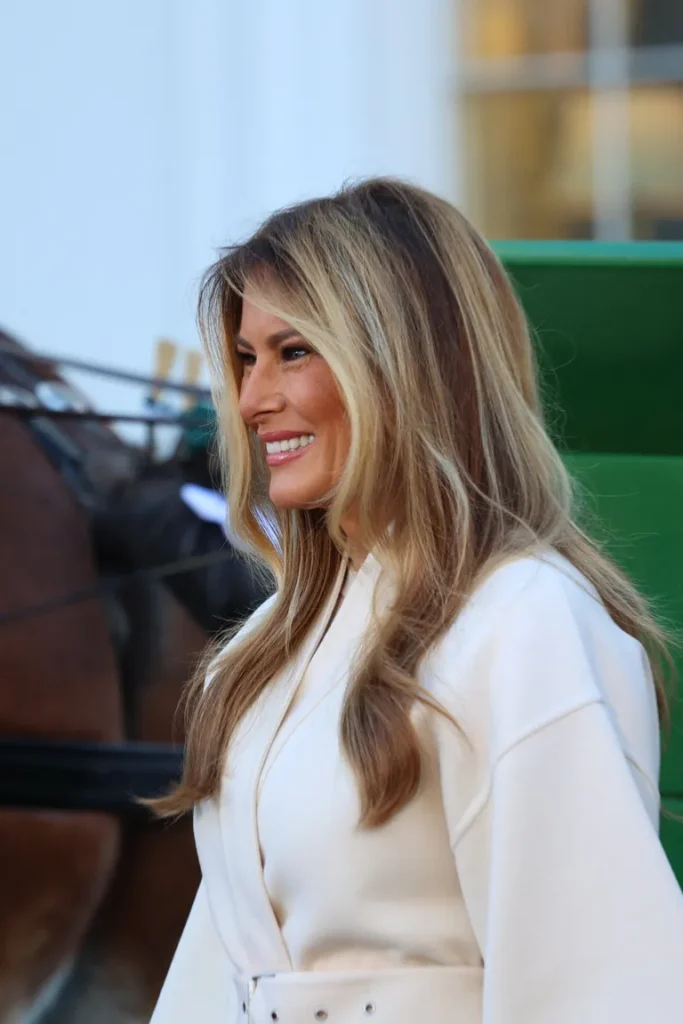
Beyond the coat itself, observers also noted a subtler but equally discussed detail—Melania Trump’s newly lightened hair color. Beauty professionals and casual viewers alike weighed in, describing the shade as a warm “cinnamon blonde” that softened her overall appearance while adding a seasonal brightness. Stylists praised the careful blending of tones, noting how the warmth complemented both her complexion and the winter palette of the event. This attention to detail reinforced a long-standing aspect of Melania Trump’s public image: an emphasis on precision and visual impact. Throughout her time in the national spotlight, even small changes in her appearance have been dissected and discussed, reflecting a broader fascination with how public figures use style as a form of communication. In this case, the updated look was widely interpreted as a refined evolution rather than a departure, signaling continuity rather than reinvention. The conversation around her hair, much like the discussion of her outfit, revealed how deeply aesthetics are woven into public perceptions of leadership, ceremony, and identity.
Yet the significance of the Christmas tree ceremony extends far beyond fashion commentary or viral reactions. At its core, the event serves as a symbolic bridge between past and present, linking generations through a shared ritual that predates social media, modern politics, and contemporary cultural divides. The White House Christmas tree has arrived by carriage for decades, a deliberate preservation of tradition that speaks to stability and continuity. In a time marked by rapid change and political polarization, such rituals take on heightened meaning, offering a moment of collective pause and familiarity. Melania Trump’s participation in the ceremony revived memories of previous holiday seasons at the White House, prompting reflection on how traditions endure even as the figures associated with them change. For many Americans, the ceremony is less about the individual presiding over it and more about the reassurance that some national customs remain intact, providing a sense of normalcy amid uncertainty.
At the same time, the intense scrutiny surrounding the event highlights the evolving expectations placed on public figures, particularly women in prominent roles. First Ladies have long occupied a unique position, blending ceremonial duty with cultural symbolism, yet the modern media environment amplifies every gesture, outfit, and expression. Melania Trump’s appearance at the ceremony exemplified this dynamic, as her role as hostess and guardian of tradition was inseparable from the public’s fascination with her style and demeanor. This duality reflects broader societal trends, where public rituals are simultaneously celebrated and dissected, admired and critiqued. The reaction to the ceremony revealed as much about the audience as it did about the event itself, exposing a collective tendency to project values, expectations, and emotions onto figures who serve as symbols of national life. In this sense, the conversation sparked by the ceremony became a mirror of contemporary culture, blending reverence for tradition with the relentless pace of commentary.
Ultimately, Melania Trump’s Christmas tree ceremony demonstrated how enduring rituals continue to evolve in meaning without losing their essence. Amid the swirling discussions of coats, hair color, and online reactions, the central image remained unchanged: a grand fir standing tall at the White House, marking the beginning of the holiday season. Music played, the carriage departed, and the tree took its place as a symbol of celebration, continuity, and shared memory. The moment reminded viewers that while public attention may shift and narratives may multiply, traditions retain their power precisely because they offer familiarity and connection. Whether admired for its elegance, discussed for its details, or simply appreciated for its symbolism, the ceremony fulfilled its enduring purpose. It signaled the arrival of the holidays at the nation’s most recognizable residence and reaffirmed that even in a modern, hyper-connected age, simple rituals can still capture the public imagination and bring a sense of collective warmth to the season.