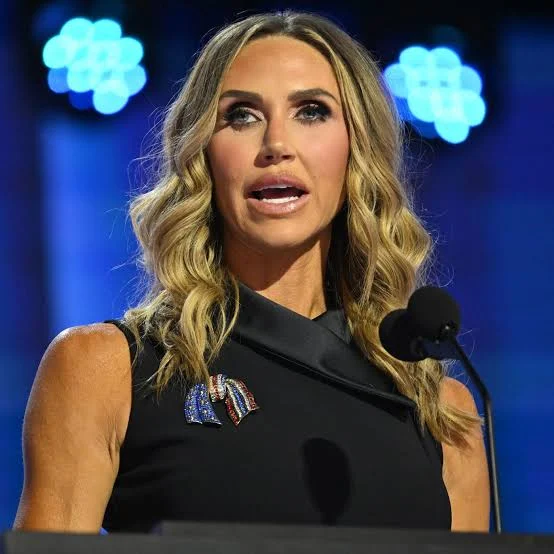
The confirmation of Lara Trump as co-chair of the Republican National Committee represents a watershed moment for the party, one that goes far beyond a routine leadership transition. Announced from North Carolina and rapidly ratified by party members, her appointment formalizes a consolidation of influence long anticipated by insiders and observers alike. For weeks, speculation swirled over whether the party’s governing apparatus would fully embrace the strategic vision associated with the Trump family, and this confirmation removes any remaining ambiguity. By elevating a close relative of the former president to a role that oversees the party’s national operations, the Republican leadership has signaled a willingness to blur the traditional boundaries between campaign priorities and institutional governance. Historically, national committees balanced loyalty to party leaders with operational independence, aiming to serve a broad coalition of candidates and interests. Now, the emphasis appears to have shifted toward cohesion around a central figure, reframing discussions of strategy, messaging, fundraising, and discipline through the lens of allegiance and continuity, and redefining how internal authority is exercised.
Lara Trump’s rise within the party is rooted in visibility, familiarity, and sustained engagement in Republican politics over the past several years. Serving as a prominent surrogate during prior election cycles, she developed a public profile that extended beyond ceremonial appearances, often speaking directly to media and grassroots audiences on behalf of the former president. Supporters argue that her experience uniquely qualifies her to coordinate party efforts in an environment marked by polarization, media scrutiny, and the need for clear, unified messaging. By embedding a trusted figure into the leadership, proponents contend, the party reduces the risk of mixed signals and ensures that its national strategy aligns with its most influential voice. Critics, however, view her confirmation as a sign of increasing centralization, cautioning that prioritizing loyalty over institutional diversity may alienate broader constituencies or stifle emerging leadership. Regardless of perspective, the decision reflects an undeniable reality: the Republican Party’s identity has become closely intertwined with the Trump brand, and positions of institutional authority are increasingly filled by those perceived as guardians of that identity.
Strategically, the appointment carries significant implications as the party prepares for a competitive national election. The RNC’s responsibilities—fundraising, voter outreach, data operations, and coordination with state and local affiliates—are central to electoral success, and positioning a Trump family member in leadership aligns these functions with the former president’s campaign priorities. Proponents argue that this reduces friction between overlapping operations, streamlines decision-making, and maximizes efficiency, ensuring that resources are deployed with precision. Past cycles illustrated the costs of internal division, with competing agendas diluting messaging and confusing supporters. A unified structure, by contrast, promises discipline and clarity, qualities often decisive in closely contested races. Yet the concentration of authority raises questions about dissenting voices within the party: how will alternative strategies, emerging leaders, or diverse constituencies influence direction when central loyalty takes precedence? This tension underscores the broader challenge facing parties in an era dominated by personality-driven politics.
Beyond immediate electoral considerations, Lara Trump’s confirmation signals a broader transformation in how political parties operate in the twenty-first century. Traditional models emphasized institutional continuity, with leadership roles rotating among seasoned operatives and elected officials representing multiple factions. Today, personalized politics increasingly prioritizes loyalty to a central figure over factional balance, a trend amplified by social media, continuous campaigning, and an electorate attuned to identity as much as policy. In this context, the RNC’s decision represents an adaptation to contemporary realities: coherence, brand recognition, and disciplined messaging are viewed as critical advantages, potentially outweighing traditional concerns about over-centralization. The appointment illustrates how party governance is evolving, reflecting a willingness to embrace personalization and strategic alignment as mechanisms to maintain influence and competitiveness in a fast-moving political landscape.
The reaction to Lara Trump’s appointment highlights ongoing tensions within the Republican coalition. For grassroots supporters of the former president, her leadership is celebrated as a long-overdue consolidation of control over an apparatus previously perceived as resistant or insufficiently aligned. They see it as a guarantee that the party will maintain its post-2016 identity and messaging discipline. Conversely, establishment figures and some strategists worry about the long-term consequences of such consolidation, questioning whether tethering the party’s operational identity to a single family risks alienating swing voters or limiting adaptability in future election cycles. These debates reflect a deeper strategic dilemma: whether Republican success depends on expanding the base and broadening appeal or on mobilizing a loyal, highly engaged core. Lara Trump now sits at the center of this conversation, balancing enthusiasm and pragmatism amid a political environment where missteps are magnified, margins are thin, and the stakes are high.
Ultimately, her confirmation represents a defining moment for the Republican Party, one with implications that extend well beyond the current election cycle. It crystallizes a strategic choice to prioritize unity around a dominant figure, reshaping how power is distributed and exercised within the party’s national leadership. Whether this approach will translate into electoral success or expose new vulnerabilities depends on how effectively loyalty is transformed into organizational discipline, clear messaging, and voter mobilization. What is clear is that the RNC’s leadership structure has been fundamentally reshaped, reflecting a broader reimagining of party governance that embraces centralization and personalization as practical responses to contemporary political pressures. The appointment signals to both allies and critics that cohesion around the Trump brand is no longer optional but foundational to the party’s strategic identity.
As the party moves forward, the consequences of this transformation will unfold in real time, offering insight into the evolving balance between institutional tradition and contemporary political strategy. Lara Trump’s co-chair role positions her to influence fundraising priorities, messaging discipline, and the allocation of operational resources, making her a key figure in shaping the party’s path to the ballot box. It also underscores a broader question facing American politics: how institutions adapt when personal loyalty and familial networks intersect with governance and strategy. The confirmation reflects a Republican Party willing to embrace centralized control as a tactical advantage, betting that a disciplined, coherent approach rooted in loyalty and familiarity will outweigh the potential costs of narrowing internal debate. In this era of highly personalized politics, the decision serves as both a strategic statement and a harbinger of how future parties may navigate the tension between identity, influence, and institutional integrity.