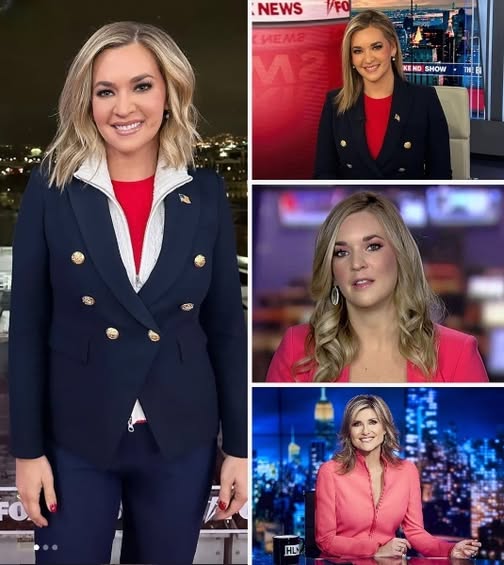
A significant transformation is unfolding at NewsNation, marking a new chapter in the network’s primetime strategy and signaling a recalibration of its editorial focus. With the confirmation that Katie Pavlich will permanently take over the 10 p.m. time slot previously anchored by Ashleigh Banfield, the network is making a clear statement about where it intends to steer its evening programming. The move follows Banfield’s decision to step away from her crime-centered show to spearhead NewsNation’s expanding true crime division, a pivot that reflects both changing audience habits and the growing influence of digital-first storytelling. Pavlich’s arrival in the coveted hour introduces a familiar conservative voice to a broader audience while underscoring NewsNation’s ambition to strengthen its political coverage during one of the most competitive segments in cable news.
Ashleigh Banfield’s transition is not an exit but a repositioning, one that acknowledges the explosive popularity of true crime content across podcasts, streaming platforms, and digital media. By shifting Banfield into a leadership role within the network’s true crime unit, NewsNation is betting on her established credibility and audience loyalty to expand its reach beyond traditional television. Her podcast, Drop Dead Serious with Ashleigh Banfield, will now become an integrated part of the network’s digital ecosystem, reinforcing a multi-platform approach designed to meet audiences wherever they consume content. Banfield herself has framed the move as an opportunity rather than a departure, emphasizing the “transformative” power of true crime reporting in the digital era and expressing enthusiasm about helping shape a genre that continues to captivate viewers worldwide.
Initially, NewsNation had planned to rotate hosts in the 10 p.m. hour, testing different voices and formats before committing to a permanent anchor. The decision to settle on Katie Pavlich reflects confidence in her ability to command a nightly audience and deliver consistent political analysis. Pavlich’s show will represent a decisive shift away from crime reporting and toward a broader political and cultural agenda, covering issues such as free speech, immigration, national security, foreign policy, and the evolving cultural debates shaping American life. This repositioning aligns the 10 p.m. slot more closely with traditional cable news primetime fare, where opinion-driven analysis and political discussion dominate viewer expectations.
Pavlich’s ascent to a permanent primetime role marks a milestone in her media career. Since joining Fox News in 2013, she has been a frequent and recognizable presence across the network’s programming, appearing on shows such as The Five, Jesse Watters Primetime, and Fox News Sunday. Her experience spans television commentary, editorial leadership, and authorship, giving her a multifaceted background that NewsNation executives believe will resonate with viewers seeking context and clarity in an increasingly fragmented news environment. Beyond television, Pavlich has served as a longtime news editor at Townhall.com and authored several politically charged books that reflect her conservative worldview and sharpened rhetorical style.
For NewsNation, the decision to elevate Pavlich is part of a broader effort to define its identity within a crowded media landscape. Marketed as a network committed to “straightforward journalism,” NewsNation has worked to distinguish itself from more overtly partisan outlets while still engaging with the political realities that dominate national discourse. Sean Compton, president of Nexstar Networks, framed Pavlich’s appointment as an expansion of political news and analysis designed to help viewers “make sense of the day’s most important headlines.” His remarks suggest that the network sees Pavlich not merely as a commentator, but as a guide for audiences navigating complex political developments at home and abroad.
The shakeup also reflects deeper changes in how audiences consume news and how networks respond to shifting preferences. Crime-focused programming has proven enormously successful in digital formats, where on-demand access allows viewers to engage with long-form storytelling at their own pace. Political analysis, by contrast, continues to thrive in live primetime slots, where immediacy and reaction to breaking developments are key. By separating these genres and placing them in formats where they perform best, NewsNation is attempting to maximize engagement while diversifying its content portfolio. Banfield’s move to digital true crime and Pavlich’s arrival in primetime political coverage illustrate a strategic division of labor tailored to contemporary viewing habits.
For Pavlich personally, the new role represents both opportunity and challenge. Transitioning from frequent guest appearances to anchoring a nightly primetime program demands a different level of responsibility, consistency, and audience connection. It requires not only sharp political instincts but also the ability to manage breaking news, conduct in-depth interviews, and maintain a clear editorial voice night after night. Pavlich has expressed enthusiasm for the role, describing it as a “front-row seat to history” and signaling her readiness to take on the pressures and privileges of primetime anchoring. Her confidence suggests an understanding that the position places her at the center of national conversations during a politically volatile era.
As early 2026 approaches and Pavlich officially takes the helm at 10 p.m., viewers can expect a noticeable tonal and thematic shift in the hour. Where Banfield’s program emphasized crime, justice, and investigative storytelling, Pavlich’s show will focus on the political forces shaping policy, culture, and global affairs. This evolution reflects not only individual career moves but a network-wide recalibration aimed at balancing depth, relevance, and audience demand. In a media environment defined by constant change, NewsNation’s primetime shakeup underscores a simple reality: adaptability is no longer optional, and the future of cable news belongs to those willing to evolve.