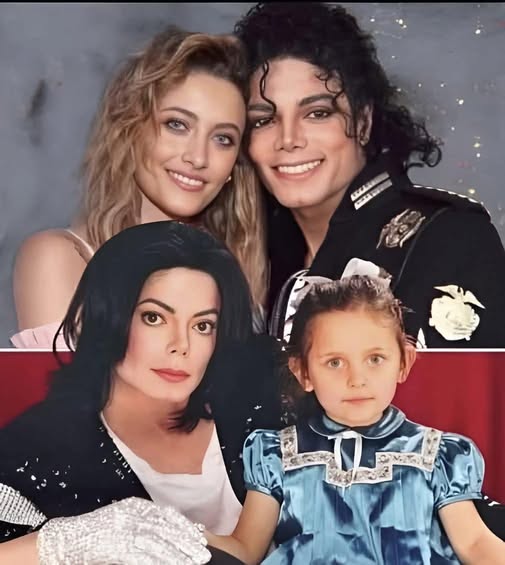
For as long as she has existed in the public consciousness, Paris Jackson has lived beneath one of the heaviest shadows in modern cultural history. Being the daughter of Michael Jackson meant inheriting not only a famous surname, but also decades of global obsession, controversy, mythmaking, and emotional extremes. To the world, her father was the King of Pop—an unmatched performer, a revolutionary artist, and a lightning rod for speculation. To Paris, he was simply her dad: affectionate, complicated, deeply wounded, and profoundly loving. For years, she remained largely silent while narratives about him multiplied and hardened. When she finally began to speak, it was not with anger or defiance, but with a quiet clarity shaped by grief, growth, and an unshakeable sense of loyalty to truth as she experienced it.
Michael Jackson’s life was forged under extraordinary pressure long before Paris was born. As a child star in the Jackson 5, he learned early that love was often conditional on performance. Fame arrived fast and never loosened its grip. The discipline imposed by his father, Joe Jackson, instilled perfectionism but also left emotional scars that followed him into adulthood. Paris has reflected on how this lack of a normal childhood shaped her father’s later life—his desire for wonder, play, and innocence. The amusement parks, the elaborate fantasy worlds, the childlike joy people often misunderstood were, in her eyes, attempts to reclaim something stolen far too early. She does not romanticize his pain, but she contextualizes it, reminding the world that behind the spectacle was a man shaped by trauma, expectation, and relentless scrutiny.
Growing up, Paris and her brothers lived in a carefully protected bubble. Their faces were shielded from cameras, their movements controlled, their privacy fiercely guarded. To outsiders, this seemed eccentric or excessive. To Paris, with the benefit of hindsight, it was an act of love. Michael understood better than anyone the cost of exposure. He knew how quickly innocence could be consumed by public hunger. After his death in 2009, that protective barrier vanished overnight. At just eleven years old, Paris stood at her father’s funeral and spoke through tears as millions watched. Her grief was no longer private; it became a public event, analyzed and replayed endlessly. The years that followed were marked by instability, loss of direction, and a deep struggle with identity, all unfolding under an unforgiving spotlight.
As Paris grew older, she began to confront not only her personal pain, but also the narratives imposed upon her family. The resurgence of allegations against Michael Jackson reignited global debate, forcing his children into an impossible position. Paris chose restraint over reaction. When she did speak, her words were measured and reflective. She acknowledged complexity without surrendering her lived truth. She did not claim her father was perfect, but she rejected portrayals that stripped him of humanity. Her message emphasized compassion over combat, insisting that hatred only multiplies when fed. The advice she attributes to her father—be the proof rather than argue—became a guiding principle in how she navigates public discourse, choosing integrity over noise.
In the aftermath of loss, Paris turned inward, then outward, channeling her pain into creativity. Music became both refuge and release, not as an attempt to replicate her father’s legacy, but as a way to understand herself. Her work is intimate, raw, and introspective, reflecting a voice shaped by grief, survival, and self-discovery rather than spectacle. She has spoken openly about battles with depression, self-harm, and feeling unmoored in a world that constantly tried to define her before she could define herself. Survival, she has said, became an act of honor—proof that love could outlast devastation. Through art, advocacy, and vulnerability, she reclaimed agency over her own narrative.
Today, Paris Jackson stands as a figure shaped by both inheritance and intention. She does not deny her lineage, nor does she allow it to confine her. Her reflections on her father are not attempts to rewrite history, but to humanize it. She remembers Michael Jackson not as an untouchable icon, but as a man who laughed in the kitchen, cooked meals, told stories, and taught lessons about kindness and resilience. In breaking her silence, Paris has not sought to defend a legend so much as to honor a relationship. Her voice adds nuance to a story too often flattened by extremes, reminding the world that behind every myth is a family, behind every headline a human cost, and behind the music, a love that continues long after the final note fades.