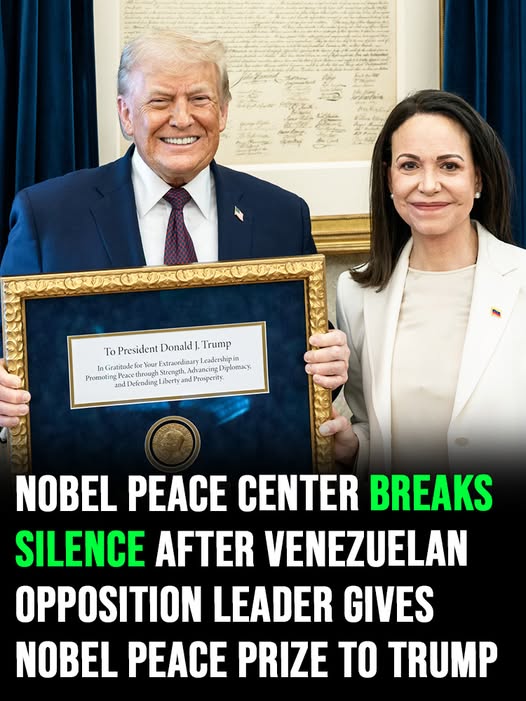
The 2025 Nobel Peace Prize, awarded to Venezuelan opposition leader María Corina Machado for her tireless efforts promoting democracy and nonviolent political change, has captured global attention in a highly unusual and symbolic turn of events. Machado, whose leadership in Venezuela has long focused on democratic rights and peaceful transition from dictatorship to democracy, traveled to Washington, D.C., in January 2026 to meet U.S. officials and engage in discussions about Venezuelan affairs. During this visit, she presented her Nobel Peace Prize medal to then-U.S. President Donald Trump. While this gesture received extensive media coverage and was widely interpreted as a form of personal recognition, experts and the Nobel Committee emphasized that the presentation of the medal does not confer the status of Nobel laureate upon anyone other than the official recipient. The distinction between symbolic gesture and formal recognition lies at the heart of understanding the controversy and its implications for international perception.
Trump, who had long publicly expressed a desire to receive the Nobel Peace Prize, accepted the medal with gratitude, praising Machado for her efforts and describing the gesture as an honor. His supporters viewed the event as a symbolic acknowledgment of his own contributions to international affairs, while critics and diplomatic observers highlighted that the acceptance of a medal from another laureate does not change the legal and institutional rules surrounding the Nobel Peace Prize. The Norwegian Nobel Committee, which administers the award according to strict guidelines and Alfred Nobel’s original will, clarified that a prize cannot be revoked, shared, or transferred to another individual after it is awarded. Machado remains the sole 2025 laureate, and the symbolic nature of the medal’s transfer underscores the complexity of blending ceremonial acts with legal recognition in international honors.
The situation also highlights the interplay between diplomacy, media, and political messaging. By presenting the medal to a sitting U.S. president, Machado created a symbolic moment that simultaneously drew attention to Venezuela’s ongoing democratic challenges and fostered potential dialogue with the United States. The act served multiple purposes: it elevated global awareness of Venezuela’s political situation, reinforced Machado’s international stature, and positioned her as a strategic actor capable of engaging powerful allies while remaining committed to nonviolent democratic ideals. Meanwhile, Trump’s reception of the medal allowed him to reinforce his public image, particularly among followers who value recognition on the global stage, even in symbolic form. The event demonstrates how high-profile awards can be used strategically in both domestic and international political narratives without altering the formal structures that govern them.
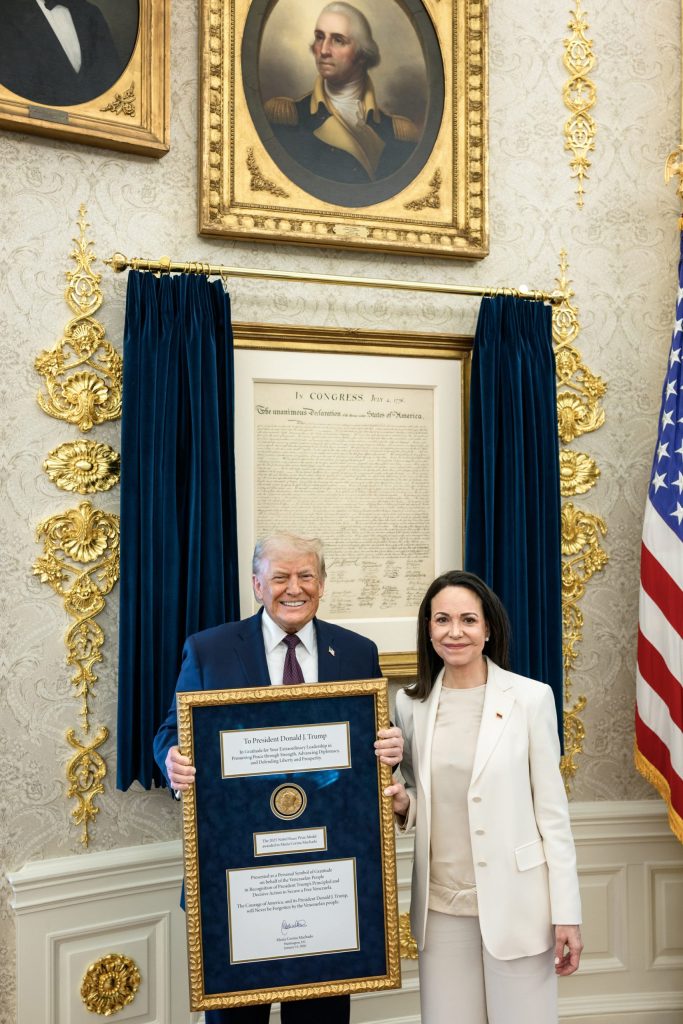
Understanding the Nobel Peace Prize’s protocols is essential to evaluating this event accurately. Medals and diplomas may be physically gifted, donated, or sold, but the official recognition of a laureate remains permanent and is tied exclusively to the individual or organization selected by the Nobel Committee. Historical precedents exist in which Nobel medals have changed hands for symbolic, philanthropic, or auction purposes; however, these transfers never alter the recipient’s status. In Machado’s case, the presentation of the medal to Trump represents a ceremonial gesture of respect and gratitude, rather than a legal or institutional transfer of the Nobel title. This distinction protects the integrity of the award and maintains its global credibility, ensuring that laureates’ achievements are recognized independently of political or personal interactions.
The public and media reaction to this event reflects broader tensions between symbolism and legality in high-profile international awards. Social media platforms were flooded with commentary praising the gesture, criticizing it, or debating its implications for Nobel tradition. Scholars of diplomacy and international relations noted that while the medal itself has symbolic weight, the essential criteria for being a Nobel laureate are legal and procedural, administered solely by the Norwegian Nobel Committee. This clarification is vital for maintaining historical accuracy and preventing misunderstandings about the nature of international honors. It also highlights how symbolic acts in diplomacy can be amplified by media coverage, creating the appearance of legitimacy or recognition that may not exist in formal terms.
Finally, the episode underscores the broader role of awards and recognition in shaping political narratives. While Machado’s gesture highlighted her strategic engagement with global leaders, it also illuminated how public figures navigate symbolic recognition to advance diplomatic objectives and domestic messaging. Trump’s acceptance of the medal further demonstrates the interplay between perception, personal ambition, and media coverage in high-profile political events. Ultimately, the 2025 Nobel Peace Prize controversy reinforces the importance of distinguishing between symbolic acts, which may influence public opinion or diplomatic relations, and formal recognition governed by international institutions. The event serves as a case study in how awards, media, and politics intersect in the modern era, emphasizing the enduring power of symbolism alongside the immutable rules of institutional honor.
In conclusion, the presentation of María Corina Machado’s 2025 Nobel Peace Prize medal to Donald Trump offers a rare insight into the dynamics of symbolism, political narrative, and the administration of international awards. While Trump received the medal as a personal gesture, the legal and historical realities of the Nobel Peace Prize remain unchanged: Machado is the official laureate, and no ceremonial transfer can alter that status. The episode illustrates the delicate balance between honoring individual achievements and navigating global political symbolism, reminding observers that while medals may move, the integrity and recognition of Nobel laureates remain permanent. It also encourages reflection on how public figures, media coverage, and international institutions interact in a world increasingly attentive to visual and symbolic displays of recognition and respect.