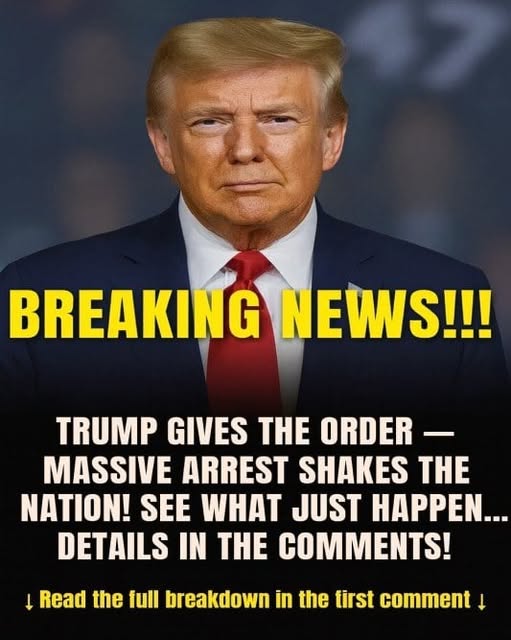
From the moment President Donald J. Trump returned to office, his administration signaled a decisive shift toward uncompromising law enforcement, prioritizing public safety, border security, and the dismantling of violent criminal networks that have long terrorized communities. That approach took another dramatic step forward with the arrest and extradition of Francisco Javier Roman-Bardales, a senior leader of the notoriously brutal MS-13 gang. His capture, announced by FBI Director Kash Patel, was not merely another law enforcement victory but a statement of intent—one that underscored the administration’s resolve to pursue dangerous fugitives relentlessly, no matter where they hide or how powerful their criminal organizations may be. For years, MS-13 has been synonymous with extreme violence, intimidation, and transnational criminal operations, and Roman-Bardales stood at the center of that web. His arrest sent shockwaves through criminal circles and reassurance to law-abiding citizens who have demanded stronger action against organized crime.
Roman-Bardales had been one of the FBI’s Ten Most Wanted fugitives, a designation reserved for individuals considered exceptionally dangerous and difficult to capture. Authorities allege that he played a central role in orchestrating drug trafficking and extortion schemes that spanned multiple countries, including the United States and El Salvador. Beyond financial crimes, investigators say Roman-Bardales ordered and sanctioned numerous violent acts, targeting civilians, rivals, and anyone perceived as a threat to MS-13’s dominance. These alleged crimes were not isolated incidents but part of a broader strategy of fear designed to maintain control over neighborhoods and smuggling routes. By coordinating violence across borders, Roman-Bardales exemplified the evolving nature of modern organized crime, where gang leaders operate internationally while their crimes devastate local communities. His extradition from Mexico required close cooperation between governments, highlighting the renewed emphasis on international partnerships aimed at combating transnational gangs.
The successful operation that led to Roman-Bardales’s capture also reflected structural changes within federal law enforcement since President Trump took office. Under FBI Director Kash Patel, the bureau has refocused its priorities toward pursuing violent offenders, dismantling gang leadership, and restoring public confidence in federal institutions. Officials familiar with the operation noted that intelligence sharing, targeted surveillance, and coordinated diplomatic efforts were critical in securing Roman-Bardales’s return to U.S. soil. The case illustrated how sustained pressure and strategic patience can yield results, even against fugitives who have spent years evading justice. For communities impacted by MS-13’s reign of terror, the arrest represented more than legal accountability—it symbolized recognition of their suffering and a promise that their concerns are no longer being ignored.
Roman-Bardales is the third individual from the FBI’s Ten Most Wanted list to be captured since President Trump resumed office, a statistic frequently cited by administration officials as evidence of renewed law enforcement effectiveness. On January 30, 2025, Arnoldo Jimenez, wanted on first-degree murder charges, was taken into custody after years on the run. Just days earlier, on January 25, 2025, authorities apprehended Donald Eugene Fields II, who faced accusations related to child rape and child sex trafficking. Each arrest involved different crimes, different locations, and different investigative challenges, yet together they formed a pattern. The administration has emphasized that these cases reflect a broader strategy rather than coincidence—one centered on prioritizing violent offenders, allocating resources toward high-risk targets, and removing dangerous individuals from society before they can cause further harm.
Supporters of the administration argue that these arrests validate a tougher stance on crime and a renewed respect for law enforcement professionals who place themselves in harm’s way. They point to years of frustration among communities plagued by gang violence, drug trafficking, and repeat offenders who seemed to slip through the cracks of a weakened justice system. Critics, meanwhile, have questioned whether such high-profile arrests translate into long-term crime reduction. Administration officials counter that removing leadership figures from criminal organizations disrupts operations, weakens recruitment, and creates opportunities for broader enforcement actions. In the case of MS-13, federal authorities believe that dismantling command structures is essential to reducing violence, as leaders like Roman-Bardales are often the architects of coordinated brutality rather than mere participants.
As Roman-Bardales prepares to face justice in the United States, the Trump Administration has framed his arrest as part of a larger promise to the American people: safety, accountability, and the rule of law. Officials have reiterated that no individual, no matter how violent or well-connected, is beyond reach. The administration maintains that protecting families, neighborhoods, and future generations requires consistent enforcement, strong borders, and unwavering resolve. Whether viewed as a turning point or a continuation of long-standing efforts, the extradition of a senior MS-13 leader stands as a clear signal that federal authorities are once again pursuing violent criminals with intensity and purpose. For many Americans, it represents hope that communities long scarred by fear may finally begin to heal.