The Arctic, long considered a remote and largely cooperative region devoted to scientific exploration and environmental stewardship, has increasingly become the focal point of global strategic competition. At the center of this emerging geopolitical tension lies Greenland, a vast island with immense natural resources, a critical geographic location between North America and Europe, and a melting ice sheet that opens new shipping routes. The renewed attention to Greenland has been sparked by U.S. rhetoric suggesting the island is essential to national security, prompting alarm from Denmark, its semi-autonomous territory, and concern from the broader international community. What was once an obscure Arctic territory has become a symbol of how great-power competition, alliance politics, and questions of sovereignty intersect in a rapidly changing global order. Analysts note that Greenland’s significance is not simply due to its mineral wealth or proximity to the Arctic Circle but because it represents a test of the rules and norms that have long governed interactions between democratic states and their allies. The presence of strategic installations like Pituffik Space Base demonstrates that Greenland has always had a security dimension, yet the intensity of the current discussion underscores how quickly perceptions of threat and opportunity can shift in response to political statements and perceived intentions. The U.S. interest in Greenland, articulated most prominently in statements from former President Donald Trump, has catalyzed European and global actors to reconsider how sovereignty, military presence, and strategic planning intersect in the High North.
Denmark, which governs Greenland as part of the Kingdom but allows significant self-rule, has taken a principled stance emphasizing both the sovereignty of the island and the self-determination of its people. Danish leaders have repeatedly stressed that Greenland cannot be sold, transferred, or ceded without the explicit consent of its government and population, framing this insistence not just as a legal or administrative matter but as a moral and democratic imperative. Greenlandic officials themselves have emphasized their desire to chart an independent course for the island’s future, rejecting the idea that external powers could determine their destiny. This insistence on autonomy is closely tied to centuries of cultural identity and historical experience, which include both colonial oversight and modern steps toward self-governance. For Denmark, defending Greenland is inseparable from defending the credibility of international norms that prevent coercive acquisition of territory and protect smaller states within alliances. The current situation has highlighted that sovereignty in practice requires not just laws but active defense through diplomacy, strategic planning, and alliance coordination. Danish policymakers are also conscious that acquiescing to external pressure could set a precedent that undermines trust in alliances, which rely fundamentally on mutual respect and predictable behavior.
European NATO allies have voiced strong support for Denmark’s sovereignty and Greenlandic self-determination. France, Germany, and Sweden, among others, have emphasized that any unilateral attempt by the U.S. to exert control over Greenland would threaten alliance cohesion and erode trust among NATO members. European countries have increased diplomatic engagement and expressed readiness to reinforce Arctic cooperation in response to perceived U.S. unilateralism, signaling that Greenland is not a bilateral matter between Denmark and the United States alone. Analysts observe that these actions are primarily symbolic rather than indicative of preparations for direct confrontation, reflecting the delicate balance European leaders must maintain: upholding alliance unity while asserting that sovereignty and international norms cannot be overridden. This diplomatic positioning underscores the evolving nature of NATO itself, where consensus and shared threat perception are no longer automatic, and smaller or medium-sized states must navigate the strategic ambitions of more dominant allies while defending their interests. The European response also reflects broader anxieties about Arctic security, where climate change and melting ice have made previously inaccessible resources and transit routes strategically and economically valuable. The collective European stance, therefore, is both a reinforcement of legal and ethical norms and a practical acknowledgment of Greenland’s strategic significance.
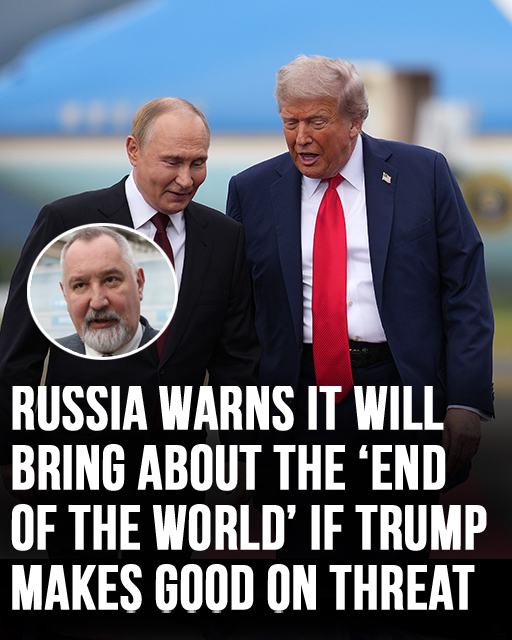
Russia has publicly monitored the unfolding situation and issued statements through officials and media channels, emphasizing that Western narratives portraying Russian threats to Greenland are exaggerated. While some Russian commentators have suggested that U.S. ambitions in Greenland could destabilize the Arctic, there is no evidence that Moscow intends military action against Greenland or Denmark. Instead, Russia’s engagement is largely rhetorical and strategic, framing criticism around perceived Western hypocrisy and the need for a rules-based international order that respects sovereignty. Moscow’s position highlights a broader pattern of Arctic great-power competition, where states use media, diplomatic statements, and military exercises to assert interests without triggering direct conflict. The Arctic is now a theater where perception, signaling, and preparation are as critical as physical deployments. Analysts note that Russian concern is heightened by the potential for U.S. missile defense initiatives, like proposals that have been referenced in public discourse, to be stationed in Greenland, as these could alter strategic calculations, even if they remain hypothetical or in early planning stages. Russia’s approach demonstrates the careful balancing act nations engage in when responding to perceived threats: voicing strong opposition without creating immediate military escalation.
The United States maintains a long-standing military presence in Greenland, primarily at the Pituffik Space Base, which historically supported Arctic and missile warning operations. Current U.S. discourse about Greenland emphasizes strategic value, missile defense considerations, and Arctic surveillance capabilities, but does not include verified plans for annexation or hostile takeover. Analysts stress that many of the scenarios described in media coverage — including dramatic assertions of global destabilization or nuclear confrontation — are speculative and not confirmed by credible sources. Nonetheless, U.S. policymakers continue to assert the importance of Greenland for national security, particularly as the Arctic becomes more navigable and contested due to climate change. This has prompted European allies and Denmark to reassert the primacy of consent, law, and partnership in determining military and infrastructure decisions. The U.S. approach illustrates the tension between strategic interests and diplomatic norms, where rhetoric can escalate perceptions of threat even in the absence of concrete action, requiring careful management to prevent misinterpretation and overreaction by other global actors.

The broader international response underscores a shifting balance of power in the Arctic and the importance of cooperative mechanisms to prevent conflict. Greenland serves as a microcosm of how global governance, climate change, resource competition, and alliance politics intersect. Observers note that the situation reveals the fragility of assumptions about alliance solidarity, especially when strategic ambitions clash with legal and ethical principles. NATO members are navigating these challenges through diplomacy, coordination, and public messaging, emphasizing that sovereignty and partnership are non-negotiable. This approach reinforces the principle that strategic geography, while important, cannot override international norms or local self-determination without serious repercussions for trust, credibility, and long-term security. In the High North, every statement, military exercise, and diplomatic engagement carries weight far beyond immediate territorial concerns.
Looking ahead, Greenland’s role in Arctic geopolitics will remain central to discussions about climate change, security, and global strategy. U.S., European, and Russian actors continue to monitor developments closely, balancing ambition with restraint, and asserting interests through diplomacy, signaling, and presence rather than direct confrontation. Denmark and Greenland are likely to maintain firm control over their territory, asserting sovereignty and agency while cooperating with allies on security initiatives that respect local autonomy. The lessons of this episode underscore the enduring importance of diplomacy, transparency, and respect for international law in managing complex strategic landscapes, where geography, climate, and global power intersect. Greenland is not merely an Arctic territory; it is a symbol of how strategic foresight, alliance management, and principled negotiation can prevent escalation, maintain peace, and uphold the rights of local populations even amid growing geopolitical competition.