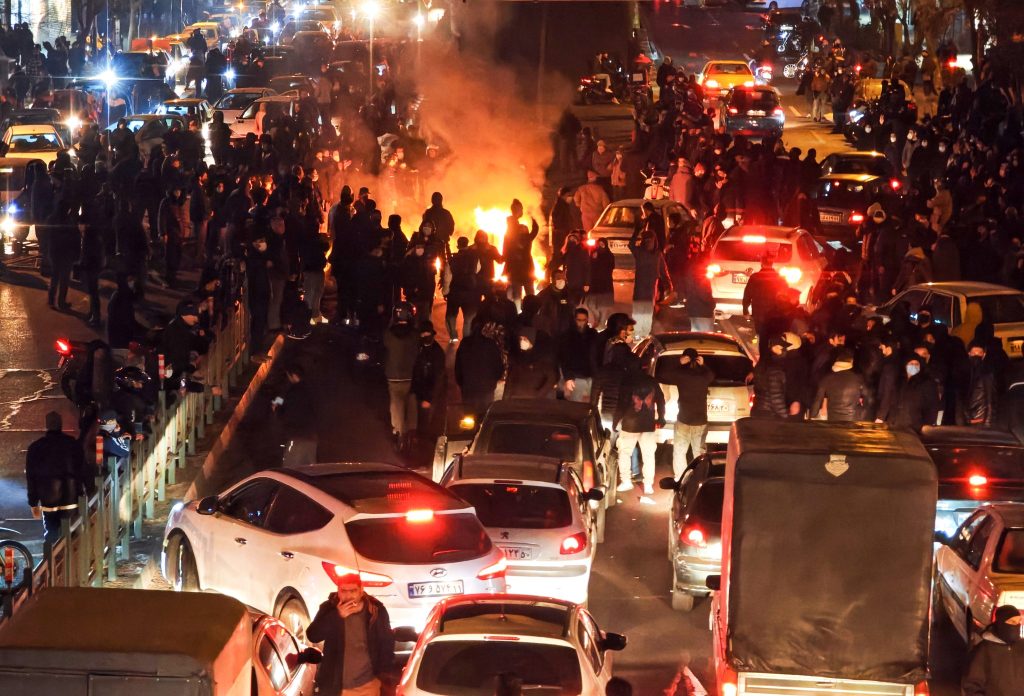
The case of Erfan Soltani emerged from the chaos of Iran’s winter protests as a stark symbol of how quickly ordinary lives can be swept into extraordinary danger. A 26-year-old shopkeeper from Fardis, near Karaj, Soltani was arrested after attending demonstrations sparked by the collapse of Iran’s currency and the economic pressure suffocating everyday families. What began as localized protests soon grew into a nationwide movement demanding political reform, accountability, and relief from inflation that had stripped savings of value almost overnight. In this volatile atmosphere, Soltani’s detention took on ominous weight when reports surfaced that he had been sentenced to death, making him the first protester allegedly facing execution amid the unrest. For many Iranians, his name became shorthand for the terrifying speed with which dissent could be transformed into a capital crime.
The urgency surrounding Soltani’s case intensified when his family learned that his execution was scheduled for January 14, with reports claiming he would be given only ten minutes to say goodbye before his sentence was carried out. Human rights organizations warned that he had been denied access to a lawyer and deprived of a meaningful legal defense, raising fears that the judicial process had been reduced to a formality designed to send a message rather than deliver justice. As news spread, Soltani’s family made desperate appeals to the international community, pleading for intervention before time ran out. Their anguish reflected a broader reality faced by thousands of families across Iran, where arrests, secretive trials, and harsh sentences have created an atmosphere of fear and uncertainty that extends far beyond those directly involved in protests.

International attention reached a new level when U.S. President Donald Trump addressed the situation publicly, warning that the United States would take “very strong action” if Iran executed peaceful protesters. Speaking in an interview, Trump framed the issue not only as a human rights concern but as a red line with geopolitical consequences. His remarks echoed across global media, amplifying pressure on Iranian authorities already facing condemnation from rights groups and foreign governments. For Soltani’s family and supporters, the statement offered a fragile sense of hope, though one tempered by the knowledge that words alone do not always translate into protection. Still, the intervention underscored how individual cases can become focal points in broader international power struggles, where the fate of one person is weighed against diplomatic leverage and political signaling.
Hours after the time Soltani was expected to be executed, his family reportedly received a call from prison authorities informing them that the execution had been postponed. Relief washed over supporters, but it was cautious and incomplete. A stay of execution does not equal freedom, nor does it guarantee safety in a system where charges can be reinterpreted and sentences revisited. Iranian judicial officials have since denied that Soltani was formally sentenced to death, insisting that he faces other charges related to national security. Human rights organizations dispute these claims, pointing to a lack of transparency and the pattern of rapid, opaque prosecutions used to intimidate protesters. The conflicting narratives highlight the difficulty of establishing truth in an environment where information is tightly controlled and fear distorts official accounts.
Soltani’s case cannot be separated from the broader context of Iran’s crackdown. Since protests erupted in December, independent groups estimate that thousands have been killed and tens of thousands detained, figures that Iranian authorities strongly contest. Statements from senior judicial officials threatening swift trials and executions have fueled fears that the justice system is being used as an instrument of deterrence rather than law. Within this landscape, Soltani became a symbol of resistance for activists and a cautionary example for the state. His near-execution demonstrated how quickly symbolic power can attach itself to an individual, turning a private citizen into a test case for the regime’s willingness to silence dissent at any cost.
For now, Erfan Soltani remains alive, but his future is uncertain. His family’s plea to the international community reflects a deeper question facing the world: how much influence external pressure truly holds when set against internal repression. Trump’s warning may have contributed to the postponement, or it may simply have coincided with internal calculations within Iran’s leadership. What is clear is that the global spotlight can sometimes slow the machinery of punishment, even if it cannot stop it entirely. Soltani’s story stands as a reminder that behind geopolitical rhetoric and diplomatic threats are real human lives, suspended between hope and fear, waiting to see whether attention will translate into lasting protection or fade once headlines move on.