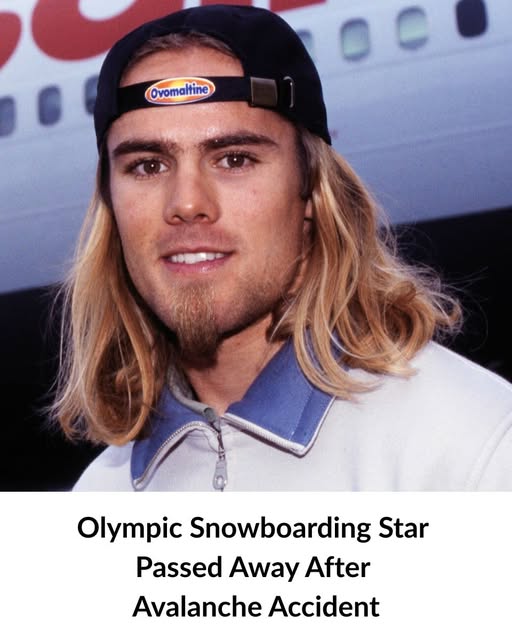
Ueli Kestenholz’s death sent a quiet but powerful shock through the world of winter sports, not because danger was unfamiliar to him, but because his life had become a symbol of how deeply and respectfully a human being could move within the mountains. At fifty years old, Kestenholz was not simply a former Olympic athlete remembered for medals and podiums; he was a figure whose identity was inseparable from snow, wind, altitude, and motion. His passing after being caught in an avalanche in Switzerland’s Lötschental valley feels especially heavy because the mountains were not just the backdrop of his career, but the central relationship of his life. For those who followed him, his story was never about reckless risk or adrenaline alone. It was about discipline, intuition, experience, and an almost spiritual connection to alpine terrain. When news of his death was confirmed by the Swiss Ski Federation, tributes reflected not only grief but deep respect for someone who embodied the essence of mountain sports with humility and intelligence.
Kestenholz first rose to international prominence at a time when snowboarding itself was still fighting for recognition and legitimacy. Born in 1975, he discovered snowboarding as a teenager and quickly revealed a rare blend of technical control and fearless creativity. His bronze medal at the 1998 Winter Olympics in Nagano marked a defining moment, not only for his own career but for Swiss snowboarding as a whole. That Olympic appearance came during snowboarding’s early years on the world’s biggest stage, when athletes were still shaping how the sport would be perceived by audiences, federations, and younger riders watching from home. Kestenholz represented a new kind of winter athlete—one who blended athletic precision with the freer, expressive roots of snowboarding culture. He was respected not just for results, but for how he carried himself, demonstrating that snowboarding could be both competitive and deeply authentic.
What made Kestenholz truly exceptional was not only his early success, but his longevity and evolution. Representing Switzerland again at the 2022 Winter Olympics in Beijing, more than two decades after his first Olympic appearance, was a rare achievement that spoke volumes about his dedication and adaptability. Few athletes in any discipline can span generations in that way, remaining relevant and capable as the sport changes around them. His participation reflected a career defined not by a single peak, but by sustained passion. Even after stepping away from competitive racing in 2006, Kestenholz did not retreat from the mountains. Instead, he expanded his relationship with them, embracing freeriding, speedriding, paragliding, kitesurfing, skydiving, wing foiling, mountain biking, and surfing. He lived as a complete outdoor athlete, guided by experience rather than ego.
Those who knew Kestenholz personally often described him as calm, thoughtful, and deeply knowledgeable about alpine environments. He was not someone who chased danger blindly; rather, he respected it. His understanding of terrain, weather, and movement was earned through decades of immersion. This makes the circumstances of his passing especially sobering. According to authorities, the avalanche struck suddenly while he was snowboarding with a friend, who was able to escape. Kestenholz was buried and later freed through a combined rescue effort involving his companion, the Valais Cantonal Rescue Organization, and Air Zermatt helicopters. Despite these efforts, he later died from his injuries in hospital. The tragedy serves as a stark reminder that even the most experienced athletes are never immune to nature’s unpredictability, especially in environments as powerful and complex as the high Alps.
Beyond medals and achievements, Kestenholz’s legacy lives in the culture he helped shape. He was part of the generation that bridged competitive snowboarding and freeride philosophy, showing that technical excellence and love for the mountains need not exist in opposition. Younger athletes looked to him as proof that a life in snow sports did not have to end with retirement from competition. His continued presence in outdoor communities, his willingness to explore new disciplines, and his visible joy in movement made him an inspiration far beyond Olympic results. He represented a holistic approach to sport—one where curiosity, respect, and lifelong learning mattered as much as victory.
Ueli Kestenholz’s life reminds us that some athletes are defined not by how they die, but by how fully they live. His story is one of motion, exploration, and deep connection to the natural world. While his passing leaves a painful absence, it also leaves behind a powerful example of what it means to commit oneself to a passion with integrity and humility. In remembering him, the snowboarding and mountain communities are not only mourning a loss but honoring a life that moved in harmony with risk, beauty, and freedom. His legacy endures in the tracks left behind, the athletes inspired, and the understanding that the mountains, while unforgiving, remain a place where human spirit has always sought meaning.