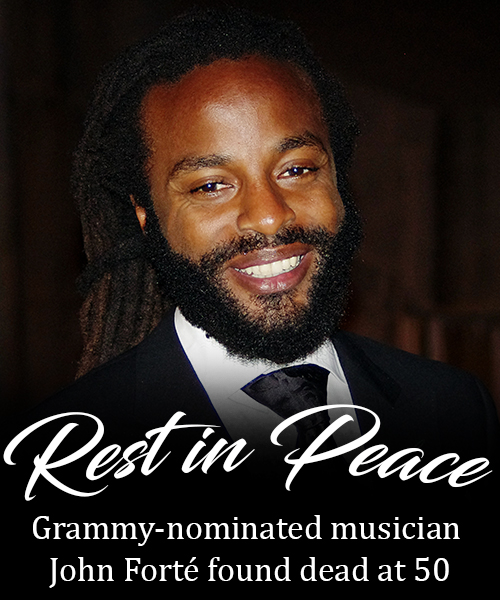
John Forté was never just a background figure in hip-hop history. Though many first came to know his name through his work with the Fugees and the Refugee Camp All-Stars, his presence carried a depth that went far beyond chart positions or liner-note credits. His death at age 50 has left a quiet but profound ache in the music world, a reminder that some of the most influential voices do not always stand at the center of the spotlight. Forté’s artistry lived in nuance — in thoughtful lyrics, in layered production, and in a willingness to expose vulnerability in a genre that often demands armor. His passing marks not only the loss of a gifted musician, but of a storyteller whose life mirrored the complexity of his art.
Born in New York City, John Forté came of age during a period when hip-hop was evolving into a global cultural force. He possessed a rare musical fluency, blending rap, melody, and instrumentation with a reflective tone that set him apart. His work on The Score, the Fugees’ Grammy-winning album, helped shape a sound that balanced political awareness, emotional honesty, and commercial appeal. Yet Forté never sought to dominate the stage. Instead, he thrived in collaboration, weaving his voice into collective projects while quietly sharpening his own creative identity. Those who listened closely recognized his fingerprints — subtle, deliberate, and deeply human.
Forté’s life, however, was not defined solely by artistic success. In 2000, he faced a turning point that would reshape his trajectory entirely when he was sentenced to a lengthy prison term on drug-related charges. For many artists, such a chapter might have marked an irreversible end. For Forté, it became a period of reckoning, reflection, and inner transformation. Behind prison walls, he continued to write, think, and reimagine what his voice could mean. His eventual release, following a sentence commutation after seven years, did not arrive as a triumphant return to fame, but as a quiet re-entry into a world he now saw differently. That experience infused his later work with a gravity that could not be manufactured.
After his release, Forté’s music took on an even more introspective tone. Albums like Poly Sci and I, John reflected a man wrestling with consequence, forgiveness, and the fragile gift of second chances. His lyrics carried the weight of lived experience, speaking not just about survival, but about responsibility, humility, and growth. He did not shy away from acknowledging his past, nor did he allow it to define him entirely. Instead, he used it as a lens through which to explore identity, justice, and the cost of choices — themes that resonated deeply with listeners who had faced their own reckonings.
Beyond the music, those who knew John Forté personally often described him as thoughtful, gentle, and deeply aware of the world around him. He was a husband, a father, and a man who understood that legacy is built not only through accomplishments, but through character. In recent years, he lived a quieter life, balancing creativity with family and reflection. His presence was less about constant visibility and more about authenticity — a quality increasingly rare in an industry driven by noise and spectacle. When news of his death spread, tributes poured in not just from fellow musicians, but from fans who felt seen by his words.
John Forté’s story is not one of perfection, but of complexity — and that is precisely why it matters. He embodied the truth that artistry and humanity are inseparable, that brilliance can coexist with struggle, and that redemption is not a headline but a lifelong process. As the music world mourns his passing, his work remains — a testament to resilience, creativity, and the quiet power of a voice that refused to disappear. Rest in peace, John Forté. Your music still speaks, and it always will.