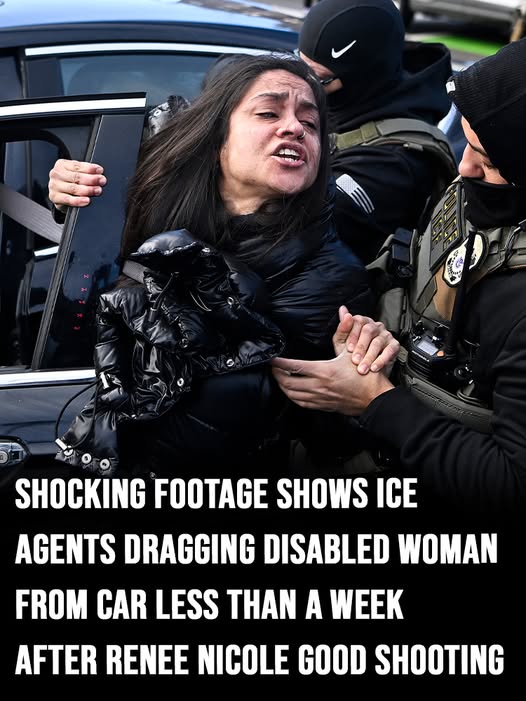
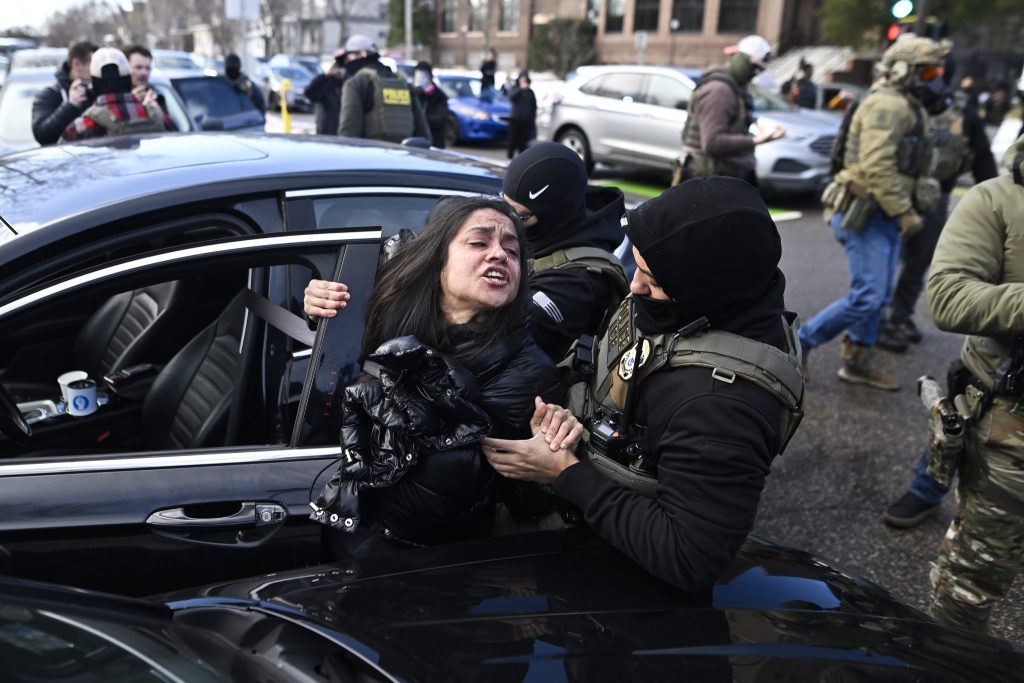
The incident in Minneapolis that captured nationwide attention began as a routine enforcement action but quickly escalated into a moment that exposed deep fractures in the relationship between federal authorities and local communities. Footage circulating online shows a disabled woman being forcibly removed from her vehicle by federal immigration agents, an event that occurred just days after the controversial shooting of Renee Nicole Good, a 37-year-old mother whose death ignited protests and public debate over ICE tactics. Witnesses describe a chaotic scene: agents forcibly opening car doors, dragging the woman onto the street, while bystanders shouted protests and urged the officers to reconsider the use of force. The video’s visceral impact went beyond the immediate shock of the event, prompting broader questions about accountability, procedure, and the human cost of aggressive immigration enforcement policies in heavily scrutinized urban environments.
The broader context of the Minneapolis operation adds complexity to the incident. The Trump administration dispatched thousands of federal agents, calling it the largest ICE deployment in recent history. Their stated goal was to target undocumented immigrants in the Minneapolis–Saint Paul area, a mission framed as law enforcement but heavily criticized for its timing, scope, and tactics. Communities were already on edge following the fatal shooting of Renee Nicole Good just a week earlier, an event that had triggered nationwide protests and amplified scrutiny on ICE operations. Local authorities, civil rights organizations, and state governments questioned the legality and morality of sending highly armed federal personnel into neighborhoods with minimal transparency. Residents report a growing atmosphere of fear, uncertainty, and distrust, where encounters with federal agents can escalate rapidly, leaving families and individuals vulnerable and anxious about their safety and rights.
This latest viral video exemplifies the challenges of enforcing immigration law in ways that balance authority with humanity. The woman pulled from her vehicle identified herself as disabled, explaining that she was on her way to a doctor’s appointment, a plea seemingly ignored amid the chaos of the encounter. The stark images and accompanying audio drew national attention, with social media users, advocacy organizations, and journalists highlighting the apparent disparity between law enforcement procedure and the basic dignity owed to individuals. Many observers compared the scene to previous instances of excessive force, emphasizing a pattern in which marginalized or vulnerable individuals are disproportionately affected by federal enforcement actions. The widespread sharing of the clip demonstrates how technology amplifies local incidents into national debates, influencing public opinion and policy discussions in real time.
Public reaction has been swift and intense. On the streets of Minneapolis and online platforms alike, citizens condemned what they viewed as unnecessary brutality. “Where is your humanity?” asked a passerby captured on the video, reflecting the sentiments of a community frustrated by aggressive tactics and limited transparency. Civil rights advocates echoed these concerns, arguing that the events illustrate systemic issues in federal immigration enforcement and the need for stronger oversight. Local leaders and elected officials have called for immediate investigations, policy reviews, and protective measures to ensure that vulnerable populations are not further harmed. The incident has reignited discussions about the appropriate balance between national security objectives and human rights, with critics arguing that the aggressive approach undermines public trust and endangers both civilians and law enforcement personnel.
The legal and political ramifications of this episode are still unfolding. Minnesota’s state government has previously filed lawsuits to block federal deployments deemed overreaching, and this event only strengthens their case. Attorneys representing community members, families affected by ICE operations, and civil rights organizations are exploring options for legal action, ranging from lawsuits alleging civil rights violations to calls for policy reforms at the federal level. In parallel, media scrutiny and public outrage create pressure on lawmakers, government agencies, and the administration to justify enforcement strategies, adhere to procedural norms, and consider the human impact of their operations. Analysts note that incidents like this have long-term consequences, shaping both public perceptions of government authority and the willingness of communities to cooperate with law enforcement initiatives in the future.
Ultimately, the woman dragged from her car is emblematic of the broader tensions between immigration policy, enforcement tactics, and human dignity in the United States. Her experience, captured and disseminated in real time, forces a national reckoning with questions about power, vulnerability, and accountability. Beyond the immediate outrage, the incident underscores the fragility of trust in public institutions, particularly when aggressive enforcement collides with everyday lives. As policymakers, community leaders, and citizens grapple with the fallout, the Minneapolis encounter serves as a stark reminder that law enforcement actions carry consequences far beyond the moment of execution, shaping the social, political, and moral fabric of society in ways that demand reflection, reform, and vigilance.