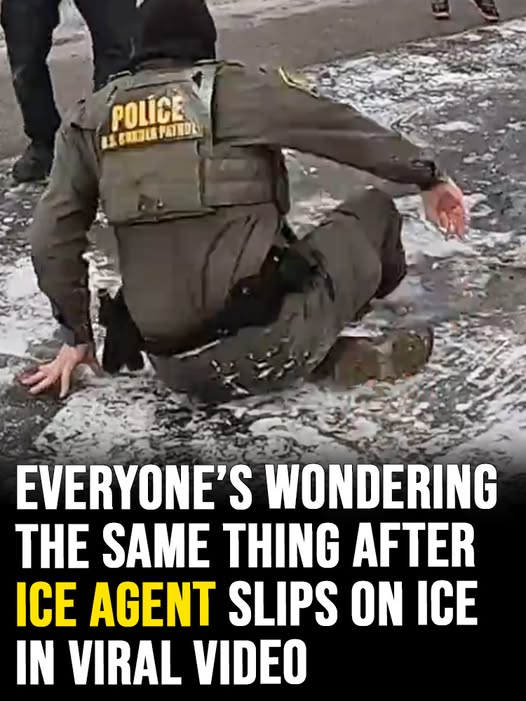
The past week in Minneapolis and Saint Paul has unfolded under an intense national spotlight, as the arrival of ICE agents ignited protests, outrage, fear, and fierce political debate. Their deployment followed a series of enforcement actions that quickly became the subject of global headlines, amplified by the tragic killing of 37-year-old mother-of-three Renee Nicole Good, who was fatally shot while sitting in her car. Officials claimed she attempted to run over an agent, a narrative that drew sharp criticism and skepticism from activists, community leaders, and ordinary citizens who took to the streets demanding accountability. In this emotionally charged atmosphere, cameras were everywhere. People filmed arrests, confrontations, and moments of raw tension that reflected a city grappling with grief, anger, and uncertainty. Yet amid the seriousness of the unfolding crisis, one unexpected moment broke through the heaviness—not with outrage or violence, but with an unscripted slip on a patch of ice that transformed fear into laughter, if only for a moment.
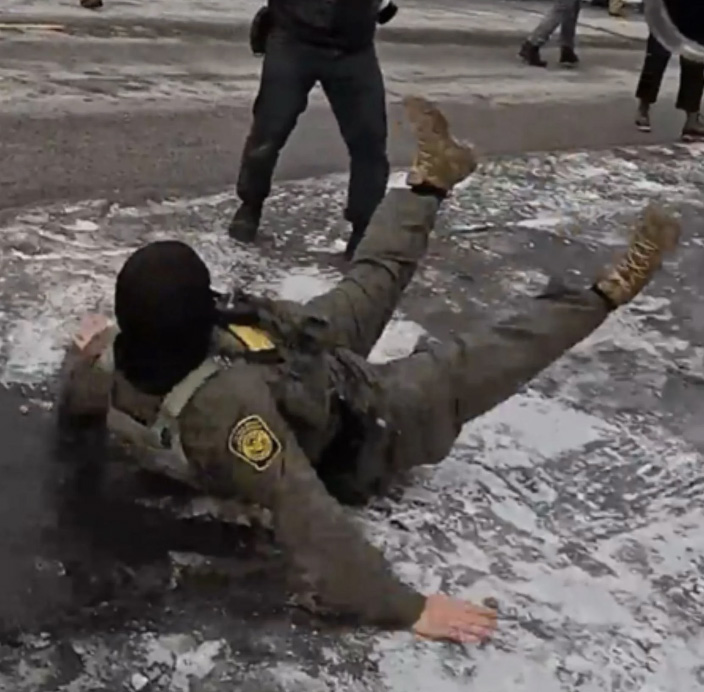
The viral clip, first shared on Reddit by user BenRocks7, shows an ICE agent running toward a shouting protester during one of the demonstrations. The scene feels tense at first, echoing countless other videos where law enforcement charges toward civilians amid shouting and chaos. But just seconds later, the tone shifts dramatically. The agent loses footing, slipping on the icy pavement and tumbling forward before ever reaching the protester. The fall is quick, clumsy, and unmistakably human. Instead of screams or sirens, the background fills with laughter and applause from bystanders who appear stunned, then delighted, by the sudden reversal of power and momentum. The clip quickly racked up more than 74,000 upvotes, spreading across platforms as people replayed the moment again and again, asking the same unspoken question: how could something so small feel so satisfying in such a heavy moment?
Online reactions poured in, many of them dripping with humor, sarcasm, and dark wit. Commenters described the joy of the bystanders as “pure,” noting how badly people seemed to need that brief release of laughter. Others leaned into wordplay, joking that it was “ice assaulting ICE,” while some mocked the agent’s appearance, saying he couldn’t have looked more foolish if he tried. Several users praised the timing and composure of the person filming, calling the camerawork “beautiful” and perfectly framed, as if the universe itself had staged the moment. One popular comment reminded viewers of basic winter wisdom—“You gotta walk like a penguin”—while another, more biting remark speculated grimly about whether the agent might return with a weapon, a comment reflecting deep distrust and fear rooted in recent events. The humor was loud, but beneath it ran a current of bitterness, relief, and unresolved anger.
What made the video resonate so widely was not just the fall itself, but what it symbolized to so many viewers. In moments of protest and police presence, power dynamics are usually rigid and intimidating. Agents are armored, armed, and trained, while civilians are often vulnerable, frightened, or enraged. The slip on the ice disrupted that script, even if briefly. It reminded people that authority figures are still subject to gravity, weather, and basic human clumsiness. For many watching, the moment felt like a rare crack in an otherwise overwhelming display of force. It did not erase the pain of what had happened in the city, nor did it resolve the questions surrounding Renee Nicole Good’s death, but it offered a fleeting sense of balance—an instant where fear loosened its grip and laughter took its place. In times of crisis, such moments can feel almost rebellious in their own quiet way.
At the same time, the video sparked debate about empathy, mockery, and the ethics of laughing during serious events. Some argued that making jokes about the fall trivialized the broader issues at stake, including loss of life, alleged misconduct, and the trauma experienced by immigrant communities. Others countered that humor has always been a coping mechanism, especially in moments when people feel powerless or unheard. The laughter, they said, was not about wishing harm on anyone, but about releasing tension built up over days of fear and anger. The fact that no one was seriously injured allowed the moment to live in that gray space between comedy and commentary, reflecting how social media often processes real-world conflict through memes, clips, and viral soundbites.
Ultimately, the viral ICE slip video became more than a moment of slapstick humor; it became a snapshot of a society under strain, searching for any release valve it can find. It showed how quickly tone can shift in the digital age, how a single unexpected second can travel the world and spark thousands of reactions, and how people use humor to navigate fear, grief, and outrage. Everyone may be wondering the same thing after watching the clip—how such a serious moment could produce laughter—but the answer lies in its humanity. In a week defined by loss, anger, and confrontation, the fall on the ice reminded people that even in the coldest, most tense conditions, something as simple as gravity can briefly level the playing field, turning dread into laughter and leaving behind a moment that, for better or worse, no one will soon forget.