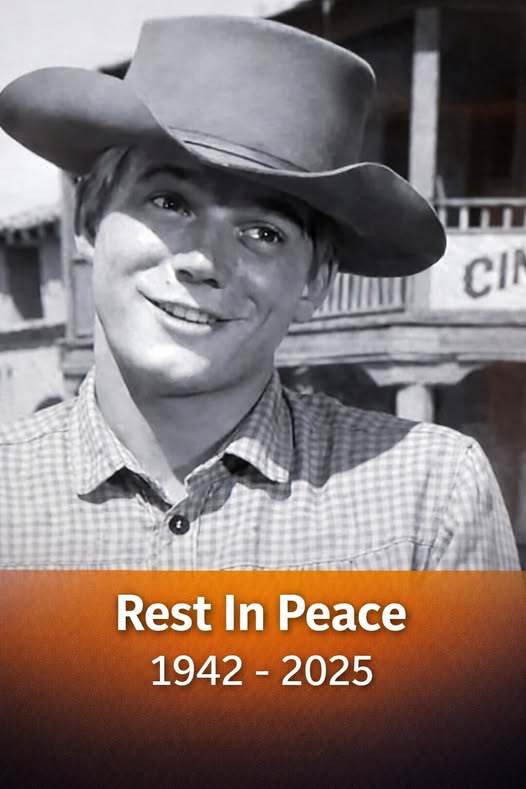
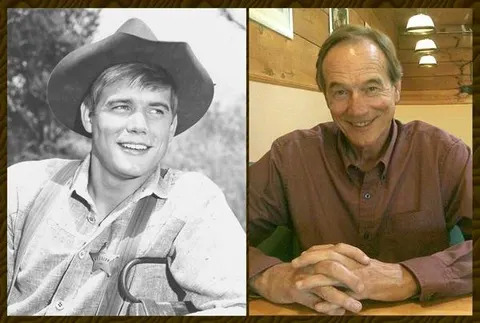
For countless television viewers, Gunsmoke was more than a mere show; it was a ritual, a weekly appointment that families kept, gathering around their screens to witness tales of justice, community, and moral struggle in the rugged backdrop of Dodge City. Within this cherished world, Roger Ewing emerged as a quiet but compelling presence, joining the cast during a pivotal era. His role as the dependable young deputy offered viewers someone to admire for his steadiness, sincerity, and the subtle emotional depth he brought to each episode. Even decades later, fans recall his performance as emblematic of the series’ heart, the kind of character who made the dangers and challenges of frontier life feel real, human, and relatable. Ewing’s contribution, though concentrated within a few seasons, helped reinforce Gunsmoke’s enduring place in television history, reminding audiences of the values that resonated across generations—loyalty, courage, and integrity.
Ewing’s entry into the world of Gunsmoke came in the mid-1960s, initially in brief appearances before he assumed a recurring role that solidified his place in the series’ narrative. At just twenty-three, he carried a calm, almost understated presence, yet it was precisely this quality that made him so effective on screen. His portrayal of a young deputy, searching for purpose after personal loss, struck a chord with viewers who saw in him a reflection of their own experiences of growth, responsibility, and finding one’s place in the world. Within the bustling, sometimes chaotic environment of Dodge City, his character’s steadfastness became a stabilizing force, providing both narrative continuity and emotional resonance. Writers and directors of the series recognized his potential, gradually crafting episodes that allowed Ewing to explore vulnerability, determination, and quiet heroism, creating moments that audiences would remember long after the credits rolled.
Long before he ever set foot on the Gunsmoke set, Ewing had been captivated by the show’s stories. As a teenager, he performed in a school parody of Gunsmoke, a testament to both his admiration for the series and his early creative instincts. These formative experiences likely shaped his understanding of the characters and the rhythm of Western storytelling, giving him a natural affinity for the role he would later inhabit. After brief college studies and early forays into acting, he confronted the universal challenges of Hollywood, including the threat of typecasting and the uncertainties of a young actor’s career. Despite these obstacles, his time on Gunsmoke became the defining chapter of his professional life, a period during which his talent met the right opportunity, leaving an imprint not only on audiences but also on the cultural memory of American television.
After leaving the show, Ewing pursued other acting opportunities, appearing in television and film roles that allowed him to explore different genres and character types. However, his career path ultimately took him in new directions, embracing creative pursuits outside of acting, including photography and travel. This exploration reflected his curiosity, adaptability, and willingness to find fulfillment beyond the glare of Hollywood lights. Although the spotlight shifted away from him, the legacy of his Gunsmoke years remained intact, embedded in the hearts of fans who continued to cherish reruns, documentaries, and memories of his performances. In interviews and retrospectives, both co-stars and fans have spoken of Ewing’s professionalism, his collaborative spirit, and the quiet generosity he brought to the set, demonstrating that impact is not always measured by screen time alone but by the lasting impression a performer leaves on colleagues and audiences alike.
Ewing’s personal story resonates because it embodies the balance between aspiration and humility, fame and privacy. Unlike some contemporaries, he never sought to remain in the public eye indefinitely, choosing instead to craft a life rich with experience and reflection. The young deputy of Dodge City became a symbol of the everyman hero—a figure navigating challenges with integrity, empathy, and courage. His presence reminded viewers that heroism does not always roar; sometimes, it walks quietly, speaks softly, and yet leaves an indelible mark. Fans who grew up watching him recognize this, recalling the moments when his character offered comfort, guidance, or inspiration, even within the tense, action-filled storylines of the Old West. Such enduring affection underscores the power of storytelling and the subtle ways in which performers like Ewing shape our collective imagination.
Today, as the entertainment world pauses to honor Roger Ewing at the age of eighty-three, his legacy remains unmistakable. Though he stepped away from acting decades ago, the warmth, reliability, and understated strength he brought to Gunsmoke continue to resonate. In an era when television has evolved in countless ways, the timelessness of his work serves as a reminder of storytelling’s enduring capacity to touch hearts, convey moral truths, and build shared memories across generations. Fans may remember him as the loyal young deputy, but Ewing’s story is larger than a single role; it is a testament to the quiet artistry of performance, the value of consistency and dedication, and the joy of connecting with audiences in ways that last long after the cameras stop rolling. For Roger Ewing, the heart of Gunsmoke, the spirit of Dodge City, and the memory of countless viewers, the impact is indelible, a life well-lived and a performance forever cherished.