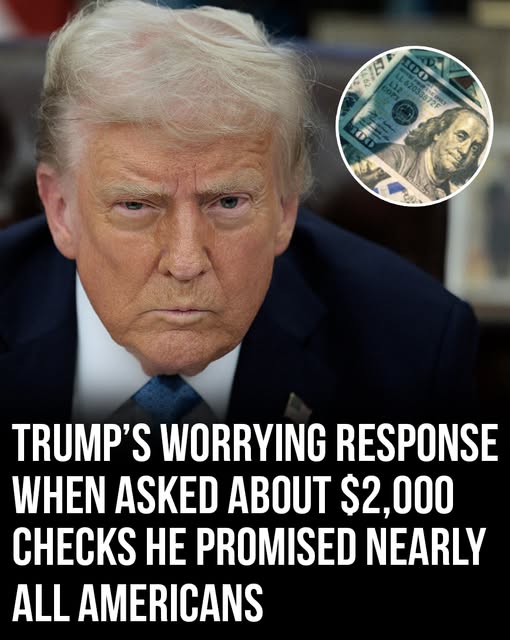
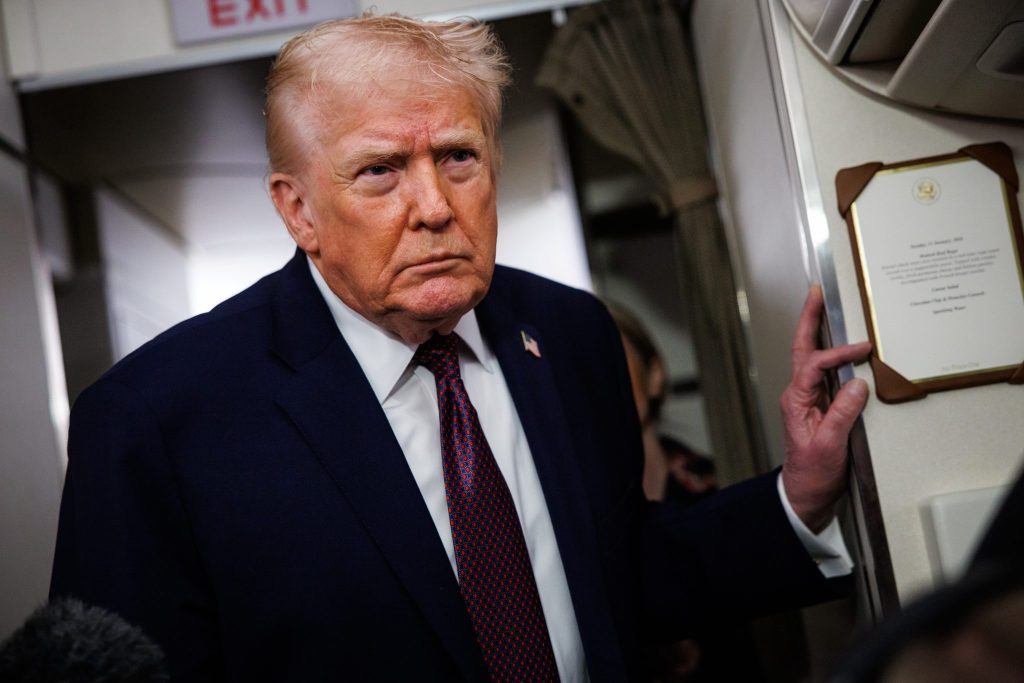
Tax season has a way of sharpening the public’s attention on government promises, and as January unfolds, renewed discussion around a possible new round of $2,000 payments has reignited anxieties that have lingered since the campaign trail. President Donald Trump’s remarks about dividend-style checks funded by tariff revenue were once framed as a bold, populist gesture aimed at low- and middle-income Americans. For many households navigating higher grocery bills, rent increases, and lingering debt, the idea of direct payments became more than a political talking point; it quietly entered personal budgeting conversations. That context explains why Trump’s recent Oval Office comments, in which he appeared momentarily uncertain about the very promise attributed to him, struck so many as unsettling. When a pledge that had been repeated publicly suddenly seemed fuzzy in recollection, it exposed a fault line between expectation and execution. The exchange did not merely raise eyebrows; it reopened questions about how modern economic promises are communicated, remembered, and ultimately fulfilled in an era when political messaging moves faster than policy mechanics.
The administration has argued that tariffs imposed on foreign goods would generate sufficient revenue to fund a broad-based dividend, presenting the policy as a way to return money directly to Americans rather than expanding traditional welfare programs. In theory, this approach allowed the White House to frame the payments as a byproduct of toughness on trade rather than deficit spending. Trump himself has spoken expansively about “hundreds of millions,” and at times “trillions,” of dollars flowing into federal coffers as a result of tariffs, language that resonated with supporters who viewed trade policy as both an economic and patriotic tool. Yet economists have consistently urged caution, pointing out that tariffs are ultimately paid by consumers through higher prices and that revenue projections often fall short of political rhetoric. The numbers most frequently cited tell a sobering story: even optimistic estimates of tariff revenue pale in comparison to the projected cost of sending $2,000 to most American households. That mismatch between aspiration and arithmetic lies at the heart of the skepticism now surrounding the proposal.
Complicating matters further is the legal uncertainty hanging over the tariff regime itself. Challenges winding their way toward the Supreme Court could determine whether significant portions of the collected revenue must be refunded, potentially wiping out the very pool of money earmarked for dividends. This looming decision injects an element of fragility into any promise tied directly to tariff income. Trump has acknowledged the stakes in unusually blunt terms, warning that an adverse ruling could leave the country in serious trouble. Such language underscores how much of the proposed payment plan depends on outcomes beyond the administration’s immediate control. For households listening closely, the message is mixed: assurances that checks are coming “toward the end of the year” sit alongside admissions that legal and fiscal realities could derail the plan entirely. The result is a climate of conditional hope, where optimism is tempered by the awareness that timelines and funding sources remain unsettled.
Inflation adds another layer of complexity to the debate. Even supporters of direct payments worry that injecting hundreds of billions of dollars into the economy could push prices higher, eroding the very relief the checks are meant to provide. Treasury Secretary Scott Bessent’s remarks about potential inflationary effects reflect a broader concern within conservative economic circles, where stimulus-style payments are often viewed with suspicion. His suggestion that Americans might be better served by saving rather than spending such funds highlights the tension between short-term relief and long-term stability. Republican lawmakers, too, have voiced unease, arguing that while targeted tax relief may be appropriate, broad cash distributions risk overheating an economy already sensitive to price pressures. These warnings complicate the narrative of easy money, reminding voters that economic policy rarely offers benefits without trade-offs.
Adding to the confusion is the evolving definition of what the promised “dividend” might actually look like. While the public imagination has latched onto the image of a $2,000 check arriving in the mail, administration officials have floated alternative interpretations, including expanded tax deductions, changes to withholding, and refunds delivered through the tax system. From eliminating taxes on tips and overtime to adjusting Social Security taxation, these proposals blur the line between direct payments and indirect relief. For some households, a larger refund or higher take-home pay could indeed approach the value of a one-time check. For others, especially those with limited taxable income, such measures may offer little immediate benefit. The lack of clarity fuels frustration, as Americans struggle to reconcile bold promises with shifting explanations that seem to redefine success after the fact.
Ultimately, the controversy surrounding the $2,000 checks is about more than dollars and cents; it is about trust. In the space between campaign rhetoric and governing reality, faith in political commitments is tested. Millions of Americans are listening not just for confirmation of a payment, but for consistency in leadership and honesty about constraints. When promises appear to change shape or fade under scrutiny, skepticism grows, regardless of partisan loyalty. The debate over tariff-funded dividends thus becomes a microcosm of a larger challenge facing modern governance: how to balance ambition with credibility, and how to speak to voters in a way that acknowledges uncertainty without undermining confidence. As scrutiny intensifies nationwide, the enduring question is whether words spoken under bright lights can retain their meaning once the cameras are gone, and whether the gap between promise and policy can still be bridged in a climate of economic anxiety and political polarization.