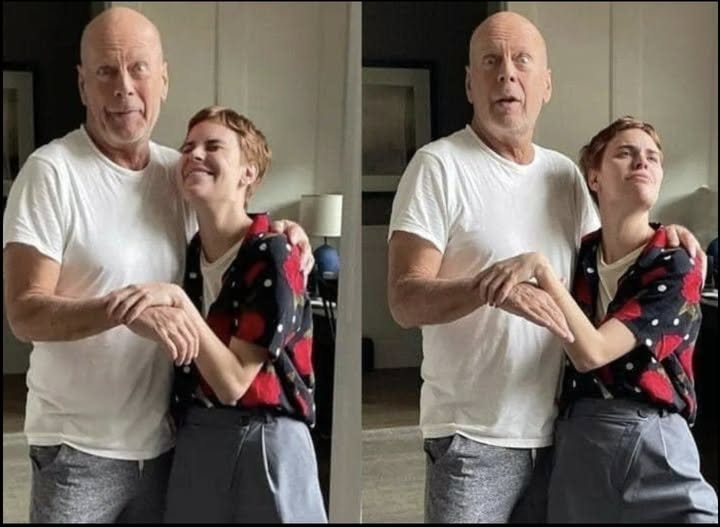
Bruce Willis has long been celebrated as one of Hollywood’s most enduring and charismatic figures, known for roles that defined entire genres and left an indelible mark on popular culture. From the sharp wit and grit of Die Hard to the layered intensity of Pulp Fiction, his performances shaped decades of cinema and earned him a devoted global following. In recent years, however, the spotlight has shifted from his career to his health, as his family has openly shared the realities of his diagnosis with frontotemporal dementia. The latest update—that Willis is now living in a nearby one-story home separate from his immediate household—has prompted widespread discussion, concern, and reflection. Rather than signaling distance or withdrawal, the move represents a carefully considered step rooted in medical guidance, emotional sensitivity, and a deep commitment to preserving his dignity and comfort.
Emma Heming Willis, Bruce’s wife and primary advocate, has been transparent about how the family arrived at this decision. Speaking publicly, including in an ABC special titled The Unexpected Journey, she described the relocation as one of the most emotionally difficult choices she has ever made. It was not driven by convenience or detachment, but by the evolving needs created by Bruce’s condition. Frontotemporal dementia affects behavior, communication, and emotional regulation, often making everyday environments overwhelming. For Bruce, noise, unpredictability, and stimulation that once felt normal began to cause distress. The move to a calm, single-story home nearby allows him to live in a space designed around consistency, quiet, and safety, while remaining physically close to the people he loves most.
Bruce’s health journey became public in 2022, when his family announced that he had been diagnosed with aphasia, a condition that impairs language and communication. At the time, the news was met with both sympathy and confusion, as many fans struggled to understand how such a condition might affect someone so associated with dialogue-driven performances. Less than a year later, doctors confirmed that the aphasia was a symptom of frontotemporal dementia, a progressive neurological disease that affects personality, behavior, and communication rather than memory alone. This diagnosis clarified many of the challenges the family had been quietly managing and underscored the importance of adjusting Bruce’s environment to match his changing needs.
One of the most sensitive aspects of the decision involved the impact on the family’s daily life, particularly on their two daughters, Mabel Ray and Evelyn Penn. Emma has spoken candidly about the sacrifices required to create a low-stress environment for Bruce, including limiting household noise and social activity. Over time, it became clear that these adjustments, while made with love, were also shaping the girls’ childhood experiences in ways that felt unfair. The move was designed to strike a balance: giving Bruce the calm, structured setting he responds to best, while allowing the rest of the family to maintain a more typical home environment. Emma emphasized that this choice aligned with what Bruce himself would have wanted—protecting his children from becoming inadvertent caregivers and preserving their sense of normalcy.
Despite living in a separate space, Bruce is not isolated or removed from family life. Emma has been clear in addressing misconceptions that relocation means emotional distance. The family spends meaningful time together, sharing meals, quiet moments, and familiar routines. Close friends and relatives continue to visit, and Bruce remains surrounded by people who know him deeply and treat him with respect and affection. Emma has repeatedly stressed that frontotemporal dementia does not erase a person’s humanity. While communication may change, emotional connection, comfort, and joy are still possible. Music, routine, gentle physical activity, and non-verbal expressions have become essential tools for maintaining connection and grounding Bruce in familiarity.
By choosing to speak openly about their experience, Emma Heming Willis has reframed the public conversation around dementia and caregiving. Rather than focusing solely on loss, she highlights presence, patience, and adaptation as acts of love. Caregiving, in this context, is not about holding on to what once was, but about honoring who someone is now. The family’s approach underscores that difficult choices can coexist with deep devotion, and that protecting dignity sometimes requires redefining what togetherness looks like. In sharing Bruce Willis’s journey, Emma offers insight not just into the life of a beloved actor, but into the universal challenge of caring for someone through irreversible change—reminding others that compassion, flexibility, and humanity remain possible even in the most challenging circumstances.