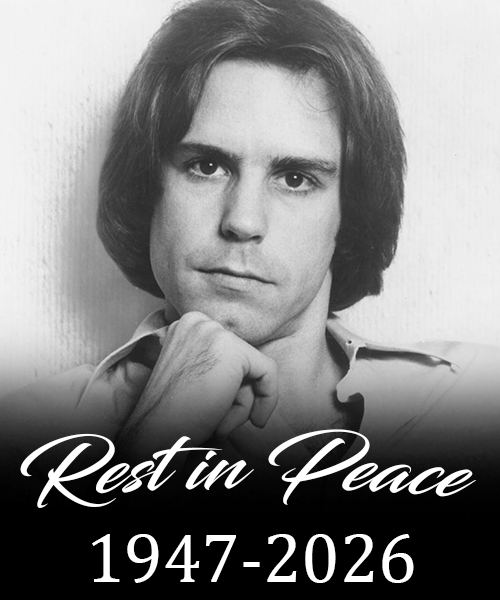
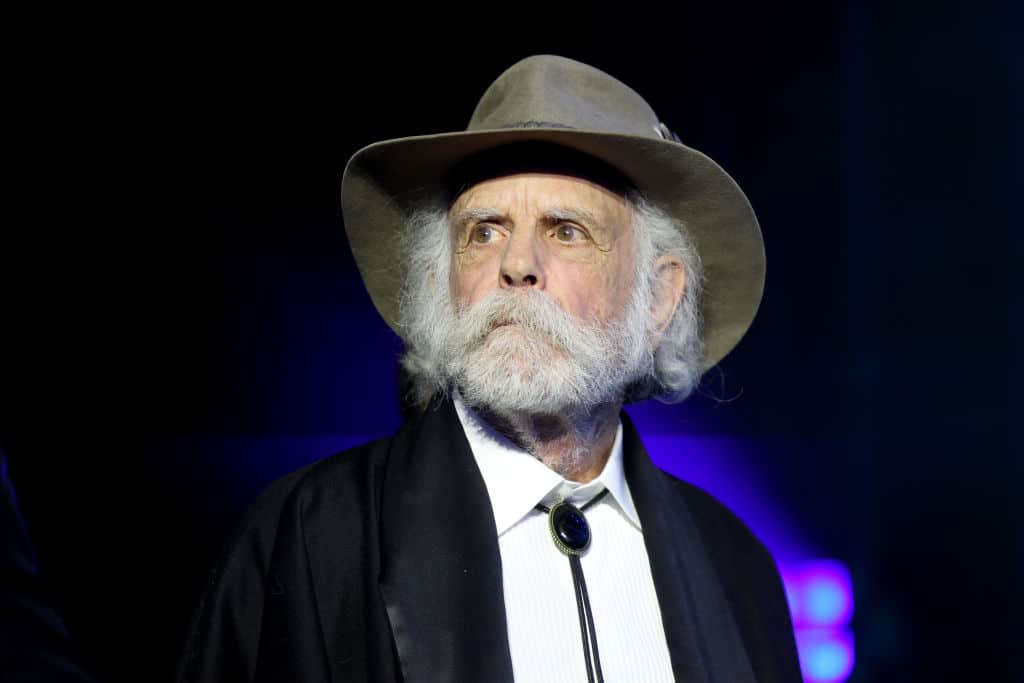
With heavy hearts, the world says goodbye to Bob Weir, the guitarist, vocalist, and founding force behind the Grateful Dead, who died peacefully at the age of 78 surrounded by loved ones. His passing closes a chapter that stretched across more than six decades, yet it leaves behind a living story that continues to unfold wherever his music is played. Weir was never simply a musician; he was a guide, a co-conspirator in curiosity, and a steady presence in a musical universe that rejected endings. From the earliest days of experimentation to his final appearances onstage, he embodied the idea that music is not a product but a journey—one meant to be shared, questioned, and constantly rediscovered. His death marks the loss of an iconic star, but his spirit remains woven into the fabric of American music and counterculture.
Bob Weir’s path into history began almost accidentally, the way many meaningful journeys do. As a teenager in the early 1960s, he wandered into a Palo Alto music store, drawn by the sound of a banjo drifting through the air. Inside, he met Jerry Garcia, and the two played late into the night, unaware that their spontaneous connection would soon alter the course of modern music. That chance meeting led to the formation of a band first called the Warlocks and soon renamed the Grateful Dead, a group that would become synonymous with exploration, freedom, and a refusal to be confined by genre or expectation. Emerging from the Haight-Ashbury scene and the legendary Acid Tests, the Grateful Dead did not simply reflect the spirit of their era—they helped shape it, offering a soundtrack for a generation searching for meaning beyond convention and certainty.
What followed defied every standard rule of the music industry. The Grateful Dead became legendary not because of chart-topping singles, but because of the experience they created night after night. Their concerts were living organisms, built on improvisation, risk, and trust between band and audience. Songs stretched, collapsed, and reassembled in new forms, guided as much by intuition as by structure. At the heart of this constantly shifting sound was Bob Weir’s rhythm guitar, a style that was angular, unconventional, and deeply musical. Rather than anchoring songs in predictable patterns, he played around the beat, creating space for exploration while quietly holding everything together. It was a role that required both discipline and daring, and Weir mastered it in a way that influenced generations of musicians who came after him.
As a songwriter, Weir helped give the Grateful Dead a voice that was at once poetic, political, playful, and profound. He co-wrote some of the band’s most enduring songs, including “Sugar Magnolia,” “Truckin’,” “Cassidy,” and “Throwing Stones,” each capturing a different facet of the Dead’s expansive worldview. These songs did more than entertain; they offered a language for people who felt out of step with the mainstream, a way to articulate longing, rebellion, humor, and hope all at once. His family later reflected that his work created not just sound, but a sense of belonging—an invisible thread connecting millions of listeners who found themselves reflected in the music. For many, discovering the Grateful Dead was not merely about finding a band to love, but about finding a place to belong.
That sense of community became one of Bob Weir’s greatest legacies. Deadheads followed the band from city to city, recording shows, trading tapes, and forming a culture that thrived well beyond commercial radio and traditional promotion. From iconic moments like Woodstock to massive gatherings such as the 1977 Englishtown, New Jersey concert, the Grateful Dead proved that music could endure without formulas or rigid expectations. Honesty, curiosity, and connection were enough. Even after the death of Jerry Garcia in 1995—a moment many believed would mark the end of the band’s story—Weir refused to let the music become a relic. Through later projects and incarnations, including Dead & Company, where he partnered with John Mayer, he carried the catalog forward, inviting new generations into a sound that refused to fade into nostalgia.
For Bob Weir, the road never truly ended. Even in his later years, his instinct was always to return to the stage. Just weeks after beginning cancer treatment, he appeared at Golden Gate Park in San Francisco, reuniting with surviving members of the Grateful Dead for concerts celebrating the band’s 60th anniversary. It was a familiar statement from a musician who believed that once music started moving, it should keep moving. Speaking about the fans who continued to find their way to the Dead’s music, Weir observed that they shared a common spirit—people drawn to adventure, curiosity, and the willingness to listen deeply. His performances were never about repeating the past; they were about keeping a conversation alive, one note at a time.
Beyond music, Bob Weir lived his values with quiet consistency. He was known for his activism, his vegetarian lifestyle, and his belief that music could serve as a force for compassion and connection. He often spoke about imagining the Grateful Dead’s songs living on for centuries, not as museum pieces, but as living works that remained relevant because they asked timeless questions. His family echoed that vision in their farewell, describing his departure not as an ending, but as a blessing—a reward for a life fully lived. He is survived by his wife, Natascha Münter, and his daughters, Monet and Chloe, who have requested privacy as they grieve a man who was not only a public figure, but a deeply present husband and father.
For six decades, Bob Weir helped millions find that rare space where the audience and the music meet, a place he once called “that hole in the sky.” It was a space defined by openness, trust, and the shared understanding that something meaningful was happening in real time, never to be repeated in quite the same way again. Now, he has gone through it first. Yet the music he helped create continues to roll on, carried forward by recordings, by living musicians, and by listeners who still gather—physically and in spirit—to follow the sound wherever it leads. Bob Weir may no longer walk onto the stage, guitar in hand, but his journey does not end here. In every improvisation, every shared chorus, and every moment when music becomes something more than sound, his presence remains. 🌹