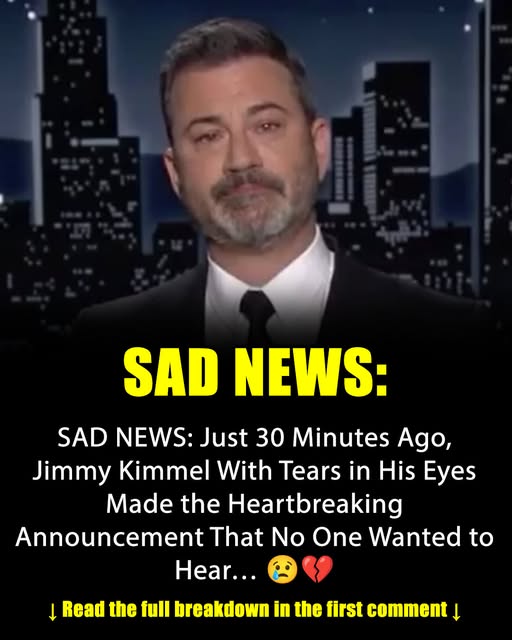
After more than twenty years behind the desk, Jimmy Kimmel is standing at a rare and reflective crossroads in his career. For millions of viewers, Jimmy Kimmel Live! has been a nightly ritual—part satire, part cultural commentary, part emotional release at the end of a long day. Yet behind the familiar monologue jokes and celebrity interviews, Kimmel has begun to openly acknowledge something many longtime hosts eventually face: the question of when it is time to step away. As he prepares to host the Academy Awards once again and reflects on the longevity of his show, Kimmel has spoken candidly about the possibility that his current contract could be his last. His words do not come across as dramatic or final, but thoughtful, measured, and honest, revealing a man who has already achieved what he once set out to do and is now considering what fulfillment looks like beyond the glow of studio lights.
When Jimmy Kimmel Live! premiered in 2003, late-night television was dominated by legacy figures, and few expected the show to evolve into one of the longest-running and most influential programs of its kind. Over the years, Kimmel’s style matured alongside his audience. What began as edgy, irreverent comedy gradually expanded to include political satire, heartfelt moments, and deeply personal monologues that resonated far beyond punchlines. He became a voice during national crises, a sharp critic of political hypocrisy, and at times, a vulnerable father speaking openly about his family’s health struggles. These moments reshaped how audiences viewed him—not just as a comedian, but as a human being willing to use his platform for empathy and reflection. As the show reached its 21st anniversary, the idea of stepping away feels less like abandoning success and more like honoring a complete chapter.
Kimmel’s recent remarks suggest that exhaustion is not the driving force behind his contemplation, but rather a sense of completion. Late-night television is relentless, demanding constant awareness of cultural shifts, political developments, and audience expectations. For more than two decades, Kimmel has lived on a schedule that rarely allows creative distance or personal breathing room. While he remains sharp and relevant, he has hinted that two more years may feel “sufficient,” not because he lacks passion, but because he values the idea of leaving while still engaged rather than overstaying his welcome. There is a quiet confidence in acknowledging when something has run its course, especially in an industry where longevity is often confused with obligation.
Beyond television, Kimmel has increasingly spoken about creative interests that have nothing to do with ratings or applause. Cooking, drawing, and sculpture may seem modest compared to hosting one of the biggest talk shows in America, but that contrast is precisely the point. These hobbies offer solitude, tactile creativity, and a sense of personal exploration that television rarely allows. For someone whose career has revolved around constant output and public consumption, the appeal of slower, quieter forms of expression is understandable. They represent not retirement, but reinvention—a chance to create without commentary, deadlines, or expectations from millions of viewers.
For fans, the idea of Jimmy Kimmel Live! ending carries emotional weight. The show has been a consistent presence through political upheaval, cultural change, and global uncertainty. Kimmel’s humor often reflected the national mood, providing both critique and comfort when needed most. His willingness to evolve, to admit doubt, and to speak openly about difficult topics helped redefine what late-night television could be. That is why his comments feel significant, even without a formal announcement. They signal an awareness that nothing meaningful lasts forever—and that endings, when handled with intention, can be just as powerful as beginnings.
Whether Jimmy Kimmel ultimately chooses to step away when his contract ends or decides to continue in some new form, his legacy is already secure. He reshaped late-night television by blending humor with humanity, satire with sincerity. If this chapter does come to a close, it will not be remembered as a sad ending, but as a thoughtful transition made on his own terms. In an industry that often resists change, Kimmel’s openness about uncertainty and possibility stands as a reminder that growth sometimes means knowing when to let go—and trusting that what comes next does not need a spotlight to matter.