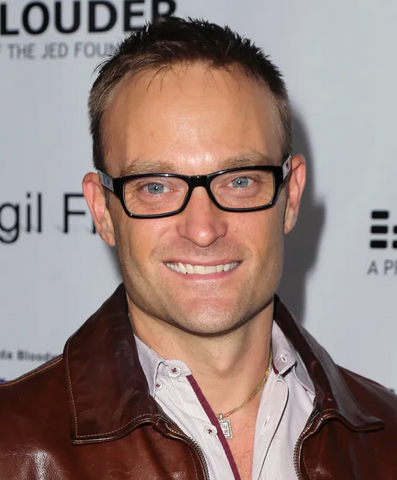
Long before he chose a life defined by quiet purpose rather than public applause, Chad Allen was a familiar face in living rooms across America. As a child actor in the late 1980s and 1990s, his days were spent on studio lots, memorizing scripts, and learning how to perform on cue while most children his age were discovering themselves in far simpler ways. Success came early and easily, bringing with it praise, recognition, and financial stability, but also expectations that grew heavier with each passing year. The entertainment industry shaped his schedule, his image, and even how he was encouraged to think about himself. To the outside world, he appeared confident and fortunate, a young star living a dream many aspired to. Internally, however, he felt increasingly disconnected from his own sense of identity, unsure where the roles ended and where his authentic self began.
As adolescence arrived, the contrast between public perception and private reality became harder to ignore. Fame had granted opportunity, but it had also narrowed his world. Ordinary teenage milestones—casual friendships, spontaneous experiences, and the freedom to be anonymous—felt distant and inaccessible. Allen began to feel that his life was being lived in fragments, shaped by expectations that left little room for exploration or error. Stepping back from full-time television work allowed him to reconnect with acting in a more meaningful way through theater, where creativity felt collaborative rather than commercial. At the same time, unresolved pressure manifested in unhealthy coping mechanisms, including substance abuse, which gradually threatened both his career and his well-being. Recovery was not a single moment but a sustained process that demanded honesty, vulnerability, and a willingness to confront pain he had long avoided. Through that process, he began to understand that healing required more than stepping away from fame—it required redefining purpose.
Self-acceptance became a central theme in Allen’s life during this period. Public scrutiny around his personal identity forced difficult but necessary conversations with family, peers, and himself. What he found surprising was the compassion he received once he allowed himself to be seen honestly. Letters and messages from strangers began to arrive, many expressing gratitude for his openness and sharing stories of their own struggles. These moments revealed to him that visibility, when rooted in integrity, could be a source of healing rather than fear. They also helped him recognize a growing desire to support others in deeper, more lasting ways. Fame, once the defining element of his life, slowly became less important than connection, understanding, and emotional truth.
The decision to pursue psychology marked a turning point that reshaped his future entirely. Returning to school as an adult required humility and discipline, especially after years in an industry where success was measured by ratings and recognition rather than patience and study. Allen immersed himself in learning about trauma, identity development, and emotional resilience, finding profound meaning in the science of the human mind. His own experiences gave him insight into the complexities of pressure, shame, and recovery, while his education provided the tools to help others navigate similar paths. Becoming a clinical psychologist was not an escape from his past, but an evolution of it—transforming lived experience into empathy and skill.
Today, Allen’s life bears little resemblance to the whirlwind of his early fame. His days are structured around teaching, private practice, and thoughtful routines that prioritize balance and well-being. Nature, reflection, and meaningful relationships form the foundation of his daily life, offering a sense of stability that fame never could. He works closely with adolescents and adults, helping them process trauma, build self-awareness, and find clarity during periods of transition. The satisfaction he derives from this work is quiet but enduring, rooted in moments of progress that rarely make headlines but deeply impact individual lives.
Looking back, Chad Allen does not reject his years in the spotlight. Instead, he views them as one chapter in a much larger, more complex story. His journey illustrates that fulfillment is not always found in applause, visibility, or external validation. Sometimes it emerges through stillness, service, and the courage to choose authenticity over expectation. By stepping away from a life many would envy and building one aligned with his values, Allen’s path serves as a reminder that growth often requires letting go—and that a meaningful life can be defined not by who watches, but by who is helped along the way.