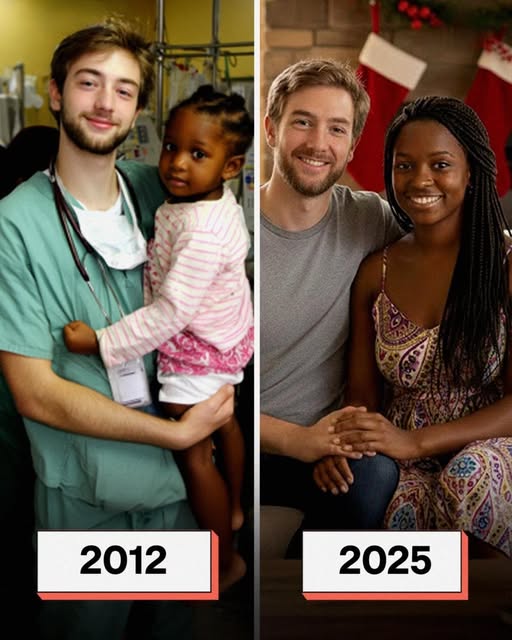
Thirteen years ago, I became a father to a little girl whose life had already seen more uncertainty than most. Avery arrived at my hospital unit as a frightened, three-year-old, clinging to anything familiar in a world that had been unkind. From that moment, I vowed to provide safety, stability, and love, earning the small, trembling trust she extended to me. Over the years, our bond grew slowly but surely, built on everyday rituals, shared laughter, and the simple certainty that no matter what else happened, I would be there. Each story she told, each tear I wiped away, each laugh we shared, became bricks in a foundation stronger than blood alone.
Then came the moment that threatened to shake that foundation. Marisa’s phone lit up with a photo: Avery at a café with a man I didn’t recognize. His hand rested lightly on her shoulder. The comfort and ease between them made my stomach knot with immediate dread. Marisa’s voice, tinged with tension, asked, “Who is that?” My mind raced through worst-case scenarios, a parent’s silent horror filling every second of consideration. The timestamp revealed it was recent. Avery had lied. That betrayal, small in some ways but massive in emotional weight, cut deeper than the image itself.
When Avery returned home that night, I didn’t raise my voice or demand explanations immediately. I asked her to sit and talk. Her face paled when she saw the phone, and for a moment, the quiet spoke louder than any argument could. “I was scared you’d be mad,” she admitted softly. Hearing that, my heart both broke and understood: fear had driven her silence. As she shared the story, I realized this man was her uncle, her mother’s brother, who had been searching for her for years. He had approached cautiously, meeting in public, never asking for custody or confrontation, only hoping to reconnect with the little girl lost from his life.
I watched Marisa process the revelation in silence, embarrassment and shock replacing anger. She had assumed the worst, and in doing so, had fractured the sense of trust between Avery and me for a brief but profound moment. Avery, ever perceptive, noticed the tension and retreated slightly, polite yet distant. One night, she asked the question I feared and expected, yet was necessary: “If you marry her, will things change?” That inquiry crystallized everything for me: love that demands a child step back is not love I could allow to thrive in my home.
Meeting Avery’s uncle was both surreal and grounding. He expressed gratitude that I had provided Avery a safe life, acknowledging that I had not replaced him but rather given Avery the family she needed to survive and flourish. That understanding, the respect and humility in his voice, reinforced my commitment to Avery above all else. The clarity that came from that conversation allowed me to make a decisive choice. Ending my engagement hurt, but it was clean, honest, and protective. Avery’s quiet embrace afterward was a reminder of the unspoken bonds that hold us together, stronger than any miscommunication or external challenge.
Years later, as I watched Avery graduate from college, the significance of the journey became clear. Family is not merely a matter of bloodlines; it is forged through presence, consistency, and unwavering dedication. Every scraped knee I comforted, every bedtime story I read, every conversation I held with patience and attention, had shaped her world. Thirteen years of earning her trust and building a life together culminated in that single proud moment, reminding me that love, devotion, and the courage to do what is right are the foundations of family, far beyond genetics or past mistakes.