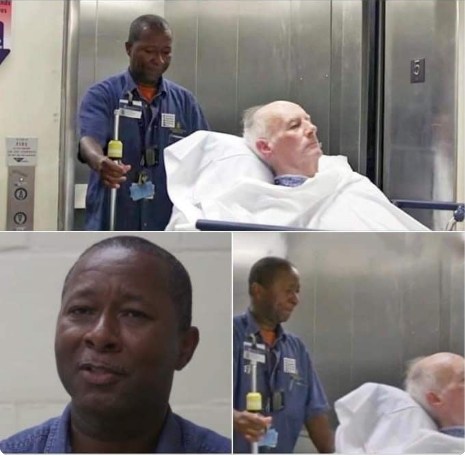
In a world often defined by rushed schedules and sterile hallways, small acts of kindness can make an extraordinary difference. Lindon Beckford, a patient transporter at Beth Israel Deaconess Medical Center in Boston, exemplifies this principle every day. For over 30 years, he has quietly moved patients between rooms, procedures, and departments, performing a job that often goes unnoticed. Yet, what sets Beckford apart isn’t just his dedication to transporting patients safely; it’s the way he sings while doing it. From soft lullabies to soulful ballads, his voice transforms the simple act of being wheeled from one location to another into a comforting, human experience, reminding patients that empathy and humanity can exist even amid hospital routines.
Beckford’s love for singing began in childhood, nurtured through years of practice and an innate understanding of music’s emotional power. Early on, he discovered that his voice had the ability to calm both himself and those around him. Over time, he began to integrate this gift into his daily work at the hospital, intuitively selecting songs based on the patient’s mood, age, or apparent anxiety. A nervous pre-operative patient might receive a soft, reassuring melody, while a long-term patient facing a difficult day could hear an upbeat, joyful tune to lift their spirits. Beckford explains that he listens carefully, gauging the room’s energy and responding with a song that matches the moment. His approach is more than performance; it is deeply relational, offering a personal connection in spaces often dominated by clinical detachment.
The impact of Beckford’s singing extends far beyond momentary distraction. Patients report feeling a measurable sense of relief from anxiety, pain, and fear. One patient, transported to a cath lab for a high-stakes procedure, began harmonizing along with Beckford, creating an impromptu duet that brought laughter and calm to a stressful experience. These moments illustrate how music can act as an emotional bridge, connecting caregiver and patient, easing tension, and providing comfort in environments that are frequently stressful or frightening. Families, too, have noticed the difference, sharing gratitude for the unexpected warmth that accompanies each transport. Beckford’s work demonstrates that healthcare extends beyond medicine, encompassing gestures that nurture the human spirit.
Colleagues at the hospital have also recognized Beckford’s unique contribution. Staff members report that his singing enhances the atmosphere, making hallways feel less clinical and more welcoming. New employees learn quickly that patients respond to his presence with smiles and lowered stress, even before speaking with nurses or doctors. Beckford’s long tenure has allowed him to observe patterns in patient behavior and response, refining his musical choices over decades of experience. His methodical yet heartfelt approach transforms what could be routine, mechanical tasks into moments of genuine human interaction, elevating both patient experience and workplace morale. In this way, Beckford embodies a model of care that integrates emotional intelligence, attentiveness, and creativity, offering lessons that extend far beyond the hospital setting.
The viral attention Beckford received in recent years has been met with humility and quiet pride. Videos of him singing while escorting patients have circulated widely on social media, attracting thousands of views and heartfelt comments from individuals moved by his approach. Yet, despite the online recognition, Beckford’s primary motivation remains consistent: the wellbeing of his patients. He does not sing for accolades or attention; he sings because he knows, from experience, that music has the power to soothe fear, comfort the distressed, and humanize the hospital experience. Each note he sings is an extension of empathy, a bridge connecting the emotional and physical aspects of healing in ways that medicine alone often cannot achieve.
Beckford’s story underscores the profound effect that small, thoughtful gestures can have in healthcare settings. Hospitals are frequently characterized by their fast pace, technical focus, and the often-unseen emotional labor of both patients and staff. By introducing music into these environments, Beckford reminds the healthcare community that care encompasses more than procedures, medications, and diagnoses. Emotional support, comfort, and human connection are integral to patient outcomes, influencing recovery, resilience, and overall satisfaction. His singing is both an art and a form of advocacy, highlighting the importance of compassion in a field where empathy can sometimes be overshadowed by efficiency or necessity.
Ultimately, Lindon Beckford’s contributions go far beyond entertainment or viral fame. His ability to combine decades of professional experience with musical talent has created a model for holistic care—one that blends emotional, psychological, and relational support alongside medical procedures. Patients leave their transport not only safely delivered but uplifted, reassured, and reminded that someone cares about their experience as a person, not just a case number. In highlighting Beckford’s work, the world is given a glimpse of the profound difference that creativity, kindness, and dedication can make in healthcare, offering inspiration for professionals everywhere to look for new ways to humanize and enrich patient care through small, meaningful actions.