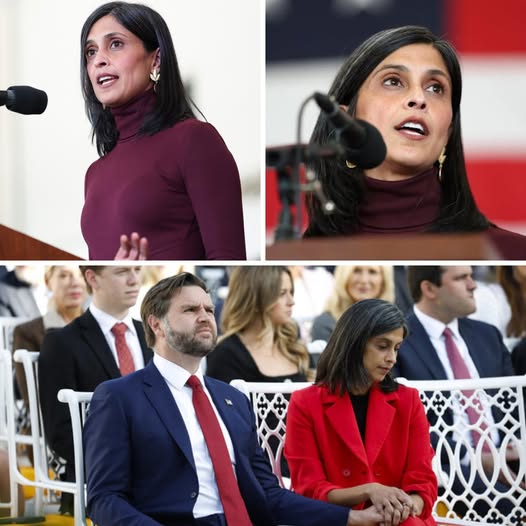
Second Lady Usha Vance, known for maintaining a low-profile public life, made headlines in December 2025 when she responded to growing online chatter about her marriage to Vice President JD Vance. Historically private, she rarely comments on personal matters, preferring to keep the focus on public service and family life rather than engaging in speculation. The specific rumors arose after several public appearances in which observers noticed her without her wedding ring, prompting a wave of social media discussion. Many interpreted the absence of the ring as a potential sign of marital discord, though Usha emphasized that this was simply a routine choice after activities such as exercising or showering, not a deliberate signal. By speaking out, she subtly reminded the public that small observations can be distorted into stories far removed from reality.
The context of Usha Vance’s comments reflects the larger challenges of navigating public life in the age of instant information and viral narratives. As the spouse of a high-profile politician, she is subject to intense scrutiny, with the media and the public often reading symbolic meaning into minor details. In her interview with USA Today, she approached the topic calmly, stressing that gossip and conjecture rarely merit emotional energy. Usha described modern political life as an environment where people constantly “read the tea leaves,” building narratives from fragments of observation. Her measured tone suggested amusement rather than defensiveness, indicating that she possesses both emotional resilience and a sophisticated understanding of media culture. By framing rumors as “noise,” she reclaimed control over her narrative without amplifying the speculation.
The scrutiny intensified following a widely circulated photo of Vice President JD Vance embracing Erika Kirk, a political associate. Social media users quickly extrapolated personal relationships from professional interactions, fueling the rumor mill. Usha’s response avoided direct confrontation with these claims, instead redirecting attention to the reality of day-to-day life. Her approach highlighted a key principle for public figures: private life need not be validated by public opinion. In choosing not to engage with speculative narratives, she signaled confidence and emotional security, while also underscoring that public assumptions are not necessarily accurate reflections of private reality. Her stance demonstrates the delicate balance political families must maintain between transparency and privacy.
JD Vance himself addressed some of the rumors in subsequent interviews, affirming that his marriage to Usha remains strong. His comments emphasized the importance of trust, mutual respect, and focusing on family priorities rather than the whims of social media speculation. Together, the couple’s responses illustrate a coordinated effort to maintain composure and perspective in the face of intrusive scrutiny. While some observers interpreted their public statements as carefully measured, others speculated that the lack of detailed responses might perpetuate curiosity. Nevertheless, both Usha and JD framed their message around stability and normalcy, reminding the public that personal relationships cannot be accurately gauged from fragmented appearances or viral posts.
Beyond responding to rumors, Usha’s statements open a broader conversation about the intersection of privacy, gender expectations, and political life. Women in particular, including spouses of prominent officials, often face disproportionate attention to appearance, attire, and marital symbols. The focus on Usha’s missing wedding ring exemplifies this phenomenon: an everyday personal choice became fodder for speculation, demonstrating how societal expectations can shape the narratives imposed upon women in public life. By addressing these expectations with clarity and poise, Usha challenges the notion that private actions must be publicly interpreted, asserting her autonomy and setting a precedent for other public figures navigating similar pressures.
Ultimately, the episode highlights the persistent tension between public curiosity and personal boundaries. Usha Vance’s calm, factual approach to rumors about her marriage reflects a broader understanding of media dynamics and human behavior. By refusing to overexplain or sensationalize, she underscores the distinction between observed appearances and verified reality. At the same time, the conversation prompts reflection on how society consumes information about public figures, often prioritizing speculation over substance. Through measured engagement and a focus on authentic personal and professional priorities, Usha, alongside JD Vance, models resilience, discretion, and the ability to maintain a private life within the relentless glare of public scrutiny, providing an instructive example for others facing similar pressures.