The shooting that claimed the life of 37-year-old Renee Nicole Good unfolded in a matter of seconds, yet its consequences have stretched far beyond the quiet Minneapolis street where it occurred. What began as a federal enforcement operation quickly transformed into a national flashpoint, drawing in local leaders, federal officials, protesters, and grieving family members, all demanding clarity about what truly happened. According to initial federal statements, an ICE agent fired his weapon after believing he was in immediate danger during a rapidly escalating encounter. Almost immediately, however, that account collided with competing interpretations, leaked video clips, and public skepticism. As images circulated online and fragments of footage were dissected frame by frame, the incident ceased to be a single tragic event and instead became a symbol of deeper tensions surrounding immigration enforcement, police authority, and public trust. The death of Good did not just end a life; it ignited a debate that continues to grow louder with each new detail revealed.
Federal authorities were quick to frame the shooting as a defensive action taken under extreme pressure. Officials emphasized that agents conducting enforcement operations often face unpredictable and dangerous situations, requiring split-second decisions where hesitation can be fatal. Supporters of this narrative argue that the agent involved acted within the bounds of his training and authority, responding to what he perceived as a direct threat. From this perspective, the tragedy is seen as an unavoidable consequence of high-risk operations carried out in volatile environments. Yet even as these statements were issued, questions began to surface. Critics noted that the language used by federal officials appeared carefully calibrated, offering justification without fully addressing the sequence of events leading up to the gunfire. The absence of immediately released, comprehensive footage only fueled suspicion, creating a vacuum where speculation, mistrust, and anger quickly took root.
As video clips began circulating on social media, city and state leaders in Minnesota publicly challenged aspects of the federal account. While acknowledging the inherent dangers faced by law enforcement officers, they stressed that any use of lethal force demands rigorous scrutiny, particularly when it occurs in a residential neighborhood and results in the death of a civilian. Minneapolis officials, after reviewing available footage, stated that what they saw did not clearly align with claims of an imminent threat. Calls for transparency grew louder, with demands for the release of full, unedited recordings and a truly independent investigation. State authorities expressed concern about being limited in their access to evidence, arguing that public confidence depends on accountability that is not perceived as controlled by the same agencies under scrutiny. These tensions exposed a deeper fault line between federal and local governance, highlighting long-standing disagreements over jurisdiction, oversight, and the role of federal enforcement within communities.
Beyond official statements and political maneuvering, the shooting unleashed a wave of public reaction that quickly spread far beyond Minneapolis. Vigils turned into protests, and protests escalated into nationwide demonstrations questioning the presence and tactics of ICE. For many, Renee Nicole Good became more than a name; she became a symbol of fear, grief, and frustration felt by communities who believe enforcement actions too often carry devastating consequences. Others pushed back against what they saw as premature judgments, warning against vilifying officers before investigations conclude. The resulting discourse was emotionally charged and deeply polarized, reflecting broader national divisions over immigration policy, policing, and systemic accountability. Social media amplified every development, sometimes blurring the line between verified information and conjecture, further complicating efforts to establish a shared understanding of the facts.
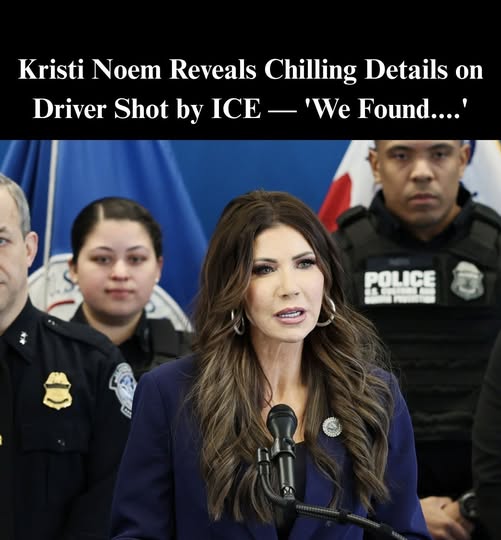
At the heart of the controversy lies the investigation itself, which has become almost as contentious as the shooting. Questions about who should lead the inquiry, who controls the evidence, and how findings will be communicated have all become sources of dispute. Federal authorities have maintained that internal and federal reviews are sufficient to determine whether policy and law were followed. Critics counter that true accountability requires oversight independent of the agencies involved, especially in cases involving loss of life. The involvement of high-ranking officials, including Homeland Security Secretary Kristi Noem, has added a political dimension to the process. Noem’s public statements defending the agency and emphasizing officer safety have resonated with some while alienating others who believe such comments risk prejudging the outcome. As investigations proceed, each new detail—released or withheld—has the potential to either restore confidence or deepen mistrust.
Lost amid the legal arguments and political rhetoric is the human cost of the incident. Renee Nicole Good was a daughter, a community member, and a presence in the lives of those who loved her. For her family, the debate over policy and procedure offers little comfort compared to the permanence of their loss. Communities affected by the shooting have spoken about collective trauma, describing fear, anger, and sorrow that linger long after headlines fade. The officer involved, regardless of legal outcomes, also faces a future shaped by the weight of that moment, carrying the psychological burden that follows any fatal use of force. These realities underscore that such incidents are not abstract policy debates but deeply personal tragedies with ripple effects that extend for years. When trust between authorities and communities fractures, rebuilding it requires more than statements—it requires empathy, transparency, and a willingness to confront uncomfortable truths.
As the Minnesota ICE shooting investigation continues, it stands as a stark reminder of the fragile balance between enforcement and accountability. The case has forced a national reckoning with how power is exercised, how quickly narratives form, and how essential transparency is when lives are lost. Whether the final findings affirm the agent’s actions or expose failures in judgment or policy, the outcome will shape future enforcement practices and public perception. For many Americans, the tragedy has already reinforced the belief that oversight and reform are urgent and necessary. For others, it highlights the dangers faced by officers tasked with complex and often controversial missions. What remains undeniable is that clarity matters—not only for justice, but for healing. Until the full truth is known and openly addressed, the questions surrounding Renee Nicole Good’s death will continue to echo far beyond the street where her life ended.