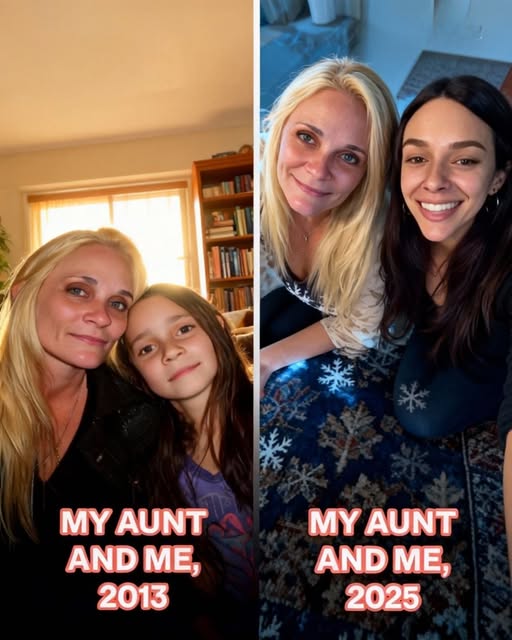
Ivy learned the shape of absence long before she had language for it. Her parents never announced a departure or staged a dramatic goodbye; instead, they drifted, slowly and almost politely, into lives that no longer had space for her. Weekends shortened, phone calls became rare, and excuses piled up like unopened mail. By the time Ivy turned ten, she understood something essential and painful: she was no longer central to anyone’s world. Both parents remarried, built new routines, and welcomed new children who became symbols of fresh starts. Ivy was spoken about in hushed, practical tones, as if she were a problem to be managed rather than a child to be loved. When the decision was made for her to live with Aunt Carol “for a while,” it came without explanation or reassurance. Her clothes were stuffed into black trash bags, her toys reduced to what could fit in a single box, and her questions were met with tight smiles. Standing in her aunt’s doorway that first night, Ivy felt less like a guest and more like something misplaced, unsure whether anyone would ever come looking for her again.
What her parents framed as temporary became permanent in all the ways that mattered. Aunt Carol did not treat Ivy like a burden or an obligation; she treated her like a person who had been waiting too long to be seen. There were rules, yes, but also routines Ivy had never known—shared dinners, school projects pinned proudly to the refrigerator, questions about her day that were followed by real listening. Aunt Carol noticed things Ivy assumed were invisible: the way she lingered over pencils and paper, how her eyes softened when she drew, how silence calmed her. Slowly, Ivy learned that stability did not have to be earned and that affection could exist without conditions. Her aunt encouraged her art not as a hobby to outgrow, but as a language worth developing. Sketchbooks multiplied, afternoons stretched into focused quiet, and praise came not only when Ivy excelled, but when she tried. In that house, Ivy discovered that safety could be ordinary, and that alone changed the way she moved through the world.
Adolescence arrived with its usual storms, but Ivy faced them with tools she might never have had otherwise. When insecurity crept in, Aunt Carol countered it with consistency. When Ivy doubted her worth, her aunt reminded her—gently but persistently—that being left behind said more about the leavers than the one left. Art became Ivy’s refuge and her voice, a way to process memories she could not yet speak aloud. She painted fragmented homes, overlapping figures, hands reaching but missing. Teachers noticed her talent, classmates noticed her intensity, and opportunities slowly opened. Scholarships followed, then exhibitions, each success built on years of quiet encouragement rather than sudden luck. Ivy did not grow untouched by abandonment, but she grew shaped rather than shattered by it. The ache remained, but it no longer defined her limits. Instead, it fueled her desire to create meaning from loss, beauty from things that break.
Years later, Ivy submitted a piece to an international art competition, not expecting much beyond the satisfaction of honesty. The work, titled Inheritance, was deeply personal—layered textures, muted colors, and a central figure standing between shadows and light. It spoke of what is passed down not through blood alone, but through care, presence, and choice. The piece won major recognition, bringing financial stability and public attention Ivy had never imagined. Interviews followed, then features, and with them came messages from people who recognized their own stories in hers. It was during this moment of visibility that her parents reappeared, tentative at first, then increasingly eager. They spoke of regret and missed time, of how proud they were, of wanting to reconnect. Ivy listened, but she noticed what was unsaid—the years of silence, the lack of accountability, the timing. Their return felt less like reconciliation and more like arrival at a destination made attractive by success.
Rather than confront them in private with anger she had already spent years untangling, Ivy chose a different path. She invited her parents to a community event she was hosting, presenting it as a celebration rather than a reckoning. The space was filled with people who had supported her journey—teachers, fellow artists, neighbors, and, at the center of it all, Aunt Carol. The walls displayed photographs spanning decades: Ivy at school plays, Ivy painting at the kitchen table, Ivy graduating, Ivy standing beside her aunt in moments both ordinary and monumental. When Ivy took the stage, her voice was steady. She spoke about influence, about who shows up when there is nothing to gain, about love that does not require reminders. She thanked Aunt Carol publicly, naming her as the woman who raised her, believed in her, and never once made her feel disposable. Without cruelty or accusation, Ivy made her truth clear, setting boundaries not as punishment, but as protection.
As the audience applauded, Ivy felt something loosen inside her, a tension she had carried since childhood finally easing. There was no dramatic confrontation, no shouted words, no need for closure wrapped in forgiveness she was not ready to give. There was simply clarity. She walked home that night beside Aunt Carol, the city quiet around them, feeling grounded in a sense of family that had nothing to do with obligation and everything to do with choice. Ivy understood then that being left behind had not been the end of her story, but the beginning of a different one—one written by the people who stayed. In honoring that truth, she reclaimed her past without being trapped by it, grateful not for the abandonment that shaped her pain, but for the love that showed her who she could become.