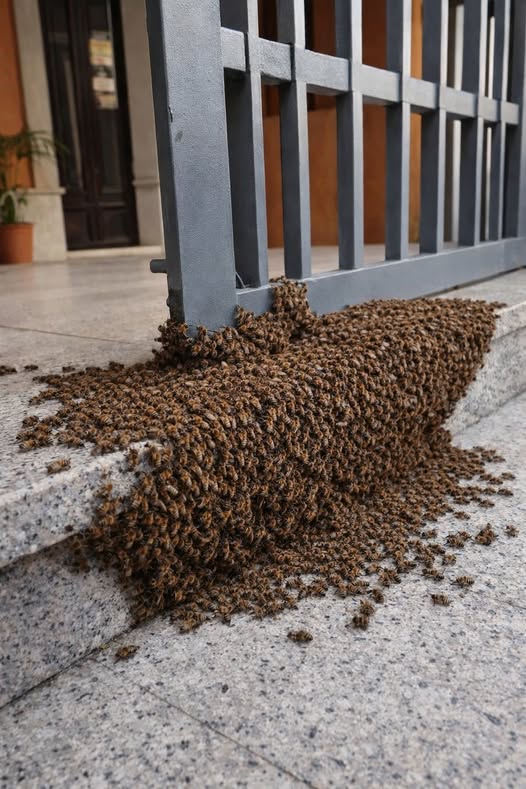
Seeing a large swarm of bees in your yard can be startling. Their buzzing, dense clustering, and sheer numbers often make people assume danger is imminent. However, migratory or temporary bee swarms are generally harmless. These bees are not attacking, nesting, or intending to stay permanently—they are simply resting during a brief stop in their journey. Most swarms remain in one spot for about 24 hours before continuing on their route. Understanding this behavior helps reduce unnecessary fear and ensures that humans and bees can coexist safely, even in moments that initially feel intimidating.
Migratory bees play a crucial role in maintaining ecosystems and food production. They act as pollinators, supporting the growth of fruits, vegetables, nuts, and countless flowering plants. Without them, biodiversity would decline sharply, and humans would face severe challenges in food security. Protecting these bees—even during temporary stops—contributes to the survival of species that sustain entire ecosystems. Observing a swarm calmly, without panicking or attempting to disperse them violently, is the first step toward responsible stewardship of pollinators. Their presence, while unusual, is a vital reminder of our dependence on these small yet indispensable creatures.
If you encounter a resting swarm, there are simple, safe measures to help. Providing sugar water on a flat plate or shallow tray offers bees an energy boost, allowing them to refuel and continue their migration. Avoid disturbing the swarm by making loud noises, sudden movements, or trying to move them yourself. Never attempt to kill the bees, as swarming individuals are generally non-aggressive and focused solely on survival. Taking these small steps supports pollinator health and allows them to continue their essential ecological role with minimal risk to people.
Education and awareness are key to fostering coexistence with bees. Understanding that a swarm is a temporary phenomenon alleviates unnecessary fears and prevents harmful actions that could impact local pollinator populations. Sharing accurate information with neighbors, friends, and community members ensures that bees are treated with care rather than hostility. Over time, this knowledge cultivates a culture of respect for the natural processes that sustain our environment. Bees, though small, have an outsized influence on the survival of countless plant and animal species, including humans.
Communities can also take broader steps to support pollinator health. Planting native flowering plants, avoiding pesticides, and creating safe spaces for pollinators can help mitigate the global decline of bees. Migratory bees rely on a network of safe stops for food and rest, and human-friendly habitats along these routes improve survival rates. By providing these resources and understanding bee behavior, individuals and communities can play an active role in protecting pollinators. These efforts are a practical investment in environmental stability, food security, and the overall health of ecosystems.
Ultimately, seeing a swarm may be alarming, but understanding its purpose and responding with calm and care transforms fear into opportunity. By offering sugar water, observing without interference, and spreading awareness, people help protect migratory bees—a lifeline for ecosystems and humanity alike. The survival of bees is intrinsically linked to the survival of humans, and small, thoughtful actions today can ensure the continued balance of our natural world for generations to come