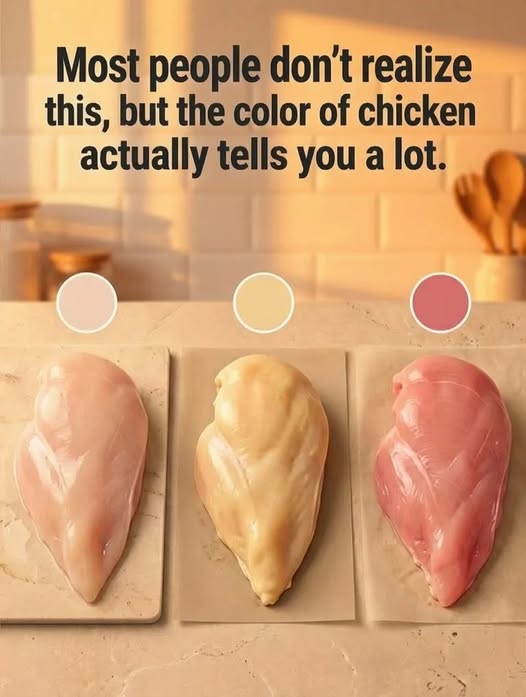
Most people walk past the meat section on autopilot, reaching for chicken based on price, brand familiarity, or the expiration date stamped on the package. Rarely does anyone pause to truly observe what the chicken looks like. Yet color is one of the first and most revealing indicators of how poultry was raised, processed, stored, and how it may behave once cooked. Raw chicken is not meant to look identical every time, and expecting a single “correct” shade often leads to confusion or unnecessary waste. Understanding why chicken varies in color — from pale pink to yellowish to deep rosy hues — allows shoppers to make more informed decisions and avoid relying on myths or fear-based assumptions that don’t reflect how meat actually behaves.
Chicken color is influenced by a combination of biological and environmental factors. Muscle usage plays a role, which is why breast meat appears lighter while thighs and drumsticks are naturally darker. Fat content, oxygen exposure, feed composition, and processing methods also contribute. A chicken raised on a corn-heavy diet often develops a yellowish tint, particularly in the skin and surrounding fat, while birds raised on other grains may appear paler. Oxygen exposure during packaging can change appearance dramatically, making vacuum-sealed meat look darker until air reaches it. None of these variations automatically signal poor quality, yet many shoppers mistake unfamiliar coloring for spoilage. In reality, chicken color tells a story — one that must be interpreted alongside other sensory clues rather than judged in isolation.
Pale pink chicken is what most consumers recognize as “normal,” largely because it is the most common presentation in supermarkets. This shade typically reflects balanced moisture levels, standard processing, and proper refrigeration. When paired with a clean, neutral smell and firm texture, pale pink chicken is usually a reliable choice. However, its familiarity has led to the false belief that anything outside this narrow range is inferior or unsafe. That assumption ignores regional preferences, farming practices, and the natural diversity of poultry. While pale pink chicken is often a safe bet, it should not be treated as the only acceptable option, nor should it be trusted blindly without considering smell, texture, and packaging conditions.
Yellow-tinted chicken occupies a strange space in consumer perception, often misunderstood as either premium or problematic. In many parts of the world, yellow chicken is preferred because it is associated with richer flavor and higher fat content, which contributes to juiciness during cooking. This coloration usually comes from the bird’s diet rather than age or spoilage. However, yellowing can also appear when fat oxidizes or when meat has been stored for extended periods. That is why context matters. A mild yellow hue paired with a fresh smell and firm flesh is generally harmless, while yellowing combined with sliminess, off odors, or excessive liquid should raise concerns. Color provides a clue, not a verdict.
Darker pink, reddish, or purplish tones tend to alarm shoppers most, yet these shades are often entirely normal. Meat near the bone, active muscles, and vacuum-sealed cuts frequently appear darker due to limited oxygen exposure or residual blood from processing. Once exposed to air, these areas often lighten within minutes. Problems arise only when dark coloration appears alongside other warning signs such as sour or sulfur-like smells, sticky surfaces, or cloudy pooling liquid. Too often, consumers discard perfectly good meat out of uncertainty, when a basic understanding of how oxygen and muscle composition affect color would prevent unnecessary waste.
Ultimately, the most reliable way to judge chicken quality is to evaluate color as part of a broader checklist rather than a standalone rule. Fresh chicken should smell neutral, feel firm and slightly moist, and release minimal clear liquid. Taste differences also correlate with color, as darker and fattier cuts tend to deliver deeper flavor and remain juicier during cooking, while paler cuts are leaner and milder. Learning to interpret these visual cues empowers home cooks to shop confidently, cook with intention, and reduce food safety risks without fear or guesswork. Chicken color is not something to avoid — it is something to understand, and once you do, it becomes one of the most useful tools in your kitchen.