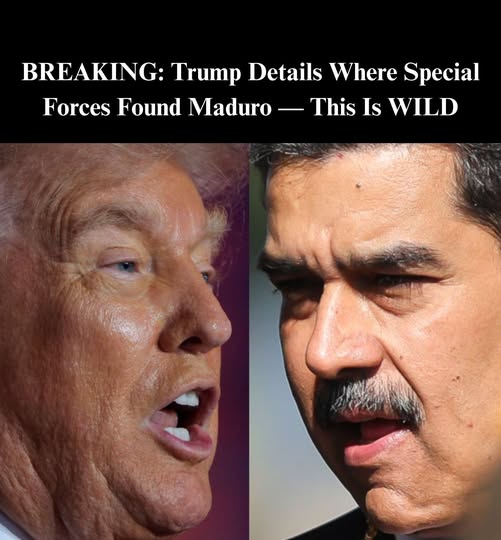
In the earliest hours before dawn, the world awoke to reports of a shocking and unprecedented development in Venezuela: President Nicolás Maduro and his wife, Cilia Flores, had been captured during a U.S.-led operation in Caracas. News of the seizure traveled rapidly through international media outlets, triggering a torrent of reactions ranging from disbelief to cautious approval among allies of the United States. The operation was framed by former President Donald Trump as a decisive and expertly executed mission, lauded for its speed, precision, and tactical execution. Helicopters reportedly cut through the night sky, special operations units entered strategic locations with overwhelming force, and the couple was taken into custody before any coordinated resistance could mount. The cinematic portrayal of the event captured the public imagination, but it also immediately raised fundamental questions about authority, legality, and the broader implications for international norms, as well as the delicate balance of power in Latin America.
While Trump and U.S. officials emphasized the success of the mission, the legal and political context surrounding it remains far from simple. No prior public notice of the operation was given to Congress, leaving legislators scrambling to understand the authorization under which the seizure was executed. Reports indicate that sealed indictments were swiftly unsealed once Maduro and Flores were in custody, with Attorney General Pam Bondi announcing charges related to narcotics trafficking, organized crime, and weapons offenses. The sequence of events — capture followed immediately by legal declaration — has sparked debate over the proper order of law enforcement procedures and the extent to which executive power may operate in such cross-border scenarios. While supporters of the mission frame it as a long-overdue enforcement of justice against a leader widely accused of corruption and human rights abuses, critics caution that the operation risks setting a precedent in which unilateral actions by a powerful nation bypass both domestic legislative oversight and international diplomatic channels.
The geopolitical ramifications of the capture are already reverberating across Latin America and the globe. Allies and adversaries alike are recalibrating their responses as information trickles in, with many capitals calling for verification and transparency regarding the operation’s details. Regional organizations, such as the Organization of American States, have underscored the importance of respecting sovereignty, even as the United States maintains that the operation was justified under domestic law and in the pursuit of global justice. For Caracas, the sudden removal of Maduro represents a profound disruption of governance, as loyalist and opposition factions within the country scramble to interpret signals, assert authority, and prevent destabilization. International financial markets, particularly in oil and emerging market bonds, responded immediately, highlighting how intertwined political developments in Venezuela are with global economic sentiment. Diplomats now face the complex task of ensuring that the operational success of the mission does not escalate into a broader regional crisis.
Domestically, the operation has been met with a mixture of acclaim and skepticism. Trump supporters celebrated the mission as an example of bold leadership, emphasizing the efficiency of American special operations forces and the symbolic importance of holding a leader accountable for alleged crimes. Media coverage amplified dramatic elements, including reports of near misses, high-speed entries, and rapid extraction, contributing to the public perception of the event as both extraordinary and morally justified. Yet legal scholars and constitutional experts caution that narrative alone cannot substitute for oversight, warning that the lack of transparent procedures, congressional consultation, and clear jurisdictional authority may spark long-term legal challenges. Questions linger regarding how extradition protocols were followed, the basis for U.S. jurisdiction over crimes allegedly committed in Venezuela, and the potential ramifications for U.S. credibility if procedural norms were bypassed for expediency.
Human rights advocates have expressed cautious optimism, noting that Maduro’s administration has long faced accusations of systemic corruption, political repression, and violation of citizens’ civil liberties. For victims of his regime, the operation offers a glimmer of accountability that had long seemed unattainable. Yet the capture also raises profound ethical dilemmas, particularly regarding sovereignty and the risks of violent confrontation in urban environments. While reports indicate that the mission was executed with minimal bloodshed, the uncertainties of such interventions are substantial, and every unverified claim contributes to a narrative in which the line between law enforcement and political spectacle becomes increasingly blurred. Analysts are now debating how future actions of this kind could influence the behavior of other leaders, and whether the operation serves as a model for targeted extraterritorial interventions or as a cautionary tale about overreach.
As the world absorbs the implications of this extraordinary development, attention turns to the unfolding legal process. Maduro and Flores have been reportedly transported to the United States, where federal courts in Manhattan will preside over their cases. Charges of drug trafficking, weapons violations, and conspiracy place both the former leader and his spouse in a high-profile legal setting with global attention. The proceedings will test not only the strength of evidence collected but also the international community’s tolerance for extraterritorial applications of U.S. law. Observers note that the speed of the capture and its immediate framing within legal discourse represents an unprecedented merging of military capability and judicial authority, and that the outcomes may redefine the expectations of accountability for state leaders accused of serious transnational crimes.
Ultimately, the capture of Nicolás Maduro and Cilia Flores is far more than a singular event. It is a lens through which to examine the evolving exercise of power, the interplay between legality and authority, and the responsibilities of nations that possess extraordinary military and diplomatic capabilities. For the United States, the operation presents both opportunity and risk: an assertion of moral and judicial responsibility, balanced against the dangers of overstepping procedural norms. For Venezuela, it constitutes an inflection point, forcing domestic and international actors to contend with instability, leadership vacuums, and the challenge of reconstruction. The global community, in turn, is watching closely, recognizing that in an era of rapid communication and highly politicized reporting, the line between operational success, political theater, and legal legitimacy is increasingly complex. How this episode is interpreted and resolved will shape not only the immediate fates of the individuals involved, but also the broader discourse on sovereignty, justice, and the limits of power in the 21st century.